Key Points
- Mitsui Chemicals will buy JSR from funds run by Japan Investment Corp for ¥1.84 trillion (about $11.6 billion).
- The purchase is the largest ever in Japan’s chemicals sector.
- The Development Bank of Japan will invest ¥200 billion alongside Mitsui.
- Mitsui will fund the deal mainly with a ¥1.64 trillion bridge loan and a share sale of up to ¥150 billion.
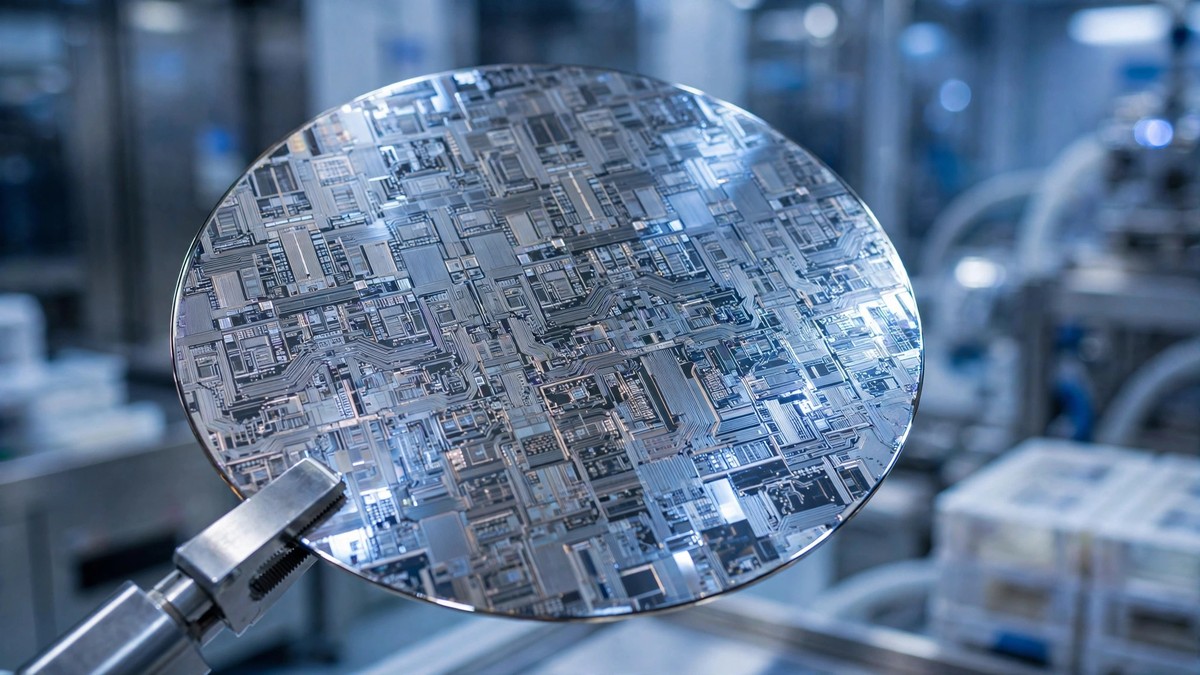
- JSR makes photoresists, the chemicals that print circuits onto silicon wafers; Mitsui leads the world in EUV pellicles.
- The deal still needs competition and foreign-investment approvals and is targeted to close in late 2027 or early 2028.
Mitsui Chemicals agreed on Monday to buy Japanese chip materials maker JSR for ¥1.84 trillion (about $11.6 billion), the biggest deal in Japan’s chemicals industry, as the AI boom lifts suppliers’ values.
What happened
The agreement, announced in Tokyo on Monday, 9 November, transfers JSR from funds managed by JIC Capital, the investment arm of state-backed Japan Investment Corp, to Mitsui. The Development Bank of Japan will contribute ¥200 billion for a stake that will convert into preferred shares without voting rights, leaving Mitsui in control of the votes.
The headline price breaks down into ¥1,392.1 billion of equity value and ¥447.9 billion of debt and other items, according to the filing. Mitsui said it would take a ¥1.64 trillion bridge loan from its main banks, sell new shares worth up to ¥150 billion, and raise more money through bank loans, bonds and mezzanine finance.
JIC bought JSR for ¥900 billion in 2024, intending to use it to drive consolidation among semiconductor materials firms. It is now selling while the AI boom has pushed up the value of chip-related companies. Seven or eight possible buyers were considered in talks held since the spring, JIC Capital chief executive Shogo Ikeuchi said. Reuters first reported in May that JIC was weighing a sale, and Bloomberg reported in September that JSR was considering offers from Mitsui and rival Mitsubishi Chemical Group.
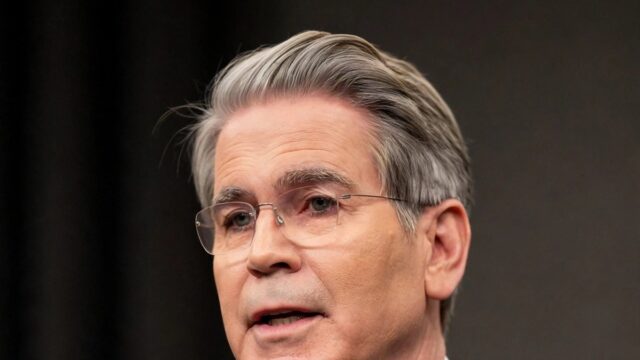
Mitsui chief executive Satoshi Ichimura told a press conference the purchase was “not simply about strengthening our semiconductor materials business, but a strategic deal to accelerate the transformation of our portfolio”.
Mitsui plans to sell JSR’s life sciences unit and other businesses outside its core, and says it aims to return to a sound financial footing within three years. The company also says the purchase should add ¥40 billion a year in profit — its own target, not an outside forecast.
Why it matters
The two companies supply different halves of the same process. JSR’s photoresists are light-sensitive coatings that allow lithography machines to print circuit patterns onto silicon wafers. It is the world’s second-largest maker of photoresists for advanced logic chips and the only company offering both leading types of photoresist for extreme ultraviolet, or EUV, lithography. Mitsui is the world’s leading maker of EUV pellicles, the ultra-thin membranes that shield the masks used in that process. Reuters reported the combination would create Japan’s largest supplier of advanced lithography materials.
The customers are the biggest names in chips. Bloomberg data lists Taiwan Semiconductor Manufacturing Co, Intel and Samsung Electronics among the buyers of JSR’s chemicals. JSR’s Oregon-based unit Inpria develops metal-oxide photoresists for next-generation lithography and is working with SK hynix on the technology. JSR’s semiconductor materials sales rose from ¥157.9 billion in fiscal 2024 to ¥196.0 billion in fiscal 2025, according to Mitsui’s presentation.
Investors were unconvinced. Mitsui shares fell 9% in Tokyo on Monday, Reuters reported, and at one stage were down as much as 15%, according to Bloomberg. The stock had already slid last week, when Reuters first named Mitsui as the final buyer. Mitsui itself was worth about ¥664.6 billion at Friday’s close, according to LSEG data cited by Reuters — barely more than a third of the sum it has agreed to pay.
The deal lands as demand for AI hardware redraws the chip industry. Google unveiled two new AI chip systems on Monday, and Anthropic struck a $3.4 billion deal for gas generators to power its AI data centres. Nvidia, the biggest AI chip maker, was also in focus after its board opened an investigation into chief executive Jensen Huang.
What happens next
The deal cannot close yet. It needs competition and foreign-investment clearances in Japan and other countries, and Mitsui aims to complete it in the second half of the fiscal year ending in March 2028 — between October 2027 and March 2028.
The questions now are whether regulators will clear a combination that puts two critical EUV materials under one roof, whether Mitsui can cut its debt and sell non-core units fast enough to steady its finances, and whether the promised profit gains arrive. Ikeuchi sounded a note of caution, saying that “simply having these materials does not mean they can immediately generate significant synergies” — but that by combining technology, talent and customer bases, the two firms “could create significant new growth opportunities”.
If it completes, Japan will have a single national champion in the chemicals that print the world’s most advanced chips — and a test of whether scale in chip materials is worth a price nearly three times the buyer’s own value.
Sources: Reuters, Bloomberg, Nikkei, Semi Doped, Mitsui Chemicals disclosure. 10 November 2026.