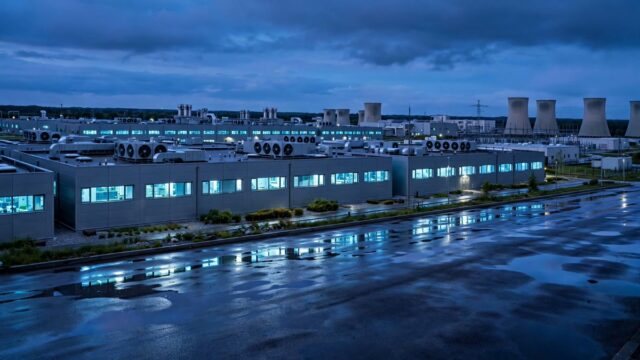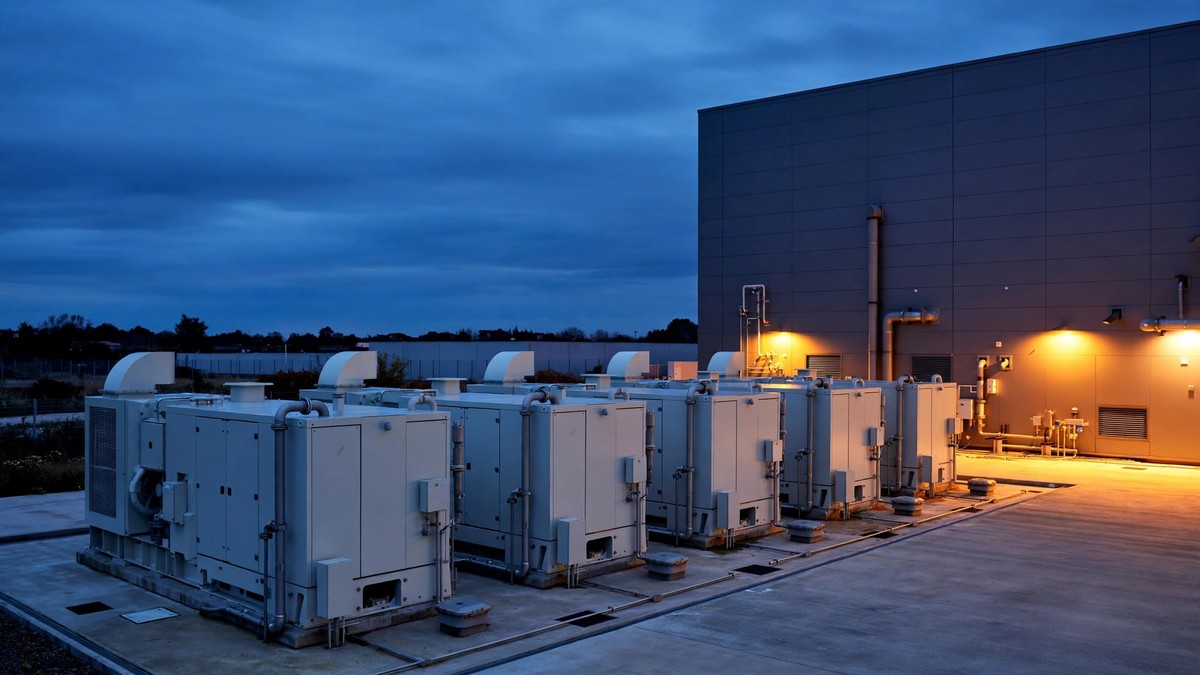
Anthropic has reportedly agreed to pay $3.4 billion for gas-fired generators to power its AI data centres, taking over equipment orders placed two years ago as the scramble for power to run AI systems intensifies.
Key Points
- The Financial Times reported on Sunday 8 November that Anthropic agreed a deal worth about $3.4 billion for 1.7 gigawatts of gas-fired generators.
- The commitments were bought in late September from OnePWR Solutions, an equipment supplier based in San Antonio, Texas.
- Anthropic did not buy OnePWR itself, and none of the supplier’s staff moved to the AI company, but the deal includes the engineering and construction work needed to install the machines.
- The newspaper described it as the largest known single purchase of power-generation equipment by an AI lab.
- Reuters said it could not immediately verify the report, and Anthropic and OnePWR did not respond to requests for comment.
- The purchase fits Anthropic’s February pledge to pay for new power to match the electricity needs of its data centres.
Anthropic has reportedly agreed to pay $3.4 billion for gas-fired generators to power its AI data centres, taking over equipment orders placed two years ago as the scramble for power to run AI systems intensifies.
What happened
The Financial Times reported on Sunday that Anthropic, the company behind the Claude family of AI models, bought commitments for 1.7 gigawatts of heavy-duty gas-fired generators in late September. The seller was OnePWR Solutions, a San Antonio company that builds microgrids and on-site power plants. The report cited a person familiar with the matter, and neither Anthropic nor OnePWR has commented publicly on it.
The machines are not new orders. OnePWR placed them with Caterpillar, the American maker of engines and generator sets, about two years ago, then needed financing to complete the purchase. Anthropic had first planned to buy electricity from OnePWR as a customer. Instead, it stepped in and took over the orders outright. The deal does not include OnePWR itself, and none of the supplier’s employees moved to Anthropic, but it does cover the engineering and construction capacity required to put the generators in place.
What Anthropic bought, in effect, was a place in the manufacturing queue. Demand for gas turbines and generators has soared as data centre builders race for power, and waiting times for the equipment now stretch for years. Machines ordered two years ago sit far ahead of anything ordered today, and the Financial Times report said the generators would become available in the near term and over the next two years. The report did not say where they will be installed or which data centres they will serve.
A separate record points in the same direction. Piper Sandler, the investment bank that advised OnePWR, lists a $3.4 billion sale of the supplier’s power generation platform to an unnamed frontier AI lab in September 2026. The dollar figure and the month match the Financial Times account, although the bank does not name Anthropic as the buyer. One detail does not line up neatly: OnePWR said in February that it held more than 400 megawatts of equipment in stock and expected more than 800 megawatts over the following two years, about 1.2 gigawatts in total, roughly 500 megawatts below the reported 1.7 gigawatts. Neither record explains the gap.
Why it matters
Electricity has become the binding limit on the AI boom. Chips can be ordered and models can be trained, but a data centre is useless without power, and the grid in many places cannot deliver it fast enough. That is why the biggest AI companies are no longer content to buy electricity from a utility. They are buying the machines that make it, the land to put them on and the teams to install them, cutting out middlemen to control their own supply.
Anthropic is spending at a scale that makes the $3.4 billion look like one line in a much larger bill. Reuters reported in September that the company expects to spend more than $500 billion over the next ten years building AI infrastructure. An amended filing with the US Securities and Exchange Commission put its total committed spending at about $895 billion, mostly tied to computing and infrastructure. Strong demand for Claude, its family of AI models, has pushed the company to lock in more computing and power capacity, and it is preparing to go public as early as this month, with investors already pushing back on its valuation.
The filing also shows the deal carries a cost that has no ceiling. Anthropic told investors that some of its planned data centres rely on dedicated on-site gas-fired generation, and that it bears the fuel bill on a pass-through basis without cost caps. A planned site could be delayed or abandoned, the filing said, if firm gas supply and pipeline transport cannot be secured. In February, the company promised to pay for all of the grid upgrades needed to connect its data centres and to bring new power generation online to match their electricity needs. On-site generators fit the second half of that promise, because new capacity arrives with the campus instead of drawing on a grid built for slower growth.
Anthropic is not alone in this shift. Rival xAI bought mobile gas turbines earlier this year for $2 billion, and Alphabet, Google’s parent company, bought energy developer Intersect in late 2025. The Financial Times report also said Anthropic leased computing capacity from SpaceX, with monthly payments expected to reach $3.1 billion by the end of the year. The pattern is the same across the industry: the companies building the largest AI systems are now building the power plants behind them as well.
That shift is running into local politics. Behind-the-meter generation faces its own set of permits, air quality rules and siting requirements, and opposition to data centre building has grown more organised. Voters weighed in on more than 40 local ballot measures dealing with data centre development in the 3 November elections, and 24 of them were approved. One estimate put on-site gas projects underway at 110 gigawatts, up from 20 gigawatts last summer. A company-paid gas plant answers the question of who pays for the power, but it still needs an air permit, a site and neighbours willing to accept it.
What happens next
The first thing to watch is confirmation. The report rests on a single source, Reuters could not verify it, and neither company has spoken. If Anthropic confirms the deal, the next questions are where the generators will go and which data centres they will serve, since no site has been named. Those details will surface in planning filings, air permits and local approvals, which now set the schedule for AI building as surely as chip supply does.
The second is the stock market debut. Anthropic is preparing to list as early as this month, and the generator deal will be read by investors as evidence of how far its spending plans reach, and how much of its future depends on power it does not yet control. The same filing that discloses the fuel-cost risk also shows a company racing to add memory, features and capacity while rivals do the same, and the cost of falling behind is measured in gigawatts.
For the industry, the deal is a marker of where the AI race has moved. The contest was once about who had the best model. It is now about who can secure the electricity, the equipment and the permits to run it at scale, and the companies with the deepest pockets are buying their way to the front of the queue.
Sources: Financial Times (via Reuters, CNBC TV18, Chosun Biz), Reuters, CNBC TV18, Anthropic Form S-1 (US Securities and Exchange Commission), Piper Sandler, OnePWR Solutions, Latitude Media. Published: 9 November 2026, Kuala Lumpur time.