Key Points
- Russia fired 36 ballistic missiles at Kyiv and its surrounding region overnight, and 172 drones across Ukraine, Ukrainian officials said.
- Ukrainian air defences stopped only four of the 36 ballistic missiles. President Volodymyr Zelenskyy blamed a shortage of interceptors for the Patriot system.
- The strikes hit substations that carry power from the Rivne and Khmelnytskyi nuclear plants to Kyiv, damaged the Northern Bridge, and left parts of the capital short of electricity, water and heat.
- Zelenskyy said early findings showed North Korean-made KN-23 missiles struck a key energy site. That claim has not been confirmed by any outside source.
- At least two people were killed and nine were wounded across Ukraine, officials said.
- The barrage came days before US-brokered talks between Ukraine, Russia and the United States in Abu Dhabi on 10 and 11 November.
Russia fired 36 ballistic missiles and 172 drones at Kyiv and its surrounding region overnight, damaging the power links that carry electricity from two nuclear plants to the capital, Ukrainian officials said on Saturday.
The attack, which ran from Friday night into Saturday, was aimed squarely at energy infrastructure, according to Ukraine’s energy ministry and the country’s air force. It left Kyiv facing serious problems with electricity, water and heating as temperatures headed towards zero, and it came three days before the three sides are due to sit down for US-brokered talks in Abu Dhabi.
What happened
The barrage began on Friday night. Explosions sounded across Kyiv as Russia sent wave after wave of ballistic missiles at the capital, while drones spread across the country. Ukraine’s air force said 36 ballistic missiles were fired at Kyiv and the surrounding region, and 172 drones were launched across Ukraine.
Ukrainian air defences brought down 149 of the drones. But of the 36 ballistic missiles, only four were stopped. President Volodymyr Zelenskyy said the low interception rate came down to a shortage of interceptors for the Patriot air defence system, the US-made system Ukraine relies on to stop ballistic missiles because they fly too fast for most of its other defences.
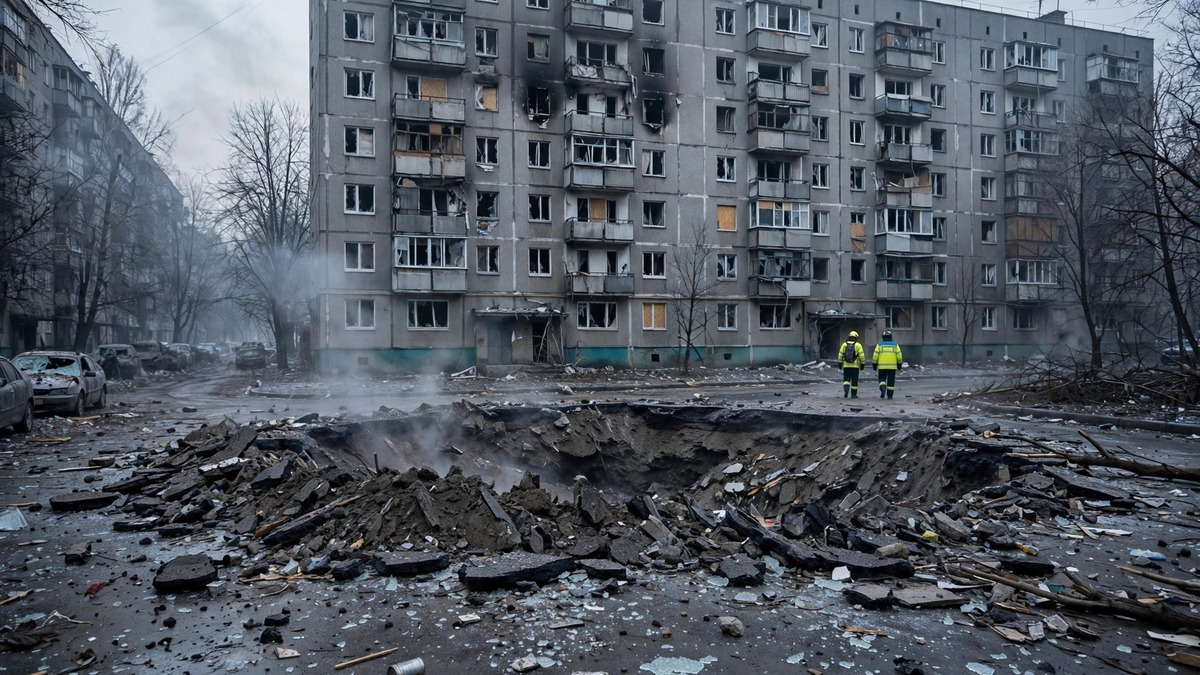
The main targets were high-voltage substations in the Kyiv region that connect the Rivne and Khmelnytskyi nuclear power plants to the capital and to central Ukraine. The energy ministry said the damage to those links was serious. Homes, shops and a kindergarten were also hit in the capital’s Solomianskyi district, where the state emergency service reported damaged homes, a kindergarten and a non-residential building. One strike on a residential block shattered its windows and left a large crater in the ground in front of the building.
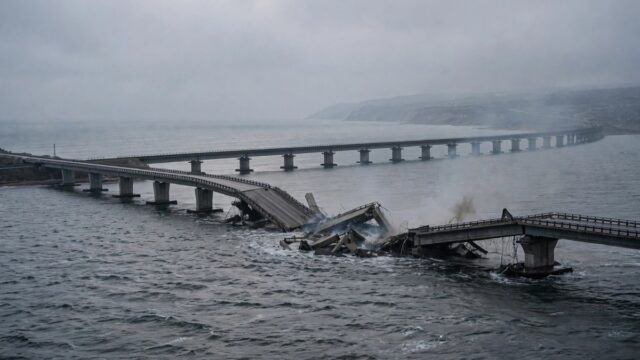
The Northern Bridge, also known as the Pivnichnyi Bridge, a major route across the Dnipro River, was hit and damaged. Kyiv’s mayor, Vitali Klitschko, said several missiles struck the bridge, and city officials closed it after the attack.
Zelenskyy said early findings from impact sites showed that North Korean missiles had struck a key energy facility. The KN-23, known in North Korea as the Hwasong-11A, is a solid-fuel, short-range ballistic missile. The claim rests on preliminary findings and has not been confirmed by any outside source.
Russia’s defence ministry confirmed that it had carried out a large-scale strike, saying it hit military-industrial targets as well as energy and transport infrastructure in and around Kyiv, including the Pivnichnyi Bridge. Moscow also claimed its air defences shot down 411 Ukrainian drones over 10 regions, the Black Sea, the Sea of Azov and Crimea. That claim has not been confirmed by any outside source.
At least two people were killed and nine were wounded across Ukraine, Ukrainian officials said. Nine people were wounded in the attacks, including a child, according to the Ukrainian authorities, and five people were wounded in Kyiv itself. The strikes also cut power in five regions, the energy ministry said.
The attacks did not stop with Kyiv. On Saturday evening, a Russian strike hit the Black Sea port city of Odesa, killing one person, damaging municipal infrastructure and setting fire to a non-residential building, the city’s military administration said. Earlier on Saturday, Russian drones struck businesses in two parts of Kremenchuk in the Poltava region, wounding four people and starting industrial fires.
Why it matters
The scale of the barrage, and how few of the ballistic missiles were stopped, lays bare the gap in Ukraine’s air defences as winter approaches. Ballistic missiles are the hardest weapons for Ukraine to intercept, and the Patriot system is the only one it has that can reliably do the job. With interceptors running low, each new wave of missiles has a better chance of getting through, and the targets this time were the substations that keep the capital’s lights and heating on.
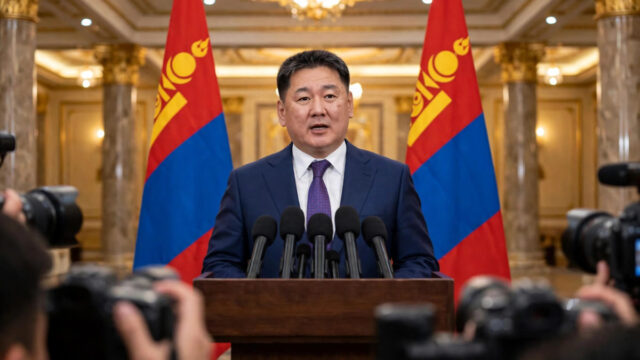
Zelenskyy framed the timing as a message. “Russia was preparing for trilateral talks by launching ballistic missiles at Ukraine’s critical infrastructure,” he said on Saturday. The talks, brokered by the United States, are set for 10 and 11 November in Abu Dhabi, where officials from Ukraine, Russia and the United States are due to meet. The strike suggests Moscow is entering those talks from a position of pressure, not pause.
The North Korean missile claim adds a second front to the story. If North Korean-made weapons were used against Ukraine’s power grid, it would be further evidence of how far Russia’s arms supply has spread beyond its own factories. Ukraine’s investigators say their findings are preliminary, and no outside body has confirmed them.
The wider picture is grim. On Sunday, Zelenskyy said Russia had launched 115 missiles of various types, nearly 1,900 guided aerial bombs and more than 3,000 strike drones against Ukrainian cities in the past week alone, and that a large share of the weapons were made this year. The week before, he had warned that Russia was preparing to strike energy sites, bridges over the Dnipro and other civilian infrastructure.
Help with the interceptor shortage is limited. Germany’s defence minister said on Saturday that Germany has exhausted its capacity to supply Ukraine with more Patriot systems for now. The US State Department approved a possible sale of 500 PAC-3 MSE interceptors to Ukraine last October, valued at about $2.1 billion, but Ukraine has asked its partners for a winter package of 100 Patriot interceptors a month, and the gap between what is coming and what is needed remains wide.
The fighting also continues to spill beyond Ukraine’s borders in the form of claims and counter-claims. Moscow’s statement that it downed 411 Ukrainian drones overnight, if accurate, would point to a large Ukrainian drone operation of its own. As with the casualty figures on both sides, such claims are difficult to check while the war goes on.
What happens next
All eyes now turn to Abu Dhabi, where the three sides meet on 10 and 11 November. The talks are the first trilateral meeting of their kind, and they come after a week in which both sides stepped up attacks rather than winding them down. Whether the Kyiv barrage hardens Ukraine’s position or pushes the two sides towards a pause will become clear once the negotiators sit down. The last round of ceasefire diplomacy ended without a deal, and neither side has signalled a change of course since.
In Kyiv, the immediate task is repair. Engineers are working to restore the substations that link the two nuclear plants to the capital, and to reopen the Northern Bridge. With temperatures falling, the speed of those repairs matters as much as the diplomacy: every night without full power and heating is a night the city feels the war at home.
The interceptor question will follow the talks. Ukraine’s request for 100 Patriot interceptors a month is now the clearest test of whether its partners can keep its air defences working through the winter. If the supply does not arrive, nights like Friday’s, when only four of 36 ballistic missiles were stopped, could become the pattern rather than the exception.
Sources: Associated Press, NHK, Kyiv Post, Aju Press, The Independent. 8 November 2026.