The assistant that forgot your plans is supposed to remember them now.
Key Points
- Meta began rolling out upgraded models to Muse and Meta AI users on 6 November 2026, trained using its flagship Muse Wonder model.
- The upgrade brings Active Memory, which keeps track of details from earlier conversations, and Active Focus, which keeps working when a task hits a snag.
- Meta says the new Muse model forgets key information 2.4 times less often and completes everyday tasks 67% better when problems crop up — its own figures, from its own tests.
- The same day, Meta launched Spaces in the Muse app, letting users turn a written description into a custom tracker, planner or game that stays updated.
- Sharing a Space with other people is not available yet; Meta says it is still exploring how that would work.
Meta has upgraded the models behind its Muse assistant and Meta AI chatbot, giving every user the memory and persistence features of its flagship Muse Wonder model, the company said on Friday.
What happened
Meta announced the change on Friday 6 November, in a post from its AI research team and a message from chief executive Mark Zuckerberg. The two assistants now run on what Meta calls specialised versions of its existing models, trained using Muse Wonder — the most capable model family the company introduced in October. Until now, the Wonder capabilities sat behind the flagship model itself, which is sold through the company’s developer platform and its Muse Code coding product.
The first of the two features is Active Memory. It is meant to hold on to details that matter from one conversation to the next, and to recognise when an old detail becomes useful again. Meta says it trained the models to tell temporary information apart from lasting information, to reason across time, and to separate what is still relevant from what has gone stale.
The second is Active Focus. When a task runs into an unexpected problem, the model is supposed to keep going — trying another approach, recovering from the setback, or asking a question before it acts — instead of stalling or giving up.
Meta put numbers on both claims. In its own tests, the new Muse model forgot information it needed to reach a goal 2.4 times less often than the model it replaces. It completed everyday tasks 67% better when something unexpected got in the way. On the company’s own Personal Superintelligence Index, the current model scored 47%, against 38% for the previous one, and on a memory test it used the right earlier detail in 90% of tasks, up from 76%. Every one of those figures comes from Meta’s own evaluations. No outside lab has checked them, and Meta published no separate numbers for Meta AI — the figures cover Muse only.
Zuckerberg announced the rollout in a post on X. “Upgraded the models for Muse and Meta AI, bringing Active Memory and Active Focus from Muse Wonder to everyone,” he wrote. “In Muse, these new specialized models are 2.4x less likely to forget critical info and are 67% better at self-correcting and completing everyday tasks.”
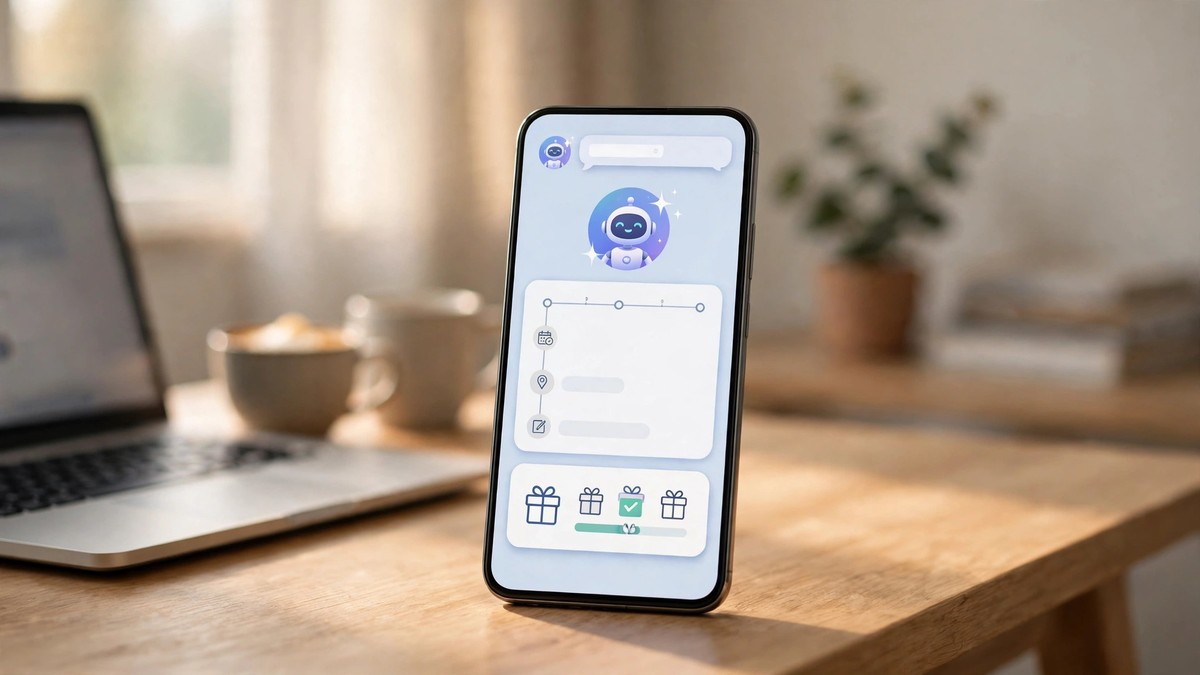
The same day brought a second launch. Spaces, a new feature in the Muse app, lets a user describe an idea in plain words and have Muse build it into a custom experience — a holiday gift tracker, a daily word game, a planning board for a home project. Each Space becomes a saved part of the app, and it can stay current by drawing on connected services such as Gmail, Google Calendar, OpenTable and Notion. Users can put a Space in the sidebar or the main tabs, hide it, or set it to appear on a schedule. Meta says Spaces are available from that day everywhere the Muse app is available. Sharing a Space with someone else is not possible yet.
Why it matters
Forgetting has been one of the most visible limits of chat assistants. A user who has explained a plan, a preference or a deadline once usually has to explain it again in the next session. Meta’s pitch is that the assistant should carry that context forward on its own — and, just as importantly, keep working when a plan breaks instead of stopping at the first obstacle.
The rollout also closes a gap Meta created itself. When Muse Wonder arrived on 12 October, its memory and persistence features were limited to the flagship model, which most people never touch. Bringing cut-down versions of those features to the free assistants puts them in front of every Muse and Meta AI user, rather than only developers and paying subscribers.
Spaces points in the same direction. It turns Muse from a chat window into a place where small tools live — trackers and planners that update themselves in the background. It is the second new Muse feature in as many days, after Muse Voice, which added real-time voice and video chat with an animated avatar on 5 November. Google added its own video-model news in the same week, releasing Gemini Omni 1.2 Flash. Together, the three launches show Meta moving fast to make its assistant feel less like a search box and more like a personal aide that remembers, talks and keeps tools at hand.
There are reasons to hold the applause. All the performance numbers come from Meta, measured on Meta’s own tests, with no task counts, no sample sizes and no independent replication. Meta has also said little in this announcement about which countries or account types get the upgrade first, or how much control users have over what the new models remember. Those gaps matter, because a memory that cannot be inspected or corrected is a risk as well as a convenience.
What happens next
Three things to watch. First, the rollout itself: Meta says the new models are going out now, but it has not given a timetable by region or device, so some users will see the change before others. Second, the real-world test: whether people notice Muse remembering more and stalling less in ordinary use, which is the only measure that counts once the company’s own benchmarks are set aside. Third, Spaces: whether users build lasting tools from it, and when Meta adds the sharing it says it is still exploring — that would turn a personal tracker into something a household or a team could use together.
Sources: Meta AI Research, “Bringing Specialized Models to Muse and Meta AI”, 6 November 2026; Meta Newsroom, “Design the Muse App, Just for You”, 6 November 2026; Mark Zuckerberg on X, 6 November 2026; The Verge, “Meta adds Spaces to Muse”, 6 November 2026; TechCrunch, “Meta introduces Spaces”, 6 November 2026; Digital Trends, 6 November 2026. All performance figures are Meta’s own, from its own tests, and cover Muse only. The Zuckerberg wording is a direct quote from his post on X. Published: 8 November 2026, Kuala Lumpur time.