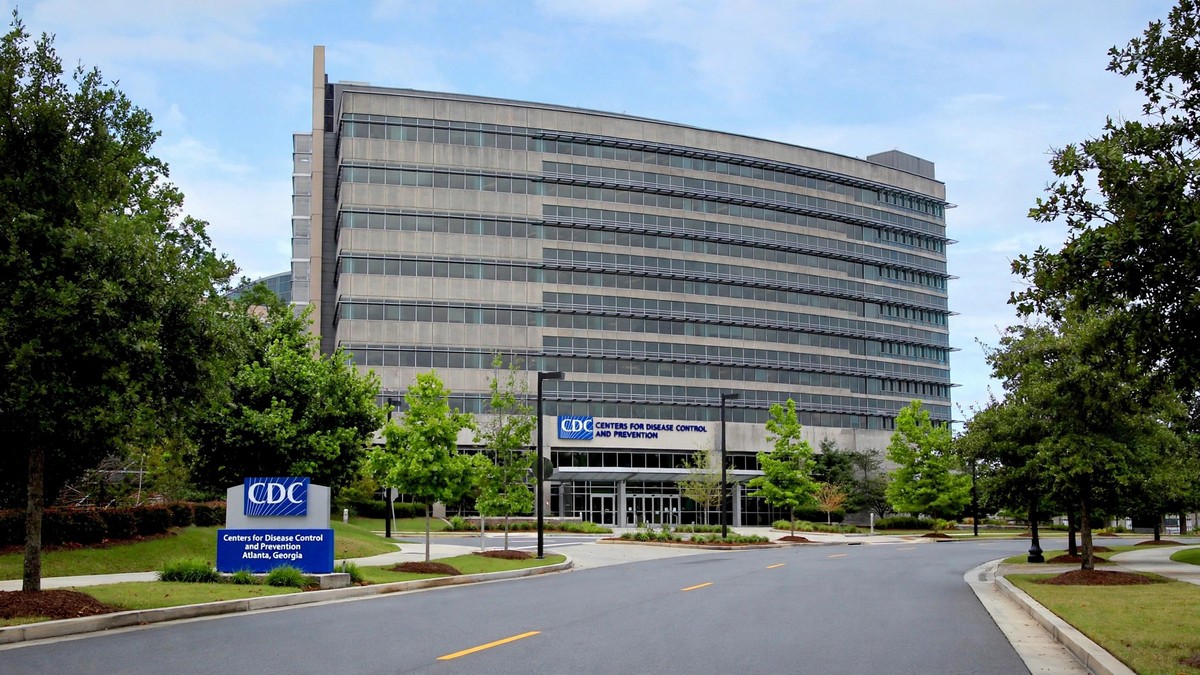
The United States has recorded its highest annual measles total in 35 years, and health officials warn the country is about to lose the elimination status it has held since 2000.
Key Points
- A total of 5,182 confirmed measles cases have been reported in the United States in 2026 as of 5 November, data released by the Centers for Disease Control and Prevention (CDC) on 6 November shows — the highest annual total since 1991.
- The total is more than double the 2,289 cases recorded in all of 2025, and 96% of this year’s cases were in people who were unvaccinated or whose vaccination status was unknown.
- Pennsylvania is the hardest-hit state, with 1,487 cases and six measles-associated deaths, according to its health department.
- The CDC counts four measles-associated deaths nationally in 2026, while state health officials have reported at least eight.
- A Pan American Health Organization panel meets on 10–13 November to decide whether the United States keeps its measles elimination status, held since 2000.
The Centers for Disease Control and Prevention confirmed on Friday that measles has infected 5,182 people across America this year — more than in any year since 1991 — putting elimination status in danger.
What happened
The CDC published its latest measles figures on Friday, 6 November. As of noon on Thursday, 5 November, 5,182 confirmed cases had been reported across 47 jurisdictions. The agency also counted 43 new outbreaks this year and said 4,993 of the cases — 96% — were linked to outbreaks, including 3,608 from outbreaks that began in 2026 and 1,385 from outbreaks that started last year.
Children and teenagers account for most of the illness: 2,104 cases were in people aged 5 to 19 and 908 in children under five — together about 59% of the total — while 2,132 cases were in adults aged 20 and older. Almost all of the people who fell ill — 96% — were unvaccinated or had an unknown vaccination status, according to the CDC.
Pennsylvania carries the heaviest burden. Its health department reported 1,487 cases and 287 hospitalisations, and said this week that a sixth person had died with measles. South Carolina, with 670 cases, and Utah, with 536, have the next-highest totals. Across the country, 562 people — 11% of those infected — needed hospital care.
The deaths this year include some of the youngest victims. Wisconsin’s health department reported on Thursday that an infant had died in Wisconsin, and New York reported earlier in the week that a seven-month-old child had died of measles — the state’s first such death in more than 30 years. The infant was not vaccinated. Children normally receive their first measles, mumps and rubella (MMR) dose between 12 and 15 months of age, although health authorities can recommend a dose from six months during an outbreak.
Why it matters
The milestone matters because of what comes next. The United States declared measles eliminated in 2000, meaning the virus no longer spread on its own inside the country year-round. A panel of experts from the Pan American Health Organization meets from 10 to 13 November to decide whether that status still holds. If it finds that one strain of the virus has circulated without a break for 12 months, the status is lost. Canada had its elimination status revoked last year after a year of continuous transmission, and the United Kingdom is also recording more cases.
“The U.S. is in the throes of the deadliest measles outbreak it has seen in decades,” said Jennifer Nuzzo, an epidemiologist and director of the Pandemic Center at Brown University, to Scientific American. “Losing measles elimination status is an official acknowledgement that the country is on the wrong path.”
The outbreak has exposed how far vaccination coverage has slipped. The share of kindergarteners vaccinated against measles fell from 95.2% in the 2019–2020 school year to 92.4% in 2025–2026 — below the 95% level experts say is needed to stop the virus spreading in a community. In January, the CDC cut the number of immunisations it recommends for children from 17 to 11, although measles was not among the vaccines dropped.
Wisconsin’s outbreak shows how quickly the virus moves once it takes hold in a community where coverage has fallen.
The death toll itself is disputed. The CDC counts four measles-associated deaths in 2026, while state health officials have reported at least eight. The gap comes from a change in how the federal agency counts deaths: under Health Secretary Robert F. Kennedy Jr., it switched from state health departments’ figures to mortality data from the National Center for Health Statistics. Pennsylvania counts a death as measles-associated when a person with confirmed measles dies within 30 days of developing symptoms, unless the death had an unrelated cause. Two Pennsylvania deaths were first included in the CDC’s national tally, then removed after Kennedy questioned whether measles had caused or contributed to them. The CDC says it is working with the US Council of State and Territorial Epidemiologists on a standard definition.
Paediatric infectious-disease specialist Adam Ratner called the deaths “tragic, and that is completely preventable.”
What happens next
The PAHO panel’s decision next week is the immediate test. Whatever it decides, the pattern is clear: new cases are still being reported every week, and the virus is circulating in the communities where vaccination rates have fallen furthest.
The fix, they say, is the vaccine itself. “The MMR vaccine is the best way to prevent measles and stop outbreaks,” said Andrew D. Racine, president of the American Academy of Pediatrics. “It is safe, reliable, inexpensive and readily available. When enough people are vaccinated, the virus can’t spread throughout the community.”
Sources: US Centers for Disease Control and Prevention, Measles Cases and Outbreaks, data as of 5 November 2026, updated 6 November 2026; Reuters, 6 November 2026; Al Jazeera, 7 November 2026; Associated Press, via The Straits Times, 7 November 2026; Smithsonian Magazine, 4 November 2026. The Jennifer Nuzzo quotes are from Scientific American, via Smithsonian Magazine. The Adam Ratner quote is from AFP, via The Straits Times. The Andrew D. Racine quote is from AAP News, via Smithsonian Magazine. Pennsylvania figures are from the Pennsylvania Department of Health, as reported by Reuters and Al Jazeera. Published: 7 November 2026, Kuala Lumpur time.