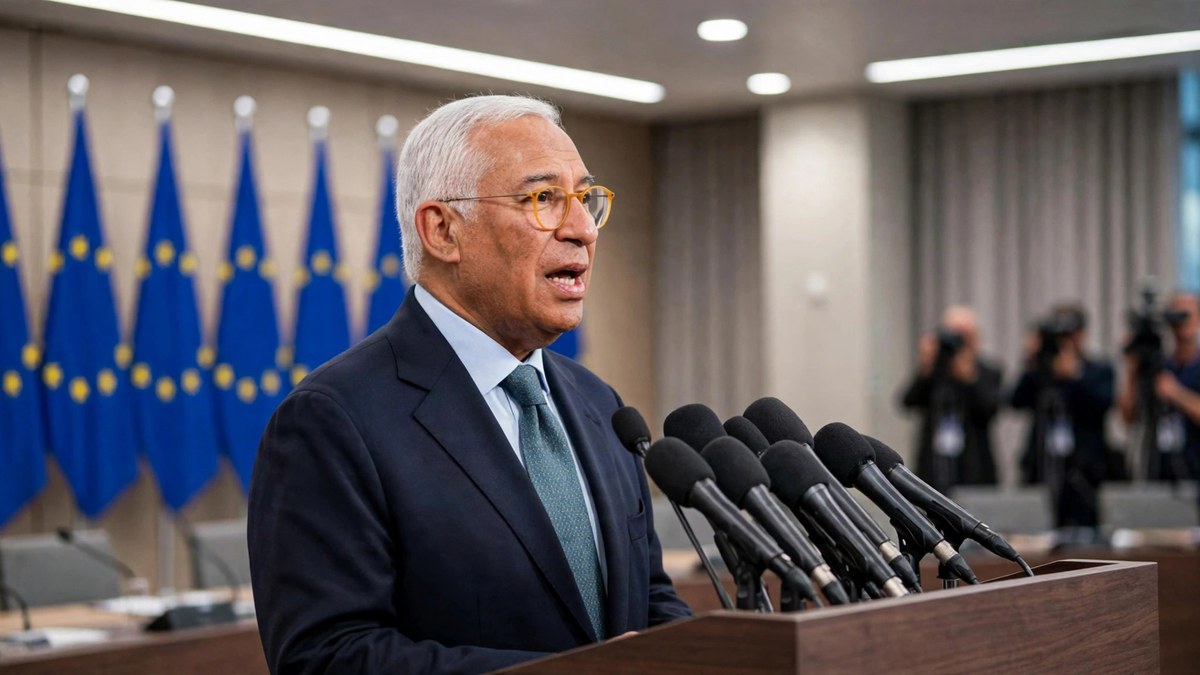
Brussels has proposed a 3% tax on Big Tech to help pay for the European Union’s next seven-year budget, in a draft unveiled by European Council President António Costa on Saturday.
The levy would fall mainly on American technology giants, and it lands at a sensitive moment: Washington has already pushed back hard against European fines and rules aimed at the same companies. The draft also cuts deep into the budget itself, setting up a difficult negotiation among the EU’s 27 governments.
Key Points
- Brussels proposes a 3% levy on digital companies’ revenue from online advertising, intermediation and user data, applying to firms with at least €50 million of EU digital turnover and €750 million worldwide.
- The draft sets the EU’s 2028-2034 budget at €1.582 trillion, €180.6 billion below the European Commission’s original proposal.
- The tax would fall mostly on US giants such as Google, Microsoft, Meta, Apple and Amazon, and is likely to draw a sharp response from President Donald Trump.
- The plan also adds a charge on discarded electronics, steeper tobacco duties, and a slower repayment of the EU’s pandemic recovery borrowing.
- EU leaders will debate the draft at a summit on 26-27 November, with António Costa aiming for a deal by December.
What happened
Costa presented the revised budget draft in Brussels on Saturday, as the EU tries to settle how it will pay for its policies from 2028 to 2034. The draft sets total spending at €1.582 trillion over the seven years, €180.6 billion below the European Commission’s original proposal, according to Reuters. News agency AFP put the reduction at €204 billion.
The Commission had proposed a budget of about €2 trillion last year, and Germany has led calls for deep cuts ever since. Costa’s draft answers those calls while trying to protect the spending that member states value most. The deepest cuts land on the Competitiveness Fund — a pot of money meant to strengthen European firms against Chinese and American rivals — as well as on defence and external spending. Spending on farming and regional development is largely spared.
At the centre of the new revenue package is the digital levy. Companies would pay 3% of their annual net turnover from online advertising, digital intermediation services and user-generated data. It would apply only to firms with at least €50 million of digital turnover inside the EU and more than €750 million of turnover worldwide. The idea is not new: the Commission first proposed a digital tax in 2018, but governments never took it up. This version narrows an earlier plan that would have taxed large companies in general, and raises the global revenue threshold.
Other new money would come from a charge on discarded electronics and steeper tobacco duties, while Costa said Brussels would look at taxing crypto assets and earning more from selling radio spectrum. The European Parliament has estimated that the package of measures, including the digital levy, could raise €32 billion a year. Spanish newspaper Demócrata reported that the full basket of five new revenue sources could bring in about €60 billion a year.
Costa also wants to stretch out repayment of the EU’s pandemic recovery borrowing — more than €600 billion raised jointly by the end of 2026. Interest and capital are due to be repaid between 2028 and 2058, but the capital part could move more slowly in the first seven years, freeing money for other priorities. Over the 2028-2034 period itself, repayments would fall from €168 billion to €158 billion, according to Rapporteur.
Why the EU Big Tech tax matters
The levy is aimed squarely at the world’s largest digital companies, and in practice that means American ones. Reuters named Google, Microsoft, Meta, Apple and Amazon as the firms most likely to be caught by it. That is why the proposal carries a political risk: President Donald Trump has opposed such a tax, and his administration has pushed back sharply against European fines and rules targeting Big Tech in recent years.
Costa rejected the idea that the measure singles out the United States. “This tax is in no way directed against any particular company or country,” he said.
The reaction inside the EU was swift, and not only from governments. France criticised the numbers as not doing enough to protect farmers. The European Parliament’s chief budget negotiator, Siegfried Muresan, went further. “This proposal is unacceptable to Parliament and cannot form the basis for our consent. The EU budget is an investment budget. Cuts, more cuts and a side of cuts are not an investment strategy,” he said.
The row matters because that budget pays for farming support, help for Ukraine, student exchanges, EU officials’ salaries, and research and technology programmes. It is financed by national contributions and by so-called own resources, such as customs duties and a share of value-added tax. Every euro the EU raises on its own is a euro governments do not have to find from their own budgets — a point Germany and the other net contributors have pressed throughout the talks.
Brussels has already been testing how far it can go against the big American platforms. Italy fined Meta €805 million earlier this month, and the United States is itself moving to tax AI data centres built abroad. The digital levy would take that confrontation into new territory, turning regulation into revenue.
What happens next
The draft goes before EU leaders at a special summit on 26-27 November, where the aim is to close the distance between the countries that pay in most and those that receive most. Costa is pushing for an agreement in December.
The timetable is tight. A deal needs every member state to agree, and leaders want it settled before the end of 2026. Waiting would push the argument into 2027, when voters go to the polls in France, Italy, Poland, Greece, Estonia, Finland and Slovakia — and the budget would become campaign material. Brussels also hopes to have a digital tax directive agreed by 2027. If the talks slip, the fight over who pays for Europe’s next seven years will become an election issue across the continent.
Sources: Reuters, AFP, Demócrata, Firstpost, Chosun Biz, Rapporteur. Published: Sunday 22 November 2026.