A 6.7-magnitude earthquake struck Peru’s central Andes on Friday evening, shaking buildings in Lima and across seven regions, but officials reported no deaths and no major damage.
The quake hit at 7:09 p.m. local time, with its centre in the high mountains near Junín, about 320 kilometres east of the capital. Its depth, more than 100 kilometres below the surface, helped spare the region the worst, even as the shaking reached the Pacific coast.
Key Points
- A 6.7-magnitude earthquake struck near Junín in Peru’s central Andes at 7:09 p.m. on Friday, 20 November.
- The shaking was felt in Lima, about 320 km away, and in six other regions, sending residents into the streets.
- No deaths or injuries were reported. Only minor damage to homes, power cuts and highway closures were recorded.
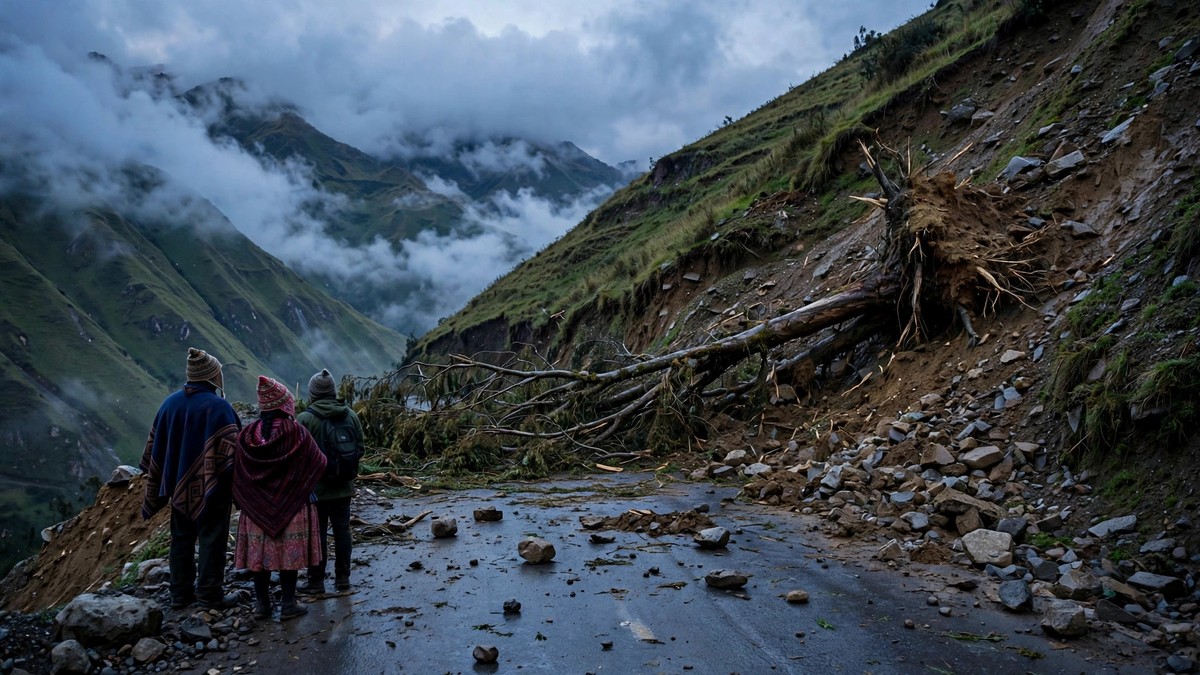
- Landslides and rockfalls hit hillsides near the epicentre, and emergency teams are still checking vulnerable areas.
- Germany’s GFZ research centre measured the quake at 6.8, while the US Geological Survey and Peru’s Geophysical Institute put it at 6.7.
What happened
The United States Geological Survey put the quake at magnitude 6.7 and placed its centre 34 kilometres north of Junín, at a depth of 108 kilometres. Peru’s own Geophysical Institute agreed on the size but put the depth at 129 kilometres and the centre about 30 kilometres north-west of the city. Germany’s GFZ research centre measured it slightly higher, at 6.8.
In Lima, the shaking sent people running into the streets. Hundreds left buildings in the Miraflores district, according to journalists from AFP, and television pictures showed lawmakers walking out of Congress as the tremor hit. The quake was also felt in Ancash, Ica, Ucayali, Cerro de Pasco, Huanuco and Callao. Peru’s emergency operations centre said it was felt with moderate to strong intensity, and the Geophysical Institute recorded shaking of intensity V in Junín.
Near the epicentre, the quake left its mark on the hillsides. Hernando Tavera, president of the Geophysical Institute, told AFP the shaking had been intense and that landslides and rockfalls had struck the slopes. A handout photograph from the Junín regional government showed a tree brought down by the tremor.
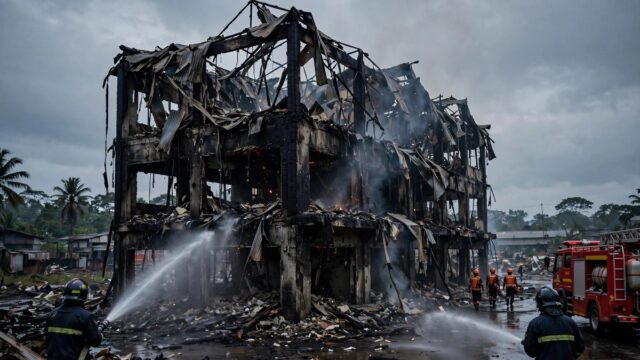
Damage stayed limited. Defence Minister Rafael Belaunde said minor damage had been reported to homes in several parts of Junín, along with power cuts and limits on highway traffic. He added that no injuries or health effects had been reported. The mayor of Carhuamayo, the town closest to the centre, told local television there were no victims and no material losses. A local council member in Junín province, Vicente Quispe, told broadcaster RPP that no damage had been reported at all. “This is the first time an earthquake of this magnitude has been felt in this area,” he said.
The US Tsunami Warning System said the quake posed no tsunami threat.
Why it matters
Peru sits on the Pacific Ring of Fire, where the Nazca plate dives beneath South America, and strong quakes are a fact of life. What saved Junín on Friday was depth and distance: the quake broke more than 100 kilometres down, and its centre lay in thinly settled high country rather than under a city. A shallow quake of the same size near Lima could have been a different story.
The region has had less luck this year. In July, a smaller earthquake in the same region killed six people and destroyed 52 homes. In August, a 6.7-magnitude quake in the southern Andes injured two people and damaged 22 homes, six health centres and a school.
Junín is also one of Peru’s mining heartlands, home to the Toromocho copper mine, one of the country’s largest. No damage to mines had been reported by Friday night, but the industry will be watching the damage checks closely.
The Peru quake came hours after a magnitude 4.2 earthquake woke Los Angeles on Friday, shaking homes across the basin with no damage reported. It was the second major natural disaster in the Americas this week, after flooding in South Florida dumped more than 15 inches of rain and shut schools.
What happens next
Peru’s National Emergency Operation Center said monitoring continued in vulnerable areas on Friday night, and teams were still checking for damage in the towns nearest the centre. Civil defence officials urged residents to stay alert, keep emergency supplies ready and stay clear of objects that could fall if the ground moves again.
The full damage picture will only emerge once checks in Junín’s remote towns are complete.
Sources: Reuters, Associated Press, AFP, TRT World, US Geological Survey, Peru’s Geophysical Institute. First published 21 November 2026. The earthquake took place on 20 November 2026.