A magnitude 4.2 earthquake woke Los Angeles at 3:25 a.m. on Friday, shaking homes across the basin hours after a stronger 5.1 quake struck the Central Coast, and fire crews found no damage or injuries.
Key Points
- A magnitude 4.2 earthquake struck near Commerce, California, at 3:25 a.m. on Friday 20 November, waking residents across the Los Angeles area.
- The shaking was felt from Lancaster to Poway, and more than 7,500 people told the US Geological Survey they felt it within the first hour.
- Fire crews from all 106 Los Angeles fire stations surveyed the city and found no significant damage or injuries by 5:28 a.m.
- Hours earlier, a magnitude 5.1 earthquake hit near Soledad in Monterey County, about 285 miles north, with 13 aftershocks of magnitude 2.5 or larger.
What happened
Los Angeles woke up shaking in the dark. At 3:25 a.m. on Friday, the ground moved under the city, rattling windows and sending thousands of people to their phones at once. The US Geological Survey put the centre of the quake about a kilometre north-west of Commerce, a city roughly five miles south-east of downtown Los Angeles, at a depth of about 17 kilometres.
Early readings of the quake’s size bounced between 4.2 and 4.4 before seismologists settled on 4.2 after review. The shaking was light — the strongest reports reached level IV on the intensity scale the USGS uses — but the quake sat almost directly under one of the biggest cities in the United States, so millions of people felt it. Reports came in from Pasadena, North Hollywood, Gardena and Riverside, and from Orange and San Bernardino counties, and the shaking was felt as far away as Lancaster in the north and Poway in the south.
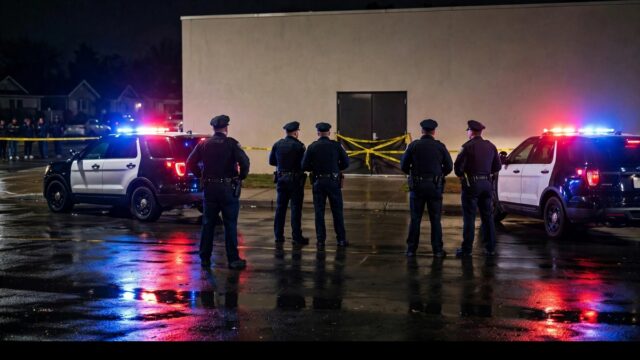
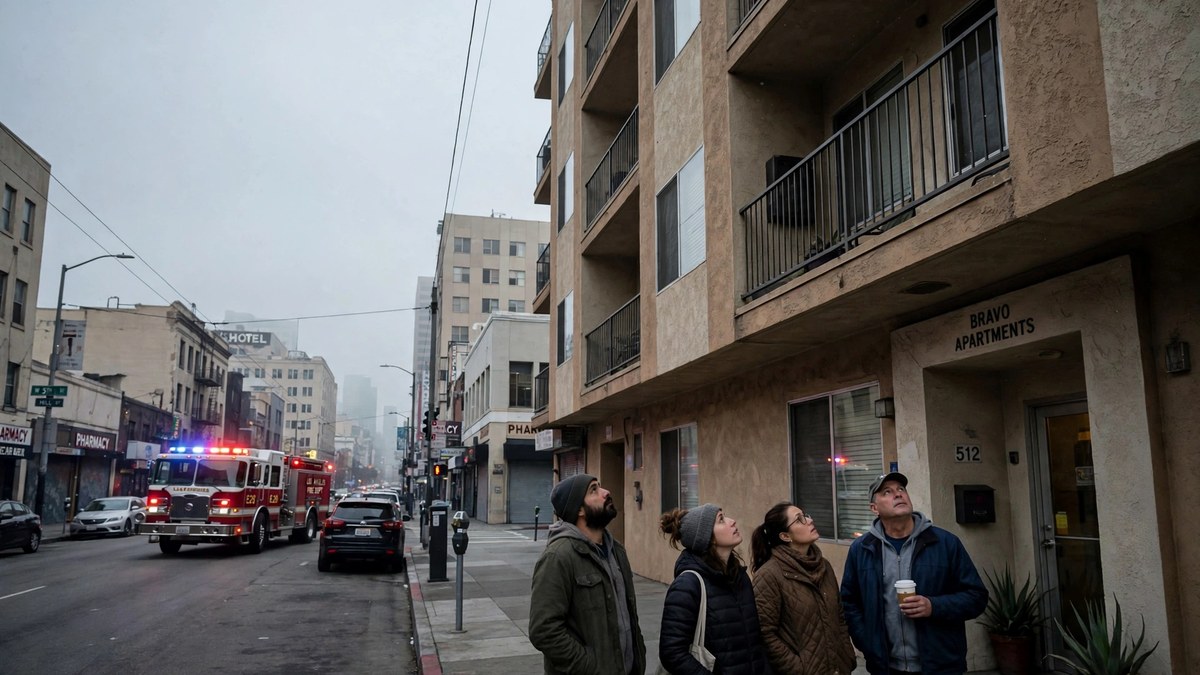
The Los Angeles Fire Department went into earthquake mode at once. Crews from all 106 neighbourhood fire stations fanned out across the city’s 470 square miles by land, air and sea, checking bridges, freeways, hospitals and other buildings that matter most. The survey was finished by about 4:30 a.m., and at 5:28 a.m. the department said it had found no significant damage to structures and no injuries. Normal operations resumed.
Mayor Karen Bass told residents on social media that the quake had “likely woke up many Angelenos” and added: “While unsettling, there are no immediate reports of damage or operational impacts, including at LAX.” The airport kept running normally.
Why the Los Angeles earthquake felt so strong
A 4.2 is a modest earthquake by California standards, and the damage it caused was nil. What made it news was where it happened and when. The epicentre lay under the heart of the Los Angeles basin, so the shaking reached homes across a metro area of millions rather than a stretch of empty land. And it struck at 3:25 a.m., when most of the city was asleep in bed — the worst possible hour for a rude awakening, and the reason more than 7,500 people had already filed shaking reports with the USGS within an hour.
The timing also fed the nerves. About four and a half hours earlier, at 10:49 p.m. on Thursday, a magnitude 5.1 earthquake had struck near Soledad in Monterey County, about 285 miles to the north and close to the San Andreas fault. That quake, first reported at 5.4 and later revised to 5.1, was followed by 13 aftershocks of magnitude 2.5 or larger, the biggest a 3.4. Two quakes in one night, hundreds of miles apart, were enough to put the whole state on edge — though seismologists stress the two events were separate, and the USGS has not tied the Los Angeles shaking to any single fault. The area sits above the Puente Hills blind-thrust system, which runs for more than 40 kilometres beneath the northern Los Angeles basin.
The two California quakes also arrived after a restless fortnight around the Pacific. A magnitude 5.7 earthquake in central Japan injured more than 20 people on 8 November, and a magnitude 6.1 quake struck off the Tokyo coast the day before. None of the events is linked to the others, but together they were a reminder that the Pacific rim never sits still for long.
What happens next
The USGS puts the chance of a magnitude 3 or larger aftershock near Commerce in the coming week at about 36 percent, and a magnitude 4 or larger at about 6 percent. By Friday morning, no aftershock of magnitude 1 or larger had been recorded within 20 kilometres of the epicentre. The fire department has asked residents to stay ready anyway — keep a torch and water handy, check gas and water connections, and look for fresh cracks in walls — and to follow the drop, cover and hold on routine if the ground moves again.
Scientists cannot say when or where the next big quake will hit, and the USGS is clear that reliable prediction is not possible. What the night did show is that the city’s response works: within two hours of the shaking, every fire station in Los Angeles had checked its patch and the all-clear was in. For a city that lives on fault lines, that is the number that matters most.
Sources: US Geological Survey, USA Today, Reuters, New York Post, MyNewsLA. First published 21 Nov 2026. The earthquakes took place on 19-20 Nov 2026.