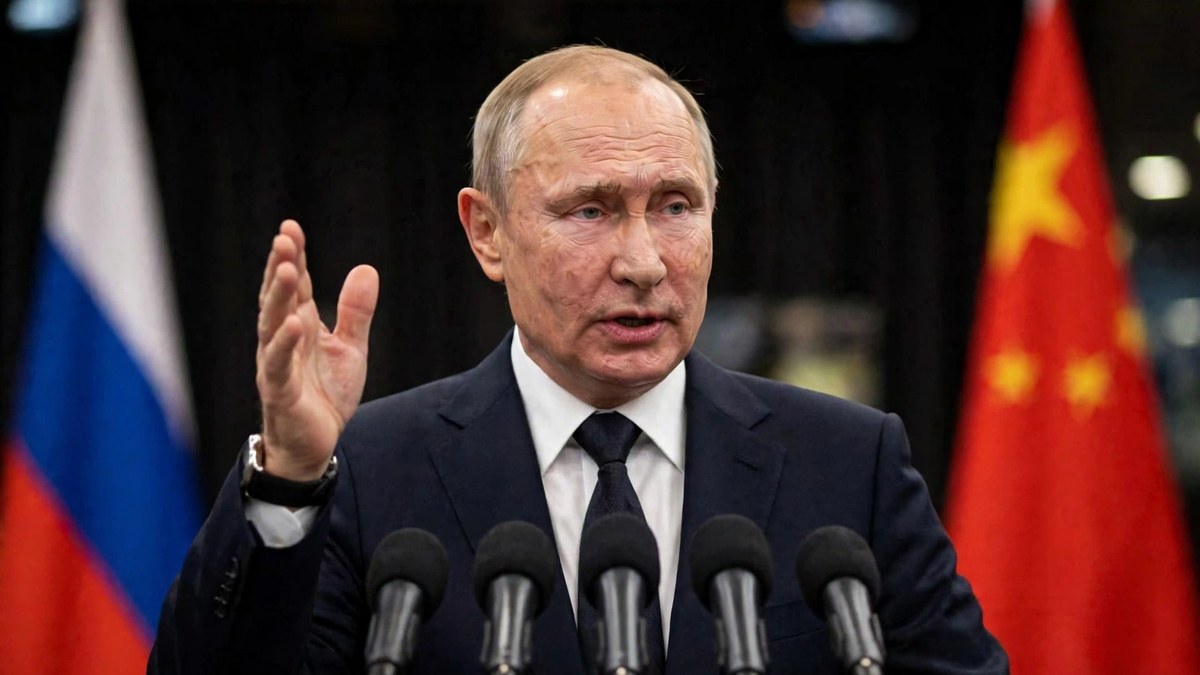
Vladimir Putin has vowed a “far more painful” response to Ukraine’s strikes on the Crimean Bridge, warning Moscow will hit back harder after the crossing was attacked for the third time in a week.
The warning came hours after the first-ever three-way meeting between Putin, Donald Trump and Xi Jinping in Shenzhen, and it shut the door on the one opening that had emerged from it: a possible pause in attacks at sea and on energy sites. Instead, the bridge strikes have pushed both sides further from any deal as winter sets in.
Key Points
- Putin vowed Russia’s response to the Crimean Bridge strikes will be “far more painful” than the attacks themselves.
- Ukraine struck the bridge for the third time in a week, hitting its railway section overnight on 19 November with Neptune missiles.
- The road section was seriously damaged when its arch collapsed on 17 November.
- Putin ruled out talks on a halt to strikes in the Black Sea or on energy infrastructure: “there will be no agreements. We will not negotiate.”
- The 19km bridge links Russia to Crimea, which Moscow seized in 2014; Putin calls it a civilian facility, while Kyiv says it supplies Russian forces.
- Zelenskyy arrived in Berlin on 19 November for a summit of European allies pushing for a role in peace talks.
What happened
Putin spoke to reporters in Shenzhen on Thursday, 19 November, shortly after sitting down with Trump and Xi in the first trilateral meeting of its kind. The talks, held at the APEC summit, produced a four-point joint declaration on the same day, but the bridge attacks hung over the meeting.
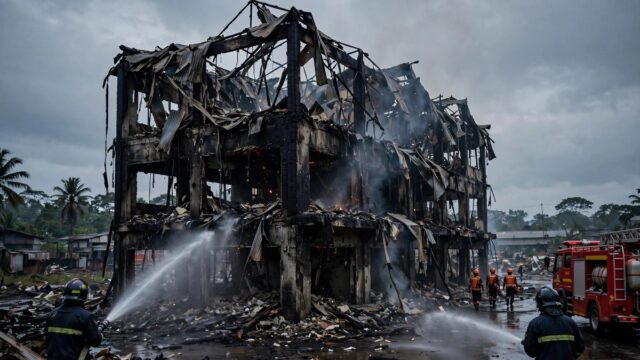
Ukraine’s armed forces said their navy struck the railway section of the bridge overnight, using Neptune coastal missile systems, and that train traffic was halted. It was the third attack on the crossing in a week: the road arch collapsed on 17 November, and another strike followed before the overnight attack on the railway.
Putin said the road section had suffered serious damage and promised the bridge would be rebuilt, adding that the railway section had already been repaired. He insisted the crossing was “an exclusively peaceful facility” and said it had not carried military equipment or oil for a long time. Kyiv disputes that, describing the bridge as a key supply line for Russian forces in Crimea and southern Ukraine.
The bridge, 19 kilometres long, is the only direct road and rail link between Russia and the peninsula Moscow seized in 2014, and it has become one of the most potent symbols of the occupation. Ukraine’s security service counts four attacks on it since the full-scale invasion began: in October 2022, July 2023, June 2025 and now November 2026.
Why Putin’s warning matters
Before the bridge strikes, Putin said he had raised the idea of a pause in attacks at sea and on energy facilities with Russia’s Security Council, and had asked officials to study whether some kind of agreement could be reached. That opening is now closed. “After the strikes on the Crimean Bridge, there will be no agreements. We will not negotiate,” he said.
The timing matters. The war is entering its fifth winter, with Russian strikes hammering Ukraine’s power and transport networks, while Ukraine has stepped up attacks on Russian oil facilities and the bridge itself. A limited truce covering the Black Sea and energy sites had been the most realistic near-term step towards easing the fighting; Putin’s remarks remove it from the table, at least for now.
The warning also lands as Europe scrambles for a seat at the table. Zelenskyy arrived in Berlin on Thursday for a summit of the “Coalition of the Willing”, co-hosted by the leaders of Germany, France and Britain, aimed at giving Europe a role in talks that have so far been dominated by Washington, Moscow and Kyiv. Putin said Russia had invited European officials to Moscow through diplomatic channels to discuss whether they should take part in the US-led talks. Kyiv has already warned that a US-floated European security framework could benefit Putin, and the question of a Donbas withdrawal in exchange for NATO membership remains unresolved.
What happens next
Free ferries between Kerch and Taman are due to start running from 20 November while the bridge is repaired, according to Crimea’s occupation authorities. The question now is what form Russia’s promised response takes, and whether it targets Ukraine’s energy grid, its ports, or something else entirely.
The joint declaration agreed in Shenzhen, covering UN reform, oil supply and nuclear risk, is separate from the fighting, and nothing in Putin’s remarks suggested the war itself is any closer to a settlement. With the bridge damaged and retaliation promised, the next days will show whether the escalation stays limited to the crossing or spreads wider.
Sources: Reuters, BBC, Kyiv Post, The New Voice of Ukraine, Al Arabiya, The Times, Vanguard | 20 November 2026, Kuala Lumpur time