Garcia’s 12 letters, sent Wednesday, tell Donald Trump Jr., Eric Trump, Jared Kushner, JD Vance, Stephen Miller and Todd Blanche to preserve their documents before Democrats take the House in January.
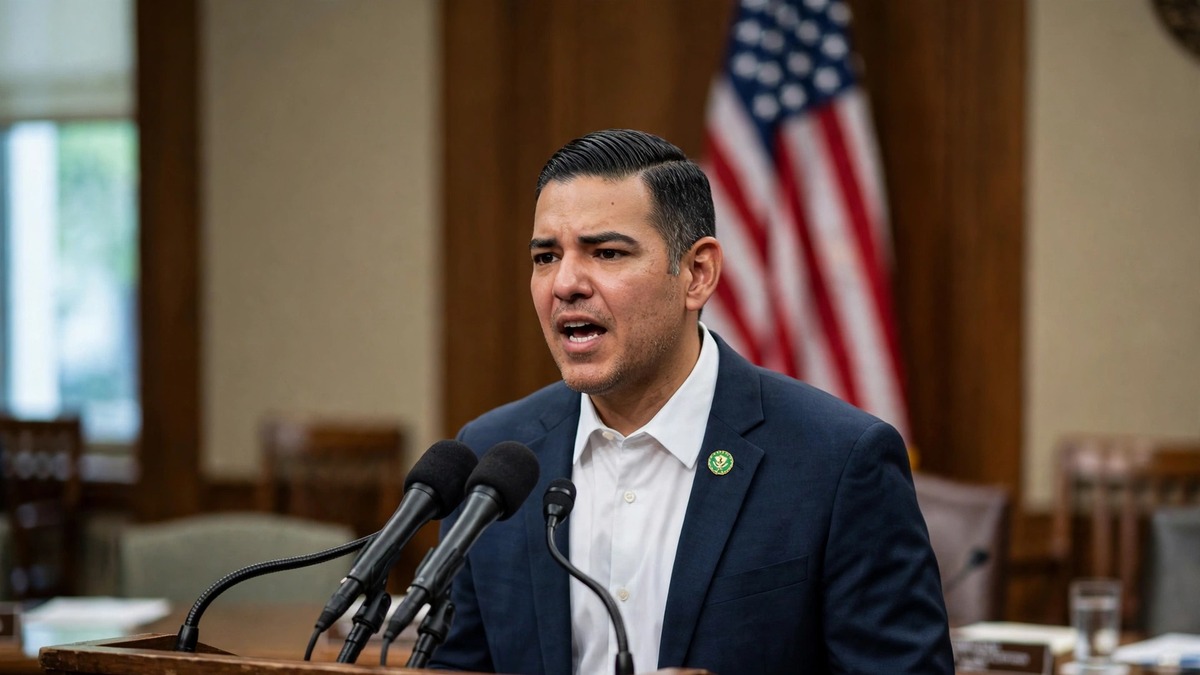
The letters went out Wednesday morning from Representative Robert Garcia of California, the Democrat expected to chair the House Oversight and Government Reform Committee when the new Congress convenes. Twelve went to figures in President Donald Trump’s orbit, and each one carries the same instruction: keep everything, because the committee is coming.
The list reads like a roster of the administration’s inner circle. Trump’s two sons, Donald Trump Jr. and Eric Trump, received letters. So did his son-in-law Jared Kushner, Vice President JD Vance, chief of staff Stephen Miller, former chief of staff Susie Wiles, Attorney General Todd Blanche, former ambassador to Greece Kimberly Guilfoyle, former Homeland Security Secretary Kristi Noem and her former adviser Corey Lewandowski. The final two went to Federal Bureau of Prisons Director William Marshall III and Tanisha Hall, the warden of the minimum-security camp in Texas where Ghislaine Maxwell is serving her sentence.
None of the letters can force anyone to hand over a single page. They have no legal force, and Democrats do not hold the gavel yet. What they do is put a dozen people on formal notice that the records exist, that the committee knows they exist, and that subpoenas will follow once the majority changes hands in January. Some of the letters ask for a response by December.
What happened
Garcia’s move is the first concrete step of the incoming Democratic majority, and it lands two weeks after voters handed Democrats both chambers of Congress. The Senate picture was settled when Mary Peltola beat Dan Sullivan in Alaska, giving Democrats a 56-44 majority, and the House changes hands at the same time. Garcia has been open about his plans since election night, when he posted a two-word warning on social media: “Lawyer up.”
The letters sketch out three lines of inquiry, and each one names its targets.
The first is the Trump family’s business. Garcia is signalling that Donald Trump Jr. and Eric Trump will face questions about their roles as co-founders of World Liberty Financial, the family’s cryptocurrency business. In his letter, Garcia describes the brothers as key players in “pay-to-play schemes” that “have raked in billions of dollars for the Trump family over the past several years.” A spokesperson for World Liberty Financial has previously said “no one at World Liberty Financial works for the U.S. Government” and that the company is “compliant with all U.S. laws.”
Garcia also raised Donald Trump Jr.’s wedding celebration, which was funded by Umar Kremlev, a Russian oligarch with ties to President Vladimir Putin. Kremlev has said the younger Trump paid him back, and the couple have described the celebration as an “extraordinarily generous wedding gift from a friend.” Garcia’s letter takes a different view: “Foreign interests also funded your lavish wedding celebrations, raising further concerns of pay-to-play schemes and foreign intelligence infiltration of the Trump family.”
Kushner, the president’s son-in-law and a U.S. special envoy, faces questions about his business dealings and his government work. Garcia raised concerns that “hundreds of millions of dollars in management fees, business opportunities, and other financial benefits are serving as disguised payoffs for policy changes, preferential treatment, relief from legal scrutiny, and access to sensitive government information and technology.” Kushner has repeatedly denied using his father-in-law’s position for personal gain.
The second line of inquiry is immigration enforcement. Garcia outlined plans to investigate “the violence, abuse, and corruption carried out by the Department of Homeland Security” under Miller’s direction. The committee says it has found 1,165 instances of concerning uses of force, arrests, deportations and enforcement actions at sensitive locations, along with other “acts of intimidation or retaliation.”
Miller, now the White House chief of staff, was described by administration officials as the “linchpin” and “architect” of the administration’s toughest policies. Garcia wrote to him: “We have documented, and will continue to document, your role in orchestrating, overseeing, and defending these abuses.” Noem, who was forced out of Homeland Security in March, was accused of having “abused DHS funds, undermined career employees, circumvented established safeguards that prevent corruption, and used your position to enrich yourself and associates of the Trump Administration.” Her former adviser Lewandowski is being probed over alleged kickbacks from GEO Group, which runs private detention facilities for migrants. Lewandowski has previously denied demanding payments from the company.
The third line is the Epstein files. Garcia is probing how the administration handled the investigative material related to Jeffrey Epstein, the late convicted sex offender, and the people and institutions accused of aiding his crimes. His letter to Vance asks the vice president to identify every meeting officials held on the Epstein files. Garcia is also seeking information about the administration’s response to the law Congress passed last year requiring the files to be made public, a release lawmakers in both parties have criticised as incomplete. Justice Department officials have said they did their best to meet the law’s disclosure requirements, but Democrats want sworn testimony from Blanche, who played a central role in overseeing the release.
Garcia also demanded answers about the decision to move Maxwell, Epstein’s co-conspirator, to a lower-security federal prison, where she is serving a 20-year sentence. He wrote to Marshall and to Hall, the warden of the camp where Maxwell was moved, after the Justice Department and the Bureau of Prisons “failed to meaningfully respond to any of our inquiries.”
There was a side letter, too. Garcia wrote to Catherine Townsend, chief executive of the Trust for the National Mall, asking about donations by private companies to support Trump’s White House ballroom. Among the companies named is Nvidia, which Garcia notes “donated millions to the Trust for the National Mall shortly after receiving permission from the Trump Administration to sell advanced microchips to the People’s Republic of China.” Nvidia has maintained that its donation had nothing to do with any business interests.
Why the Garcia letters matter
The letters matter because they turn a campaign promise into a paper trail. For two years Democrats were largely stonewalled by the administration, and their oversight threats carried no subpoena power behind them. That changes in January, when Garcia expects to take the gavel and the committee gains the power to compel testimony and documents. The letters tell the targets, in writing, that the clock is already running.
They also show how wide the net will be. The three main lines of inquiry reach into the family’s money, the deportation campaign and the Epstein files at the same time, and the side letters reach further still. Democrats on the House Judiciary Committee are separately opening an investigation into Cantor Fitzgerald, the financial services firm once led by Commerce Secretary Howard Lutnick, over claims it profited from the recent Nvidia scandal. Treasury Secretary Scott Bessent has accused Lutnick of delaying a decision to label Megaspeed, a major Nvidia customer, a possible national security threat. Cantor called the claims “inaccurate” and said the suggestion that its work influenced government decisions was “baseless.”
The top Democrat on the House Foreign Affairs Committee, Gregory Meeks, has separately demanded that the State Department and six other agencies preserve their records as Democrats prepare to examine the Iran war, a Venezuela oil deal, military boat strikes in the Caribbean and the dismantling of USAID. His letters ask the agencies to confirm in writing by November 18 that they will comply with the laws on preserving federal records.
Garcia framed the letters as the start of a mandate. “Voters gave Congressional Democrats a sweeping mandate to root out corruption and ensure that the government is accountable to the people,” he wrote. “We intend to act on that mandate in the 120th Congress by conducting the critically important oversight essential for legislative reform.” In a separate statement he added: “Oversight Democrats are fighting to put an end to this Administration’s self-dealing, misconduct, and abuse. These investigations will lay the groundwork for legislation which helps all Americans. This is just the beginning.”
What the other side says
The White House has not stayed quiet. It warned Garcia and other Democrats that their planned investigations could expose them to criminal investigation, and White House counsel Will Scharf wrote to Garcia on November 9 that oversight efforts “may cross the line into blatant criminality.” Scharf has also said the administration “will not be extorted” and that federal employees must obtain approval before testifying before Congress.
Trump himself weighed in on November 7, four days after the midterms, calling the Democrats who had sent “threatening letters” to his officials “EXTORTIONISTS” and saying “These SLEAZEBAGS should go to jail for what they are doing.” He said he was ordering the Justice Department “to look into this criminal act, immediately.” The next day, Blanche told CNN that criminal charges against Democrats were possible, saying “yes, there could be” criminal conduct in their statements.
The White House and the Justice Department did not immediately respond to requests for comment on Garcia’s letters. The Trump brothers and Kushner did not immediately return requests for comment either, and the White House has repeatedly denied that Trump or his family members have engaged in any conflicts of interest.
What happens next
The letters set up a fight that will run for the rest of Trump’s term. Administrations of both parties have typically treated senior White House officials, especially chiefs of staff like Miller and Wiles, as immune from compelled testimony, so the coming subpoena battles are likely to end up in court. Garcia’s letters anticipate that, with each one describing the investigations as “essential for legislative reform,” the standard Congress must meet to justify its inquiries.
The first test comes in December, when some of the letters request a response. The bigger test comes in January, when Democrats take control of the committee and the preservation notices turn into subpoenas. Garcia has already shown he will not wait for permission: the White House warned him the probes could be a crime, and he mailed the letters anyway.
Key Points
- Rep. Robert Garcia sent 12 preservation letters Wednesday to Trump’s sons, son-in-law, vice president, chief of staff, attorney general and others, telling them to save their documents.
- The letters cover the Trump family’s crypto business, the Epstein files and alleged abuses at Homeland Security.
- The letters have no legal force yet. Democrats gain subpoena power when they take the House in January.
- The White House warned Garcia the probes “may cross the line into blatant criminality.” Trump called Democrats “EXTORTIONISTS” on November 7 and said he ordered the Justice Department to look into them.
Sources: Politico; CNN; Associated Press; CNBC and Al Jazeera reporting on President Trump’s November 7 Truth Social post. Published Wednesday, 18 November 2026.