The FAA has stopped installing new Juniper routers after one fitted in Arkansas flooded the air traffic control network and forced a nationwide ground stop on Friday.
The decision, announced on Tuesday, leaves the agency running on equipment built 25 years ago while investigators still cannot explain why the new device brought the system down. More than 18,000 flights were cancelled between Friday and Sunday, and hundreds of thousands of passengers were left stranded.
Key Points
- The FAA paused Juniper router installations on Tuesday and switched off the units already fitted, after a new router in El Dorado, Arkansas, was linked to Friday’s nationwide ground stop.
- The router flooded the network with 1,000 connection attempts every four to five seconds, disrupting communications and radar at 17 of the FAA’s 22 regional control centres.
- More than 18,000 flights were cancelled between Friday and Sunday, with about 27,000 delayed.
- Investigators have recreated the failure but have not found its root cause. Testing is under way at an L3Harris laboratory in Florida, with the FBI present.
- The Trump administration has asked Congress for $50.1 billion to modernise air traffic control and airports.
What happened
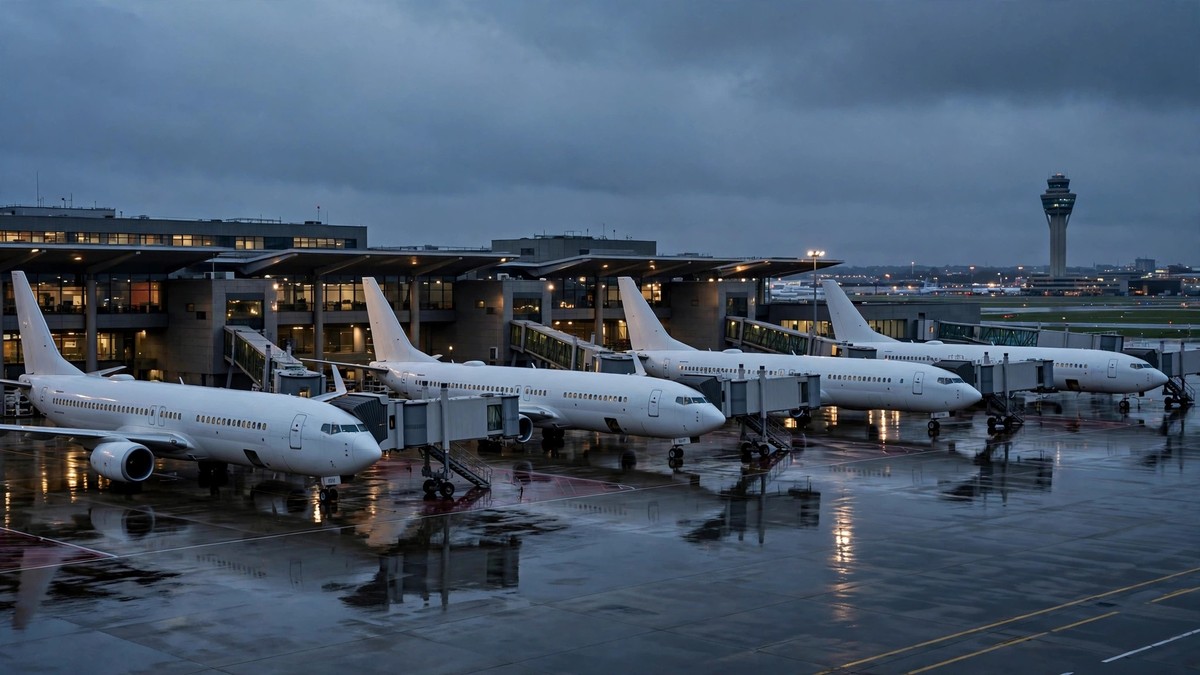
Trouble started on Friday afternoon, when the FAA began to see instability in radar and communications systems at its regional control centres. At 3:36 p.m. Eastern Time, controllers were losing reliable contact with aircraft. The agency ordered every departure in the country held. The stop lasted more than four hours before flights were allowed to move again that evening, the longest nationwide halt to US departures since the September 11 attacks.
The fault was traced to a radio communications site in El Dorado, Arkansas. A crew from L3Harris Technologies, the contractor that maintains the FAA’s telecom network, had just fitted a new Juniper router there as part of a switch from old copper lines to fibre-optic cable. The router began broadcasting into the network, sending about 1,000 connection attempts every four to five seconds. The flood overwhelmed the 25-year-old Cisco routers still running the system, and communications and radar feeds grew unstable at 17 of the FAA’s 22 en route centres, which guide aircraft at cruising altitude.
Investigators are also looking at a radar site in Amarillo, Texas, where a router had been replaced three weeks earlier. The disruption spread fast. Airlines cancelled 9,201 flights on Friday alone, according to FlightAware data, and 18,236 across the three days to Sunday. About 27,000 flights were delayed over the weekend. By Monday, cancellations had fallen to about 300, and schedules were largely back to normal.
Why it matters
The failure exposed how much of American aviation still runs on old equipment. The Cisco routers at the heart of the network were made in 2001 and were due to be replaced in 2006. More than 45,000 flights a day depend on the system they serve. Congress approved $12.5 billion last year to modernise it, much of it earmarked for replacing copper wire, floppy disks and radars built in the 1980s, but the work is far from done.
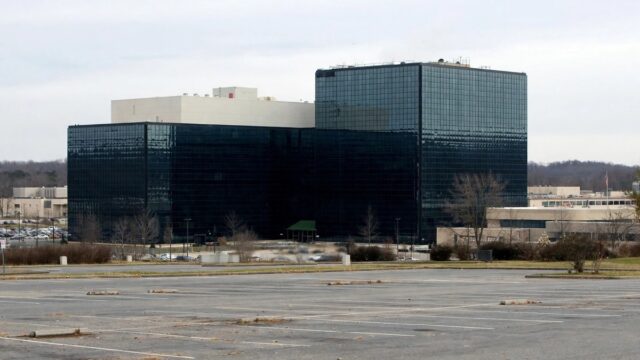
It was also the latest in a run of technology failures to hit American systems in the past week. The NSA’s classified network went down on Monday, United Airlines suffered a system outage that disrupted flights, and Chase customers were hit by a banking outage.
The router programme itself is large. L3Harris plans to fit 3,648 Juniper routers across the network. About 400 have been installed so far, and 69 are in service. The unit in El Dorado was the 69th. The 68 fitted before it caused no problems, which is part of why the failure has puzzled investigators.
Nobody can yet say what went wrong. “We’ve been able to recreate what happened in El Dorado, but the root cause of what happened, we don’t have clarity yet,” Transportation Secretary Sean Duffy told reporters on Tuesday after meeting senators. Hewlett Packard Enterprise, which owns Juniper, said its equipment was working as configured. FAA Administrator Bryan Bedford said the agency believed the router’s broadcasting feature had been switched off and did not know how its settings had changed. Bedford also said claims that artificial intelligence played a part in the outage were unfounded.
The politics moved fast. Thirteen Democratic senators on the Commerce Committee wrote to Duffy on Tuesday demanding that new installations stop until the cause is found. “Identifying the device that failed does not establish why it failed. FAA must investigate further to determine the root cause and report to Congress on how it intends to prevent future issues,” the letter said. President Donald Trump blamed old technology and Democrats for the grounding. Duffy, speaking over the weekend, spread the blame wider: “I can’t apologize for what was passed on to us. And I can’t blame Republicans or Democrats, because it’s all of them. It goes back, 20, 25, 30 years of a lack of investment.”
Money is now the argument. On Tuesday the Trump administration sent Congress an updated request for $50.1 billion to modernise the system and improve airports, including $10.1 billion for air traffic control, five new control centres and work on up to 140 towers. Duffy had said on Friday that $50 billion was needed.
What happens next
Testing continues at the L3Harris laboratory in Florida, where the FAA, Cisco and the FBI are examining the routers pulled from El Dorado and Amarillo. No new routers will go in until the cause is understood, and the FAA has switched off the broadcasting function on the new units and 60 other routers as a precaution. For now the network runs on the old Cisco equipment.
Duffy insists the copper-to-fibre work cannot stop. He said the Biden administration replaced 19 percent of the telecom network and his administration has replaced just over 50 percent in a year. “We do have to get this work done. Otherwise, staying on the old system for longer is going to mean more risk,” he said.
The next test comes at Thanksgiving on 26 November. Duffy said flight operations should be back to normal by then. Congress now has to decide on the $50.1 billion request, and the Senate committee is waiting for the FAA’s report on what failed and how it will be stopped from happening again.
Sources: Associated Press, Reuters, The Wall Street Journal, USA Today, The Points Guy and FlightAware. Published 18 November 2026.