KEY POINTS:
- Iran’s Revolutionary Guards say combat drones hit a US-operated radar at Sheikh Isa Air Base in Bahrain on Tuesday morning.
- Bahrain says its armed forces intercepted the attack, after residents were told to seek shelter; an all-clear came later.
- It is the third Iranian drone attack claim on Bahrain in five days, after strikes on Friday and Sunday.
- No damage or casualties have been confirmed, and the US military has not commented.
- The attack comes as a third US aircraft carrier arrives in the region and peace talks stay deadlocked.
What happened
Explosions sounded over Manama on Tuesday morning, hours after Iran’s Revolutionary Guards said they had sent combat drones against a US radar system in Bahrain.
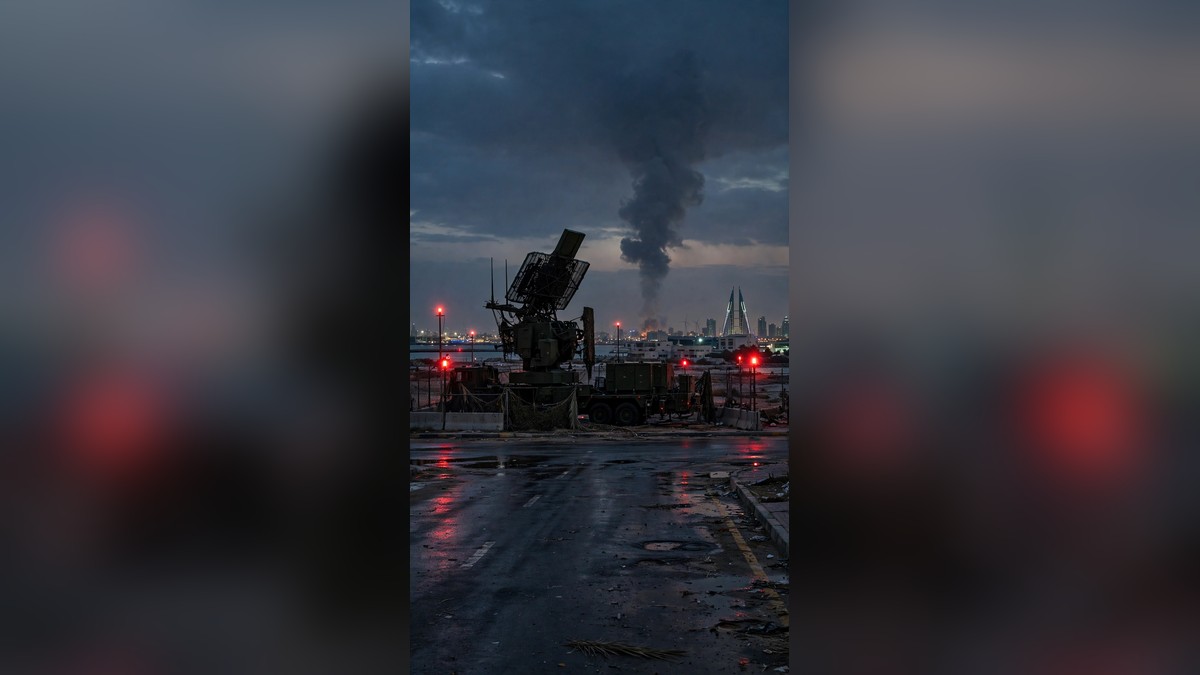
In a statement carried by the Guards’ Sepah news website and Iranian state broadcaster IRIB, the force said its drones had carried out what it called a precision operation against a radar operated by American forces at Sheikh Isa Air Base. It described the strike as an answer to what Tehran calls repeated violations of Iranian airspace by US military drones.
Bahrain’s Interior Ministry sent a mobile phone alert to residents warning of a potential threat and telling them to move to the nearest safe location. An AFP journalist in the capital reported blasts echoing across the city. State television later said the kingdom’s armed forces had intercepted Iranian aerial attacks, and the ministry issued an all-clear message while saying precautionary measures would stay in place.
The two accounts do not agree. The Guards describe a strike on the radar; Bahrain describes an attack stopped in the air. Nothing released so far settles whether any drone reached its target, whether the radar was hit, or whether the blasts people heard were interceptions, impacts, or both. No casualty or damage figures have been reported, and the US military has not commented on Tuesday’s claim.
The Guards also warned that further violations of Iranian airspace, or the use of military bases in the region for attacks on Iran, would not go unanswered, and said American commanders would bear the consequences.
Why it matters
This is the third time in five days that Iran has claimed a drone attack on Bahrain, after weeks in which the kingdom had been quiet. On Friday, the Guards said they had destroyed a US early-warning radar in Bahrain; the US military said it shot down two Iranian drones, with no injuries and no damage. On Sunday, the Guards said they launched six drones at a US air-defence radar at the Al-Riffa helicopter base; Bahrain said its defences had intercepted several incoming attacks.
The pattern is the story. Al Jazeera’s correspondent in Tehran said the rules of engagement appear to have changed since Friday, with Iran now trying to restore deterrence. Tehran had warned that if the US escorted ships through the Strait of Hormuz without coordinating with Iran, it would strike American military installations. It now frames the Bahrain attacks as a response not to one incident but to continued US drone flights over Iranian airspace.
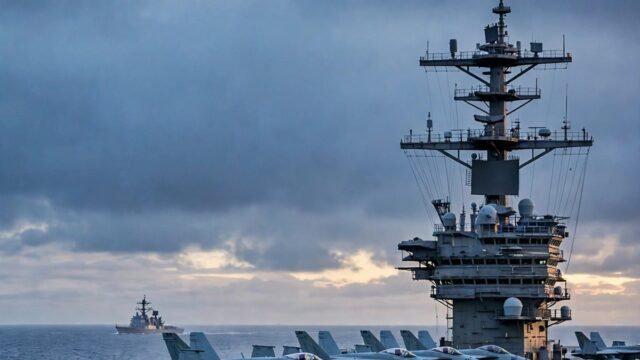
Bahrain matters because it hosts the headquarters of the US Navy’s Fifth Fleet in Manama, and it has been hit repeatedly since the war between the United States, Israel and Iran began on 28 February. The kingdom was heavily targeted earlier in the war, then peaceful for weeks until Friday. The return of attacks on three days out of five puts a Gulf capital back on the front line, and it comes the day after a third US aircraft carrier, the USS Theodore Roosevelt, arrived in the region.
Washington’s response so far has been words. Secretary of State Marco Rubio condemned Iran’s attacks on Bahrain in a call with the Bahraini foreign minister on Monday, and the State Department said the United States stood by the security of Bahrain and its other Gulf partners. The US Embassy in Bahrain has also warned American citizens of possible armed attacks.
The tension is not only military. On Monday, a Bahraini court sentenced 64 people to life in prison and five more to 15 years, after convicting them of belonging to an organisation allegedly linked to the Guards and seeking to overthrow the government. Among those given life terms was the prominent Shia cleric Sheikh Isa Qassim, who has lived in Iran since 2018. Iran’s foreign ministry condemned the sentences as cruel and rejected the claim that the defendants were linked to Tehran. Bahrain told a United Nations conference on Monday that the Iranian strikes violate international law.
What happens next
The immediate question is whether the United States answers the third attack differently from the first two. After Friday’s claim, the US military said it had shot down the drones; after Sunday’s, Bahrain said its defences had stopped them. Neither side has shown evidence of what happened to the radar, and no American statement on Tuesday’s attack had appeared by the time of publication.
The wider question is whether the Bahrain attacks keep escalating while diplomacy stays frozen. The war is on the agenda for an unprecedented trilateral summit this week in Shenzhen, where President Donald Trump is due to meet China’s Xi Jinping and Russia’s Vladimir Putin. The leaders are expected to discuss Iran, among other issues.
For now, the pattern points one way: Iran has claimed three attacks on Bahrain in five days, each aimed at an American radar, each met by an interception claim, and each followed by a warning that more will come. The last two attacks were both described as retaliation. The next test will be whether a fourth follows, and whether Washington treats it as a strike to be shot down or an escalation to be answered.
Sources: Al Jazeera; AFP (via Malay Mail); Reuters (via Dawn and Free Malaysia Today); Tasnim News Agency (via Shafaq and Rudaw); Türkiye Today; Gulf News. Published 17 November 2026, 18:30 +08. The strike itself is claimed by Iran’s Revolutionary Guards and has not been confirmed by any outside source; Bahrain says the attack was intercepted.