President Volodymyr Zelenskyy said on Saturday that speed limits on Starshield, the military satellite network Ukraine’s drones rely on, are back — and are letting Russian drones through to hit the country’s power grid.
The claim puts Kyiv in open dispute with SpaceX, which denies any change. It also leaves a basic question unanswered: who controls the switch. Musk has pointed at the Pentagon. Senior American officials have given conflicting accounts. And with winter coming, every night of strikes tests how much of Ukraine’s air defence still works.
Key Points
- Speed limits on Starshield terminals are back at 161 kilometres per hour (100 mph), President Volodymyr Zelenskyy said on Saturday. Ukrainian units have detected the cap for five days.
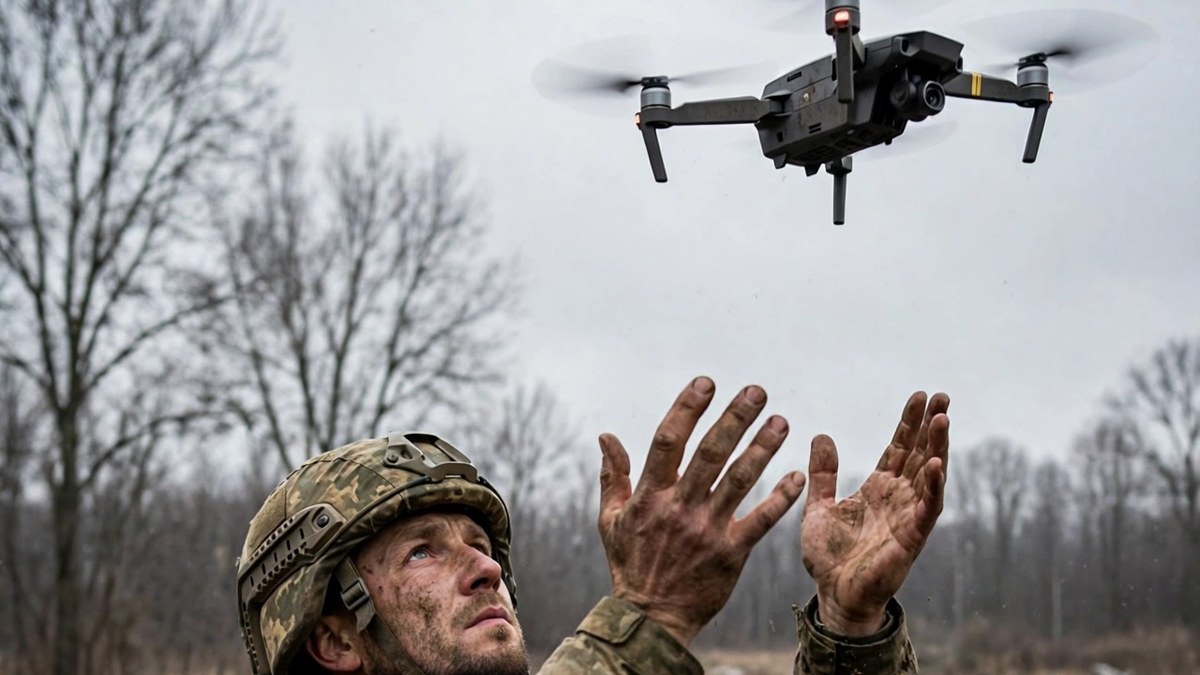
- Drones flying faster than that lose their connection. Ukrainian interceptor drones can no longer catch Russian jet-powered Shahed drones, which fly at 400 to 600 km/h.
- An energy facility in Odesa was hit in the latest overnight barrage, cutting power to 41,000 households, the DTEK energy company said.
- SpaceX denies any change. “This is false. There has been no change,” a company spokesperson told Ars Technica.
- Two Democratic senators ordered SpaceX on 13 November to preserve records about the restrictions.
What happened
Zelenskyy said in remarks released on Saturday that the speed cap on Starshield, the military version of SpaceX’s Starlink network, had returned. Ukrainian forces use the network to steer the interceptor drones that hunt Russian attack drones, and to strike targets in occupied territory.
According to Zelenskyy, Ukraine’s defence ministry raised the slowdown with SpaceX. The company replied that it was imposing no restrictions and blamed a technical problem. “We do not believe that is the case,” Zelenskyy said. He said daily tests by Ukrainian units across several sectors of the front keep confirming the cap, and that it affects the entire front line.
The limit bites hardest where Ukraine’s own drones operate in Russian-held ground. Anything moving faster than 161 km/h drops off the network. That leaves interceptor drones unable to chase jet-powered Shaheds, which cruise at 400 to 600 km/h. It also limits Ukrainian strikes against military targets on occupied ground. Zelenskyy said the restriction amounts to treating that land as if it were no longer Ukraine’s. “If you impose restrictions there, you are already partially recognising the temporarily occupied territories as not ours,” he said, as quoted by Reuters.
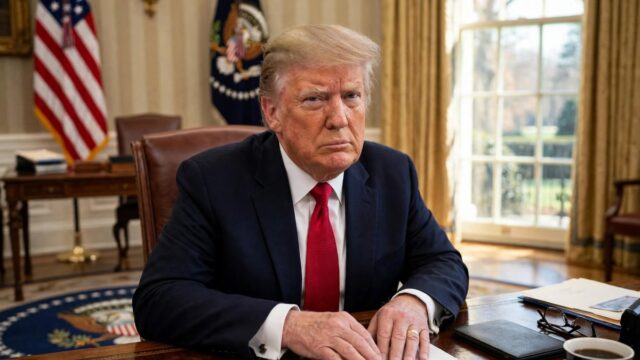
It is the second such cap in a month. A similar cap appeared in mid-October and was lifted on 24 October. In that first episode, Elon Musk wrote on X that Starshield systems are owned and controlled by the US government, and that any limits are decided by the US military and ultimately the president. The Wall Street Journal later reported that Musk had personally authorised the slowdown, and Musk then said the decision was his. The Telegraph reported that Musk had proposed the limits to President Donald Trump, who approved them.
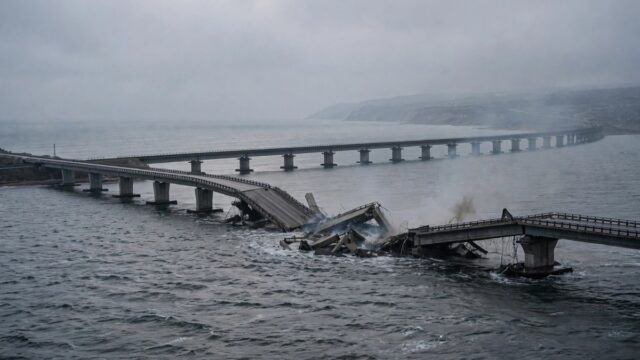
The timing matters. Russia has stepped up attacks on Ukraine’s energy system as winter approaches. An energy facility in Odesa was hit in the latest overnight barrage, leaving 41,000 households without electricity, DTEK said in a Telegram statement. Overnight, Ukrainian air defences shot down 106 of the 132 drones Russia launched, the army said. A Russian drone strike on Saturday killed two people in the northern Koriukivka region, hitting a site Ukrainian officials described as “critical infrastructure”. On Sunday, Russia’s defence ministry said its forces had struck Ukrainian military airfields and ammunition depots.
Why the Starshield limits matter
The dispute is about who controls the switch, and nobody in public has settled it. Musk has pointed at the Pentagon. Senior American officials have given conflicting accounts of the company’s authority. A bipartisan group of nine senators asked the Pentagon’s inspector general in October to investigate whether American officials directed, approved or knew in advance about the earlier disruption. The inspector general declined.
That gap is now a formal fight in Washington. Democratic senators Jeanne Shaheen and Chris Coons sent SpaceX a preservation demand on 13 November covering contracts, technical specifications, network logs, directives and communications. The Wall Street Journal reported that Democrats had ordered Musk to preserve records over Ukraine Starlink access.
The pressure lands in the middle of US-brokered talks. US negotiators have travelled to both countries in recent days to push for a ceasefire, as friction grows between Washington and Kyiv over Ukrainian strikes on Russian oil refineries. Zelenskyy also revealed that US envoys Jared Kushner and Steve Witkoff had asked whether Ukraine would give up the Donbas region in exchange for NATO membership or NATO-like security guarantees. The idea was raised during talks in Abu Dhabi on 10 and 11 November, which ended without a breakthrough on a ceasefire but produced agreement on a prisoner exchange of more than 1,000 people. Zelenskyy warned last week that a US-floated security framework could benefit Moscow. The Abu Dhabi talks are covered in detail here, including the prisoner exchange agreed there.
Ukraine’s foreign minister, Andrii Sybiha, pushed back on Sunday against Russia’s proposal to rewrite Europe’s security order. “Putin is throwing around ideas about reshaping the European security order. In his dreams, he sees himself in Yalta in 1945. The problem is that to put forward ideas of this magnitude, you first need to win a world war,” he said.
What happens next
SpaceX has not said when, or whether, it will hand over the records the senators demanded. The preservation demand keeps the paper trail open while the dispute over who ordered the limits stays unresolved.
On the ground, the coming winter will be the real test. Russia is hitting substations and power plants night after night, and each strike that gets through leaves more homes dark. Ukraine will keep testing the network daily, and Zelenskyy has made clear Kyiv will keep the complaint public until the cap lifts.
In Shenzhen this week, President Donald Trump is scheduled to meet China’s President Xi Jinping and Russia’s President Vladimir Putin. Ukraine is not on the agenda for that meeting.
Sources: Al Jazeera, Reuters, The Guardian, Business Today, Times of India | 16 November 2026