Army Major Stephen Ramsbottom, who survived the drone strike that killed six American soldiers in Kuwait, has told Congress that senior leaders ignored warnings the base could be hit from the air.
His complaint, filed on Friday, turns the deadliest attack on American troops in the Iran war into a question of accountability. It lands as Democrats prepare to open wide investigations into the war when they take control of Congress in January, and as the Pentagon declines to answer whether the soldiers had the protection they needed.
Key Points
- Major Stephen Ramsbottom says Army leaders ignored repeated warnings that Port Shuaiba, Kuwait, had no defence against drone attack.
- An Iranian drone hit the US command post there on 1 March 2026, killing six soldiers and wounding dozens.
- Ramsbottom filed a whistleblower complaint with Congress on 13 November and spoke to CBS 60 Minutes.
- Senator Richard Blumenthal has demanded a classified briefing from Defence Secretary Pete Hegseth. The Pentagon declined to comment.
What happened
On 1 March 2026, a day after the United States and Israel opened the war with Iran, an Iranian one-way attack drone struck the American command post at Port Shuaiba, a port in Kuwait about 65 miles from Iran. The drone hit the centre of the trailer where the operations team worked. Six Army Reserve soldiers died in the strike, and dozens more were wounded. They were the first Americans killed in the war.
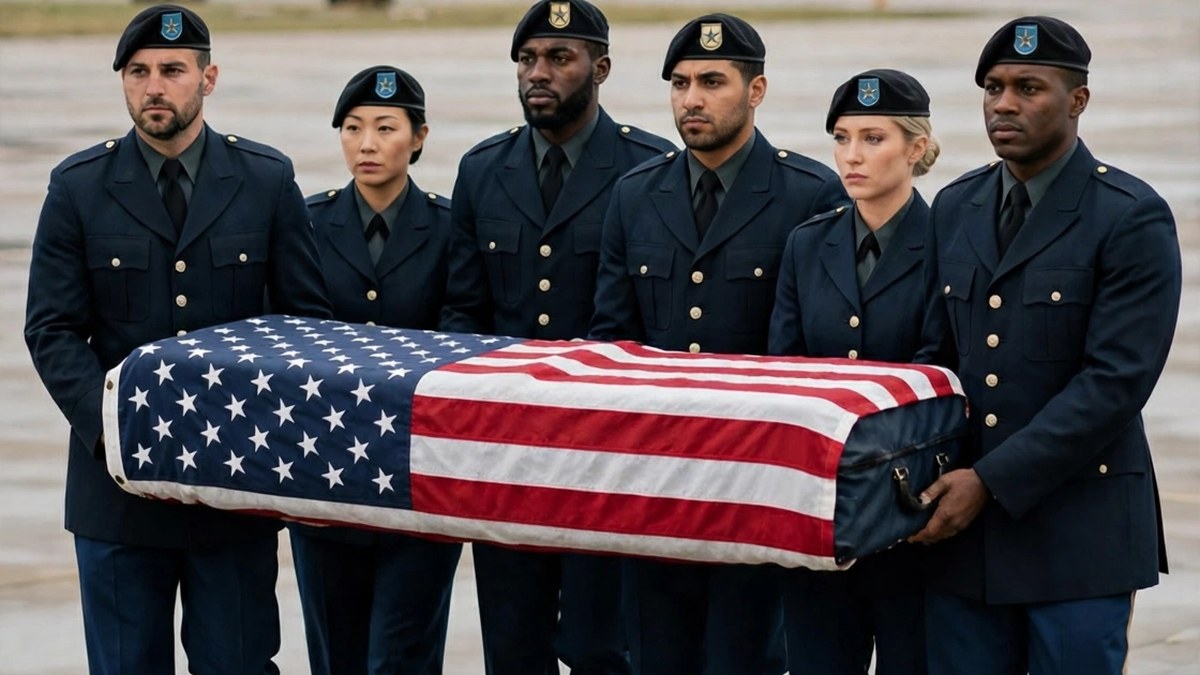
The dead were Jeffrey O’Brien, 45; Robert Marzan, 54; Cody Khork, 35; Nicole Amor; Noah Tietjens; and Declan Coady, 20. Their bodies were flown home to Dover Air Force Base in Delaware, where President Donald Trump attended the dignified transfer on 7 March.
The soldiers belonged to the 103rd Expeditionary Sustainment Command, an Army Reserve unit based in Des Moines, Iowa. About 70 of its members had been sent to Shuaiba after the Pentagon moved 90 percent of its ground forces out of Kuwait ahead of the war, fearing Iranian retaliation.
Ramsbottom, the unit’s deputy chief of operations, was among the wounded. He has since been selected for promotion to lieutenant colonel.
The warnings
Ramsbottom says he raised the danger before the strike and was brushed aside. In an interview with CBS 60 Minutes that aired on Sunday, he said he told senior officers the post had no defence against an attack from the air and was told: “We don’t have to worry about protection.”
He said he warned Major General John Hinson, the officer in charge of logistics for US Central Command, and that the unit’s commander, Brigadier General Clint Barnes, was also told about the threat. Six soldiers told the programme they had seen American intelligence that listed Shuaiba as an Iranian target. “There was definitely an X where we were,” Ramsbottom said.
A counter-drone system was promised by the unit’s senior enlisted soldier, Ramsbottom said, but it never arrived at Shuaiba, and he does not know whether it was ever ordered. The post’s defences, he said, were built to stop car bombs. “There was nothing there designed to protect from an aerial attack,” he said.
The site was short of medical cover too. According to the complaint, it had no physician, no fixed aid station and only one ambulance. A civilian medic who treated the wounded said the supplies in his truck were enough to keep two people alive at most.
The night before the strike, five small quadcopter drones were seen circling the port, apparently watching the base. An all-clear sounded at about 9 a.m. on 1 March. About 30 minutes later, the attack drone hit.
The complaint
Ramsbottom filed his whistleblower complaint on Friday 13 November with the leaders of the House and Senate Armed Services Committees and with the ranking member of the Senate Permanent Subcommittee on Investigations. His lawyers also filed a confidential complaint with the Defence Department’s inspector general, calling for an independent investigation.
In the interview, Ramsbottom took a share of the blame himself. “I feel this is a tactical failure by the Army, our leadership, and myself, all the way down to my level,” he said. “We just did not plan this well, and this needs to be a lesson that we learn.”
Speaking two days after the strike, Defence Secretary Pete Hegseth called the drone a “squirter” that had slipped through, and said the operations centre it struck was fortified.
The Army finished its own investigation into the attack in the summer, but its findings have not been made public. Families of the dead are being briefed on the findings this week. One mother told 60 Minutes the briefing she received did not acknowledge any mistakes.
Why it matters
The complaint puts the Pentagon’s planning for the war’s first American deaths under formal scrutiny, with Congress now holding the file. Senator Richard Blumenthal, a Connecticut Democrat and the ranking member of the Senate Permanent Subcommittee on Investigations, has demanded that Hegseth appear for a classified briefing and hand over all force-protection assessments for Port Shuaiba.
“The families of the six fallen servicemembers, the wounded survivors, and the American people deserve transparency and accountability,” Blumenthal said.
The Pentagon declined to comment on Ramsbottom’s claims, including whether the unit was denied adequate force protection. Generals Hinson and Barnes did not respond to requests for comment from CBS. The Pentagon puts the cost of the war so far at $47 billion. Trump said this month the war was effectively over, though strikes and attacks have continued.
The allegations are Ramsbottom’s, and the Army’s findings remain unpublished. No finding of fault against any officer has been made public.
What happens next
The inspector general’s office now holds a confidential complaint asking for an independent investigation, and Blumenthal is pressing for the classified briefing and the force-protection documents. Democrats plan wider investigations into the Trump administration’s handling of the Iran war when they take control of Congress in January.
Iran has since attacked American bases in the region again, including a drone attack on a US base in Bahrain at the weekend. For the families, the briefings continue this week. For Ramsbottom, the complaint he filed on Friday is now a matter for Congress and the inspector general to weigh.
Sources: CBS News (60 Minutes), CNN, Compass Rose Legal Group. Published 16 November 2026.