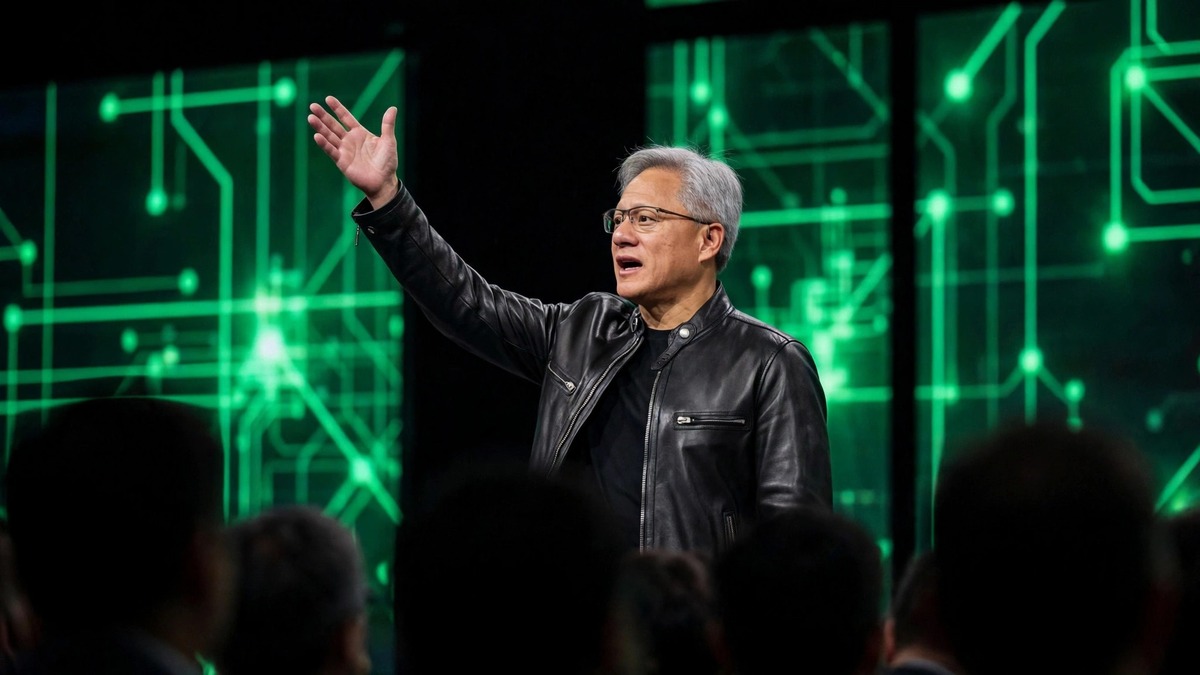
Elon Musk has joined more than 158,000 people urging Nvidia’s board to reinstate Jensen Huang while an independent investigation runs into the affairs that ended his 33 years as chief executive.
The letter leaves the board caught between two pressures. On one side sits a campaign backed by some of the biggest names in technology and by more than 7,500 of Nvidia’s own staff. On the other, a Reuters report says Huang misled his senior executives about one of the relationships, and the US Treasury secretary has said the company should hire its next chief from outside.
Key Points
- More than 158,000 people have signed an open letter asking Nvidia’s board to bring Jensen Huang back while an independent investigation runs.
- Elon Musk, Uber co-founder Travis Kalanick, Epic Games chief Tim Sweeney and Y Combinator president Garry Tan are among the signatories.
- More than 7,500 of the signatories say they work at Nvidia, about 18% of its workforce.
- Reuters reports Huang told senior executives that his relationship with Alice Huang was ordinary customer business and did not say it was romantic.
- US Treasury Secretary Scott Bessent says Nvidia should look outside the company for its next chief executive.
- Nvidia shares have fallen more than 30% from their peak on 6 October, wiping out over $1.8 trillion in market value.
What happened at Nvidia
The open letter went out over the weekend. It asks Nvidia’s directors to “bring Jensen back while an independent investigation establishes the facts.” By Sunday, it carried more than 158,000 signatures.
Musk is the best-known name on it. The other technology figures include Tim Sweeney, founder and chief executive of the video games publisher Epic Games, and Garry Tan, president of the start-up backer Y Combinator. Uber co-founder Travis Kalanick also signed, and wrote that Huang had “erred, yes – to err is to be human – but I do not believe anything he has done rises to the bar of separating him from his company.”
The support runs deep inside Nvidia itself. More than 7,500 signatories identified themselves as Nvidia employees, about 18% of the company’s workforce.
Two large shareholders added their weight on Friday. Brad Gerstner and Gavin Baker urged the board to keep “all options” open, a phrase that leaves the door open to Huang’s return.
Huang himself may want the job back. The Financial Times reported that he has talked about a possible return with people close to him, and that one of his allies says he is putting together a crisis team of executives to seek support from the White House.
Huang resigned on Thursday, ending 33 years as chief executive of the company he helped to found. Reports at the time said he had two extramarital affairs, one with Alice Huang, a Chinese businesswoman accused of links to Chinese intelligence, and one with a subordinate employee.
Why it matters
Huang is widely seen as a godfather of artificial intelligence. Under him, Nvidia became the dominant supplier of the chips that power AI, and a major investor in data centres and start-ups. That role earned it the nickname “the central bank of AI”. Critics say the same run helped to fuel a speculative investment bubble.
He also championed open AI models, including Chinese ones, and fought against constraints on the AI race. That put him at odds with Anthropic and its chief, Dario Amodei.
The campaign for his return now faces a counterweight. A Reuters exclusive, built on internal correspondence the news agency reviewed, says Huang kept his senior executives in the dark about the true nature of his relationship with Alice Huang. The messages, from 2025 and October 2026, describe his dealings with Alice Huang and her company, Megaspeed International, as ordinary customer-related business. Two people familiar with the matter told Reuters he did not disclose that the relationship was romantic.
The executives named in the report are general counsel Tim Teter and chief marketing officer Alison Wagonfeld. Reuters said it received no reply from either of them. Representatives for Huang and Nvidia declined to comment.
Alice Huang has been accused of links to Chinese intelligence. Beijing has denied the allegation, and Reuters said it could not verify on its own whether she worked for the Chinese government.
Nvidia’s independent directors have put the law firm Wachtell, Lipton, Rosen and Katz in charge of an investigation. It was launched after reports by The New York Times and The Wall Street Journal about Huang’s relationship with Alice Huang and US concerns about her alleged intelligence links.
On Sunday, Huang apologised for being unfaithful to his wife and for disappointing the company. He did not name Alice Huang.
Treasury Secretary Scott Bessent said on Fox News on Sunday that Nvidia should look “outside” the company for its next chief. “They need a dramatic shake-up,” he said. He also wants the company to explain whether it knowingly turned a blind eye to its chips being smuggled to China. The question carries weight because forensic tests found Nvidia Blackwell chips inside six Chinese AI models, despite US export bans, though that finding does not prove a breach.
The market has punished the company. Shares fell about 13% on the day Huang resigned. They have now dropped more than 30% from their peak on 6 October, wiping out more than $1.8 trillion in market value, according to Reuters.
What happens next
Nvidia reports third-quarter earnings on Tuesday, and interim chief executive Colette Kress will face investors for the first time since the resignation. It is her first chance to steady the market.
Bessent said he expects a response from Nvidia and the results of its internal investigation within 10 days.
Lawmakers from both parties have demanded that Huang and Nvidia appear before Congress and explain whether national security was put at risk. The Guardian reported that Huang and other Nvidia representatives have agreed to testify, but no hearing date has been set.
The board, which met last week to decide Huang’s future, is now searching for a permanent chief executive. The open letter, the big-name backers and the Financial Times report of Huang’s own comeback talk all keep his return on the table. The Reuters report, the Wachtell investigation and Bessent’s demand for an outsider all pull the other way. The decision now rests on what the investigation finds, and on whether the board thinks the man who built Nvidia can still lead it.
Sources: AFP, The Guardian, Reuters. Published 16 November 2026.