The Federal Aviation Administration lifted its nationwide ground stop on Friday night, letting US flights take off again after a communications failure kept planes on the ground for more than four hours.
The halt was only the second time since the September 11 attacks that every departing flight in the country had been stopped at once. It ran for four hours and 21 minutes, far longer than the 90-minute stop in January 2023, and airlines warned that schedules could take days to untangle.
Key Points
- Departures began moving again on Friday evening once the FAA ended the nationwide stop at 8:15 p.m. Eastern time, though the restart was gradual.
- More than 6,600 flights were cancelled and 8,600 delayed, according to FlightRadar24, with 1,500 more already cancelled for Sunday.
- The early explanation points to overloaded switches and routers, not a cyberattack, but officials said the cause had not been settled.
- Transport Secretary Sean Duffy blamed ageing equipment and pressed Congress for 50 billion dollars to rebuild the air traffic system.
- Airlines said the disruption would run into Saturday, and passengers were told to check with their carriers before heading to the airport.
What happened
Trouble began at 3:36 p.m., when air traffic control centres started seeing unstable radar and communications data. At 3:54 p.m., the FAA ordered a nationwide ground stop for all United States airports after a communications problem hit all 22 air route traffic control centres.
Planes already in the air were allowed to land. Flightradar24 counted 4,042 aircraft heading for US airports when the order came down. International flights were handled case by case, and flights in Alaska and Hawaii were not affected.
The FAA announced the lift at 8:15 p.m. Eastern time, or 1:15 a.m. GMT on Saturday. Duffy said the immediate problem had been fixed and flying was safe, but warned that the restart would be slow.
“It’s going to be slow,” Duffy told reporters at the White House. Aircraft and crews were out of place after hours on the ground, and some planes would not move until Saturday morning.
The scale of the disruption kept growing through the evening. FlightAware counted more than 10,000 delayed flights and over 4,000 cancellations, according to CBS News. Cirium, an aviation data company, counted 827 diverted flights and said about 11,000 flights carrying more than 1.5 million passengers had been due to leave US airports after 4 p.m.
JetBlue cancelled its remaining Friday evening flights, except for services to Europe from New York and Boston. American Airlines said it was giving priority to flights serving smaller cities and international routes so it could get aircraft and crews back into position faster.
The stop reached beyond commercial aviation. College football teams were caught on the road: Texas deplaned in Austin before a trip to LSU, Utah went back to campus, and Arizona State planned to fly on Saturday morning instead. Amtrak said its website and app were showing error messages as stranded flyers tried to switch to rail.
Why it matters
The stop exposed, in one evening, how much of American air travel rests on old equipment. Duffy said the switches and routers carrying radar and communications data had been overwhelmed.
“Our switches, our routers actually got overloaded with data and they started to give us inconsistencies in the data from those routers and because of that we shut the system down,” Duffy said. He added that controllers never lost radar or communications completely and were able to land thousands of planes safely.
Congress approved 12.5 billion dollars for an air traffic control overhaul last year. On Friday, before the failure, the White House and the Department of Transportation asked lawmakers for another 30.1 billion dollars. Duffy went further after the stop, calling for a 50-billion-dollar rebuild.
“What we have is an incredibly old air traffic control system,” Duffy said. “Give us the money to fix it.”
What actually failed is still an open question. Homeland Security Secretary Markwayne Mullin said there was “zero evidence” so far that a cyberattack or a rogue AI system caused the outage, though investigators had not ruled out either. “It appears this was mechanically driven, however, we’re still looking,” he said.
The FBI does not believe a cyberattack or criminal activity caused the failure, Bloomberg reported, citing an official familiar with the matter. Investigators were examining whether a software update played a part. Mullin offered a preliminary explanation of his own: patches and new equipment overwhelming the older system.
One question drew particular attention. The FAA had expanded an AI-powered air traffic management system, built by Air Space Intelligence, across all 22 control centres on November 10, three days before the stop. The company said its technology was not responsible. “The current ground stop is not based on or a result of the SMART system, any product of ASI or our integration with FAA and ATC,” it said in a post on X. The FAA awarded the company an 875-million-dollar contract in June to develop the system.
Reuters also reported that the outage appeared to affect a telecommunications network overseen by L3Harris Technologies, which handles radio frequencies controllers use to talk to pilots, citing two airline officials. L3Harris gave no answer when asked about the report.
The Department of Homeland Security ruled out any link between the ground stop and the separate Microsoft outage that disrupted email and workplace services this week, and Microsoft said it had no indication its services were involved.
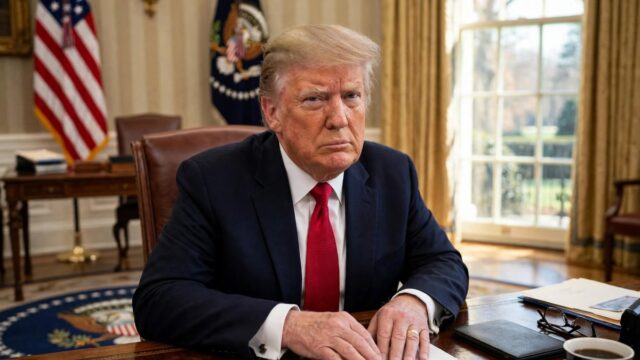
President Donald Trump made no public remarks about the disruption. Mullin said Trump had been in regular contact with senior officials and had been briefed throughout. He said Trump had been pushing for an overhaul of the ageing air traffic control system.
Democratic Senator Tammy Duckworth, the ranking member of the Senate aviation subcommittee, called for a full inquiry. “The safety of our skies is built on redundancies. Whatever led to the nationwide ground stop will warrant a thorough and complete investigation,” she wrote on X.
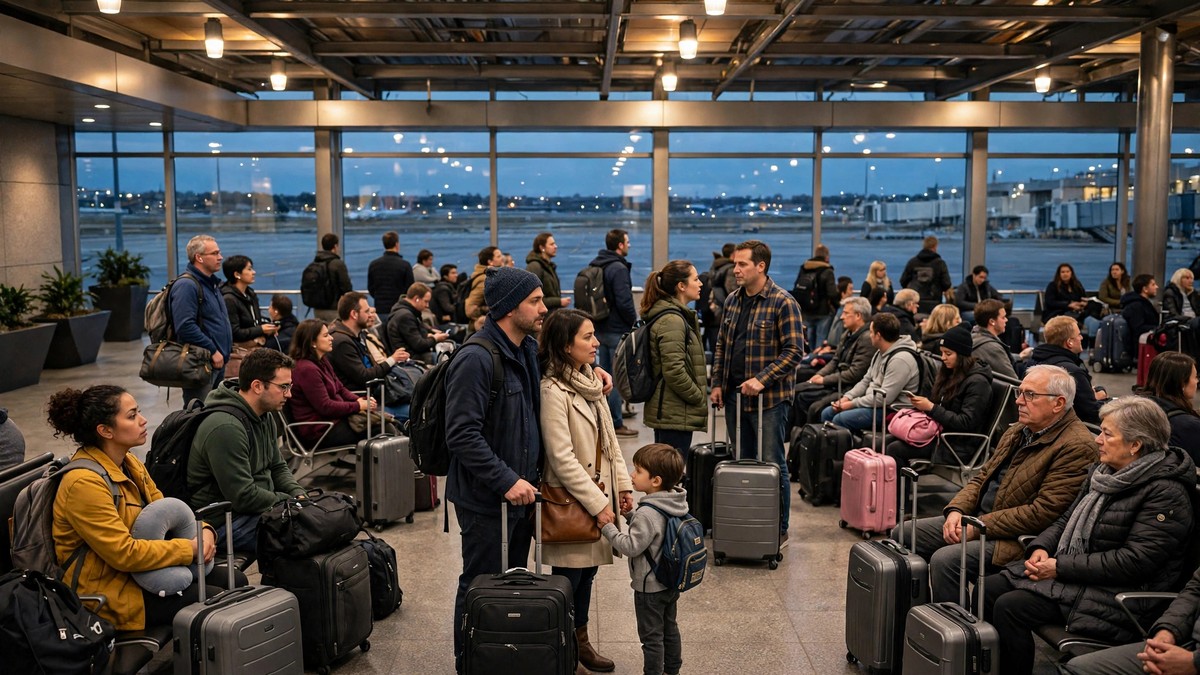
For passengers, the practical cost was a night in the terminal or a cancelled trip. Airlines will not have to pay compensation to stranded passengers because the carriers were not responsible for the FAA system failure. Edward Kargbo, 50, had been due to fly from Dulles to Lome in Togo at 9 p.m. Instead he planned to spend the night at the airport. “I have to squat the night here,” he said. “I’m stranded.”
Investors were already pricing in a hit to the airlines. Shares of American Airlines, United Airlines and Delta Air Lines fell between 1 per cent and 2 per cent in after-hours trading, while JetBlue dropped about 3 per cent.
What happens next
Recovery will be gradual. Airlines need to reposition aircraft and crews, and aviation analysts said the four-hour grounding could disrupt schedules for days. Another 1,500 flights were already cancelled for Sunday, according to FlightRadar24.
Duffy said he expected normal operations to return before the Thanksgiving travel period, but warned that similar shutdowns could happen again without serious investment in the system.
The investigation continues, with the National Security Agency working alongside the Department of Homeland Security. Duckworth said she would demand answers from the FAA as the inquiry goes on.
Congress now faces the funding question directly. The 30.1-billion-dollar request made on Friday was already on the table before the failure; the ground stop has turned it into a test of whether lawmakers will pay to replace the system before it fails again.
Sources: Reuters, Al Jazeera, Channel NewsAsia, Gulf News, Airways Magazine, Associated Press.
Published: 14 November 2026.