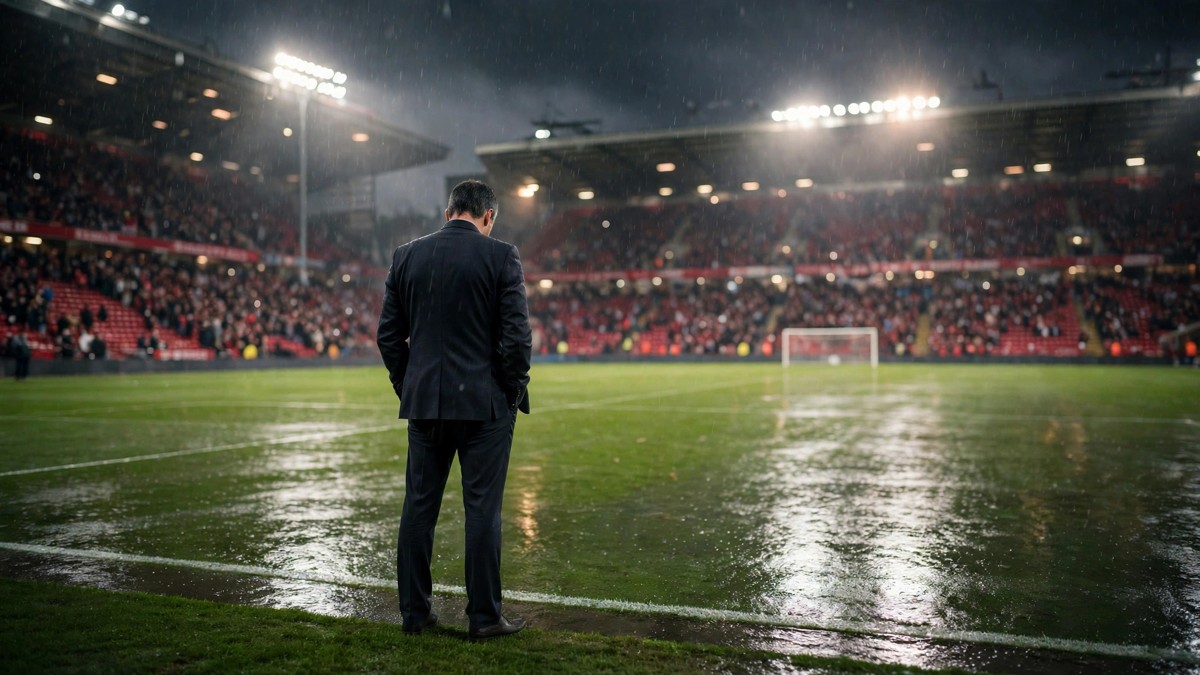
Manchester United have sacked head coach Michael Carrick after a winless run left the 20-time English champions 18th in the Premier League, the club confirmed on Thursday, 12 November 2026.
Key Points
- Manchester United confirmed on Thursday, 12 November 2026, that Michael Carrick has left his role as men’s first-team head coach, less than a year after taking charge.
- United have won only three of 15 matches in all competitions this season and sit 18th in the Premier League on eight points from 10 games, one point above the bottom of the table.
- Sunday’s 4-4 home draw with Aston Villa was the last match of Carrick’s reign and stretched United’s winless league run to eight games.
- Carrick, 45, took over on an interim basis in January 2026 after Ruben Amorim’s departure, won 11 of his first 16 matches and was handed a two-year permanent contract in May.
- Reports say United have a framework agreement with Mauricio Pochettino, head coach of the United States, to take over — but the club has not confirmed any appointment.
- Carrick is the seventh permanent manager United have sacked since Sir Alex Ferguson retired in 2013.
What happened
United announced the decision on Thursday morning, in a short statement that thanked Carrick and said the change was needed to get the club back on course. “After a disappointing start to the season, the club has come to the extremely difficult conclusion that a change is necessary in order to achieve our ambitions,” the statement said. It added that United intend “to appoint a permanent successor as quickly as possible.”
The decision came a day after a meeting in Monaco between co-owner Sir Jim Ratcliffe, chief executive Omar Berrada and director of football Jason Wilcox. BBC Sport reported that Carrick arrived at the club’s Carrington training base before 8am on Thursday and left after being told of the decision. He had taken training on Tuesday and Wednesday, while the club’s leadership weighed his future.
The numbers behind the decision are stark. United have won three of 15 matches in all competitions this season, and only one of their 10 league games. Eight points from those 10 games leaves them 18th in the table, a single point above the bottom, and Sunday’s 4-4 draw at home to Aston Villa made it eight league games without a win. It is the club’s worst start to a season in 40 years, and its lowest league position at this stage of a campaign since 1986-87.
BBC Sport’s Manchester United correspondent Simon Stone reported that several problems fed into the decision: poor results and inconsistent performances, tension in the dressing room, injuries, and disagreements over recruitment. Reuters’ analysis of the season added two more: a defence it described as the worst in Europe, and the decision to leave captain Bruno Fernandes on the bench against Bournemouth, which drew heavy scrutiny.
Why it matters
Carrick’s fall has been as fast as his rise. He took over on an interim basis in January, after Ruben Amorim’s departure, and the effect was immediate. United won 11 of his first 16 matches, beating Arsenal, Manchester City, Liverpool and Chelsea along the way, and climbed to third in the table to secure Champions League football. The run earned the former midfielder, who made 464 appearances for the club as a player, a two-year permanent contract in May.
None of that form survived into the new season. The collapse has been total: a team that finished last season in the Champions League places is now fighting relegation in November, and the club has now sacked seven permanent managers since Ferguson retired in 2013. Carrick is the third of them to go since Ratcliffe became a minority owner in 2024.
But the case against Carrick is only part of the story. Reuters’ analysis points to deeper problems that no change of manager has fixed. United spent £150 million in the summer, about $199 million, and put all of it into midfield — Carlos Baleba, Andrey Santos and Youri Tielemans arrived, while other gaps in the squad went unfilled. The most glaring is at left back, where the injury-prone 31-year-old Luke Shaw is the only established senior option for a side competing on four fronts.
That pattern is now familiar at Old Trafford. Each new manager has arrived with a different idea of how the team should play, and each has been given players to fit that idea, leaving a squad assembled for several different teams at once. As Reuters put it, even the sharpest tactical mind can only cover structural gaps for so long. Whoever takes over next inherits the same squad, the same gaps and the same expectation that a new face in the dugout will fix them.
What happens next
All signs point to Mauricio Pochettino, but nothing is official yet. The Guardian reports that the former Tottenham and Chelsea manager has a framework agreement to take the job, Sky Sports reported a verbal agreement in principle on Thursday morning, and the Press Association understands a framework is in place. The BBC reported on Wednesday that Pochettino, 54, was ready to accept the role if it were formally offered, while wanting to stay respectful to the United States Soccer Federation. United’s statement names no successor, and the appointment has not been confirmed.
Pochettino has coached the United States men’s national team since September 2024, and beIN Sports reports that his deal there runs until after the 2030 World Cup and carries a multi-million release clause — which may explain why the talks have moved through intermediaries rather than a direct approach. Other names reported in the frame include Eddie Howe, Julian Nagelsmann and Antonio Conte.
Timing matters. United’s next match is away at Liverpool on 22 November, and reports say the club wants the appointment sealed before that trip to Anfield. The November international break gives the board a window to finish the deal, and gives the new manager — whoever it is — a first look at the scale of the job before the season resumes.
Carrick’s exit is the latest big change in a busy sporting week. Cristiano Ronaldo announced his retirement from Portugal duty after 23 years and a record 146 international goals, Mohammed Shami called time on his Test career 13 years after his debut, and Nigeria’s Flamingos won the Under-17 Women’s World Cup.
Sources: Reuters, 12 November 2026; BBC Sport, 12 November 2026; PA Media, 12 November 2026; beIN Sports, 12 November 2026; USA Today, 12 November 2026. Published 12 November 2026.