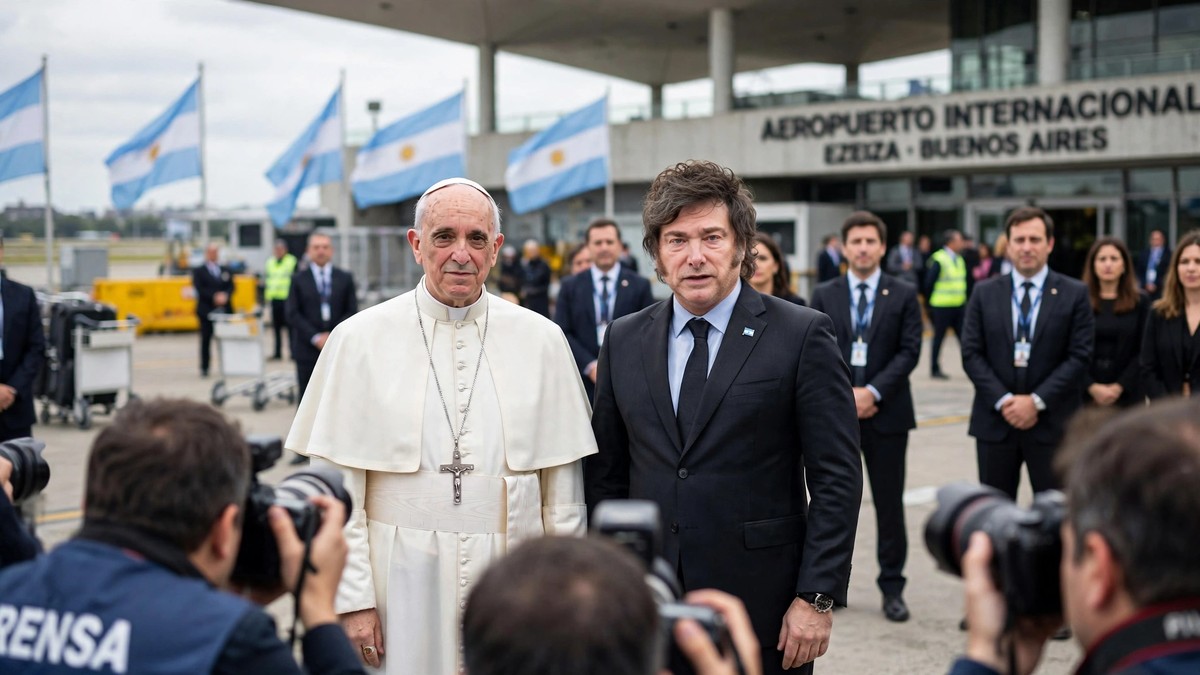
Pope Leo XIV has told Argentina’s President Javier Milei that the economy must serve people, not the other way round, as he began the Argentine leg of his South American tour on Sunday.
Key Points
- Pope Leo arrived in Buenos Aires on Sunday, welcomed by Milei at Jorge Newbery airport, on the first papal visit to Argentina in nearly 40 years.
- In his first speech, at the Palacio Libertad, he said: “The economy must serve the person, not the person the economy.”
- He said democracy is part of Argentina’s heritage that must be safeguarded, and that those in power must know the limits of their authority.
- Milei defended his libertarian programme in reply, saying life, liberty and property are the backbone of Argentina’s constitution.
- The Pope also met Milei at the Casa Rosada, before continuing his 12-day tour, which ends in Peru.
Pope Leo XIV has told Argentina’s President Javier Milei that the economy must serve people, not the other way round, as he began the Argentine leg of his South American tour on Sunday.
What Pope Leo said in Buenos Aires
Leo landed in Buenos Aires on Sunday after flying in from Uruguay, the first stop of a 12-day tour of South America. Milei, accompanied by his sister and presidential secretary Karina Milei, greeted him at Jorge Newbery International Airport. Later, at the Palacio Libertad cultural centre, the Pope gave his first public address in the country, speaking to officials, diplomats and civic leaders.
His message on the economy was direct. Growth, he said, should be encouraged where it creates opportunities and stimulates private initiative, but it must also reach “the unemployed, retirees and all those who, despite hard work, nonetheless struggle to meet their household’s needs”. He called for investment in education, vocational training, universities and research, protection for older people and people with disabilities, and for the country’s natural resources to serve “the well-being of communities”.
He also spoke about how power should be used. “Those who exercise authority have a duty to act prudently, recognise the limits of the power entrusted to them and direct their decisions towards the common good of the entire community,” he said. Democracy, he added, depends on “careful use of words” and on seeing people who think differently as “fellow citizens with whom we share a common future”. “We must learn to live together, beyond our differences,” he said.
Leo never named Milei’s austerity programme, but the contrast was plain. Milei, a self-described anarcho-capitalist, has built his presidency on deep spending cuts, and has called social justice “a horror”, a “moral aberration” and “theft”. His supporters point to inflation falling from over 200 per cent to 33 per cent. His critics, including Argentina’s Catholic Church, say the cuts have fallen hardest on the poorest, cutting disability benefits and other services, while poverty remains high even after falling from its peak.
Why the visit matters
The trip is the most politically delicate of Leo’s tour. It is the first visit to Argentina by a pope in nearly 40 years, and the last Argentine pope, Francis, never returned home during his 12 years in the role, which makes Leo’s arrival all the more charged.
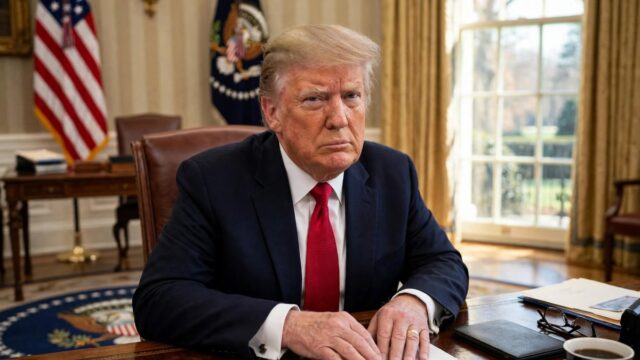
The politics around it are sharp. Milei is a close ally of US President Donald Trump, while Leo, the first pope born in the United States, has criticised the war in Iran and voted by mail in last week’s US midterm elections. Milei, who plans to seek re-election next year, welcomed the visit, saying the Pope’s presence had brought together representatives from across Argentina’s political spectrum.
The visit comes as Latin America faces a run of political upheaval, including the impeachment of Paraguay’s president last week. For the Church in Argentina, the trip is also a homecoming of sorts: Leo spent years as a missionary and bishop in Peru, and his tour ends there, with a Mass in Chiclayo on 13 November that is expected to draw up to 1.5 million people.
What happens next
Leo continues his stay in Argentina before travelling to Peru for the final leg of the tour. There is no sign yet that Milei’s government plans to change course on spending, and the Pope’s words were a message rather than a demand. But with the world’s cameras on Buenos Aires, the contrast between the two men is now out in the open: one preaching that people come first, the other insisting the market must be set free. How the rest of the visit is read will depend on which of those visions Argentina’s leaders choose to hear.
Sources: Associated Press, Al Jazeera, Buenos Aires Times, Reuters — 9 November 2026.