Key Points
- Hong Kong’s High Court sentenced Joshua Wong, 30, to 10 years in prison on 5 November 2026.
- The charge was conspiring to collude with foreign forces under Hong Kong’s national security law.
- Wong pleaded guilty in September; prosecutors said he conspired with Nathan Law and others in 2020 to seek foreign sanctions.
- He has already spent almost six years behind bars and had been expected to be freed in January.
- Human Rights Watch criticised the sentence, while the court said the punishment must fit the gravity of the offence.
Joshua Wong was sentenced to 10 more years in prison by Hong Kong’s High Court on 5 November 2026, after pleading guilty to conspiring to collude with foreign forces under the city’s national security law.
What happened
Joshua Wong, one of Hong Kong’s best-known democracy activists, was sentenced on Thursday, 5 November, to 10 years in prison. The High Court handed down the sentence for conspiring to collude with foreign forces, an offence under the national security law that Beijing imposed on Hong Kong in 2020. A press summary released by the court said it had imposed a final sentence of 10 years’ imprisonment.
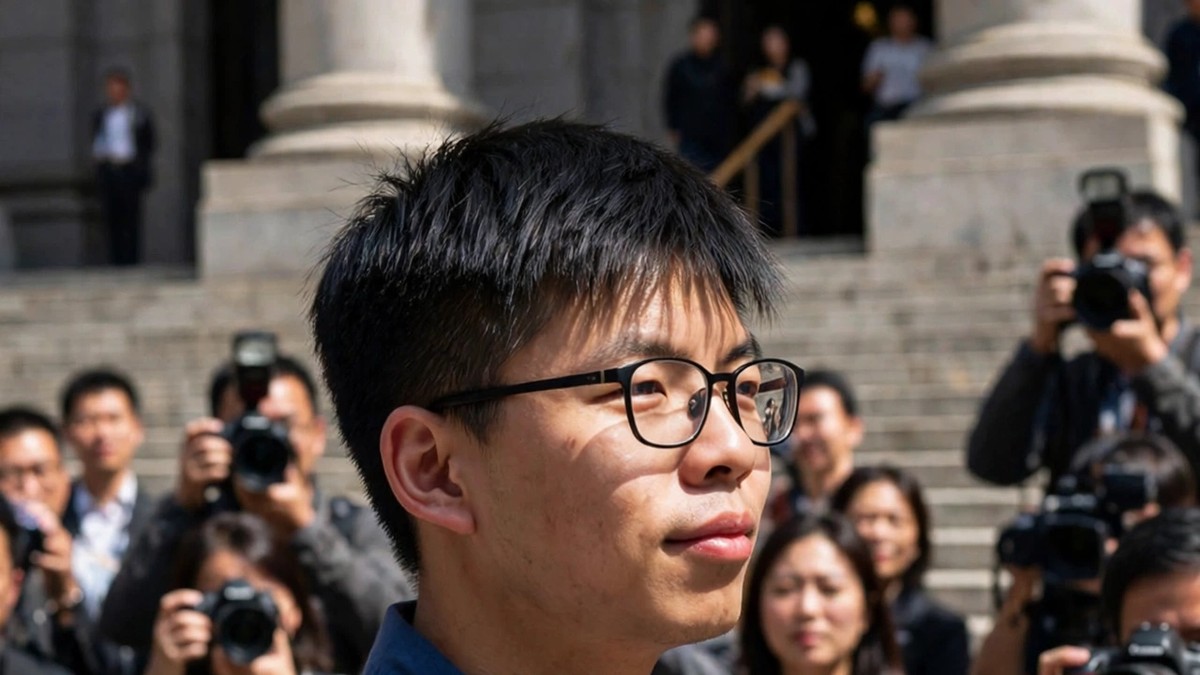
Wong, who turned 30 last month, entered the court on Thursday morning looking calm, wearing a blue shirt and black glasses, and nodding to supporters, according to news agency reporting from the hearing. The judge told a packed courtroom that the punishment must fit the gravity of the crime.
The case centred on events in 2020. Prosecutors said Wong conspired with self-exiled activist Nathan Law and other people whose identities were not given, between 1 July and 23 November 2020, to ask foreign countries, institutions and individuals to impose sanctions or blockades, or to take other hostile action against the governments of Hong Kong and China. Wong pleaded guilty to the charge in September.
Wong first became internationally known as a teenage student leader during Hong Kong’s large pro-democracy protests. He has been repeatedly detained for his part in organising rallies, and he has been in custody since November 2020. He was among dozens of pro-democracy figures jailed in 2024 in the city’s largest national security trial, a case over an unofficial primary election, for which he was convicted of subversion.
Why it matters
The sentence matters first because of its length and its timing. Wong had already spent almost six years behind bars, and he had previously been expected to be freed in January after serving four years and eight months for subversion. Instead, the new sentence, handed down after he was charged again in June 2025 while still in prison, extends his time in custody by a decade. Human Rights Watch said he now faces imprisonment until late 2036, when he will be 40.
It also matters because of what the charge represents. Colluding with foreign forces is one of four major offences under the national security law, alongside secession, subversion and terrorist activities, and it carries a maximum penalty of life imprisonment. The law, imposed on 30 June 2020 after sometimes violent demonstrations, has led to the arrests of hundreds of pro-democracy politicians, activists, journalists and students, and to opposition groups disbanding and activists fleeing the city. Critics say the law has been used to quash dissent; Beijing and Hong Kong officials say it was needed to restore stability after the protests.
Human Rights Watch described the charges against Wong as baseless and called the sentence harsh, saying it keeps a prominent democracy activist behind bars. That reaction underlines how the case is read far beyond Hong Kong: Wong became the global face of the city’s pro-democracy movement as a young protester, and his treatment is watched as a measure of how much space remains for dissent in the territory.
For Hong Kong itself, the sentence closes one chapter while leaving a wider question open. Wong’s guilty plea meant the court did not have to test the prosecution’s evidence at a full trial, so the hearing turned on the length of the sentence rather than on whether the offence had been committed. The court’s answer — a decade in prison — sends a clear signal about how seriously the judiciary treats calls for foreign sanctions, even when the person making them is already serving a sentence for a related national security offence.
What happens next
The immediate question is whether Wong appeals against the sentence, and whether foreign governments respond publicly. No appeal had been reported at the time of sentencing, and any appeal would go through Hong Kong’s courts in the coming weeks. Rights groups are also likely to keep pressing the case, as they have throughout Wong’s time in custody.
Longer term, the sentence will shape how Hong Kong’s remaining activists and politicians weigh the risks of public campaigning. With Wong now facing custody into the late 2030s, and with the national security law still in force, the space for the kind of street movement that made him famous has narrowed sharply. What happens next, for Wong and for Hong Kong’s democracy movement, will be measured less in court hearings than in whether anyone is willing, or able, to take up the same cause in public.
Related coverage: North Korea Tests New Air-Defence Missile System and Apple’s China Market Share Climbs to 18% in Q3.
Sources: Reuters (original report, 5 November 2026) and AFP via Channel News Asia / Free Malaysia Today (independent report), 5 November 2026. Facts verified against the original report and one independent source. Image is AI-recreated, not the original photograph.