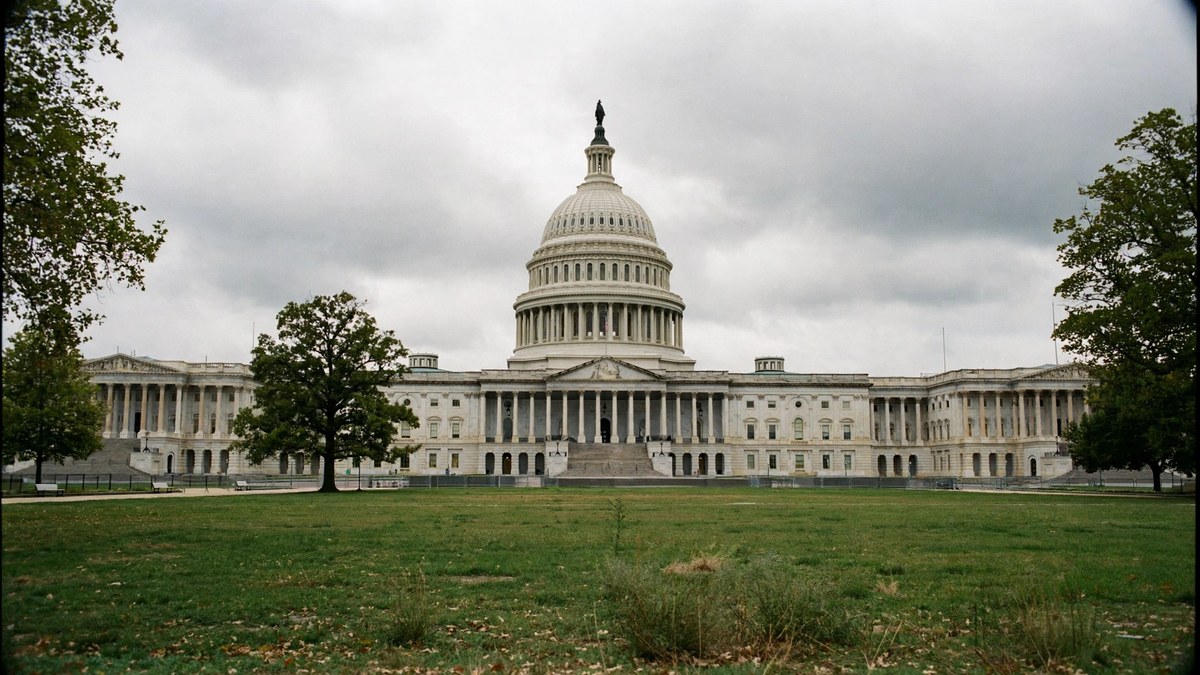
A federal appeals court ruled on Friday that the House passed a $1.7 trillion spending bill unconstitutionally, because hundreds of lawmakers voted by proxy instead of in person.
Key Points
- The full 5th US Circuit Court of Appeals ruled 9-8 on Friday that the House’s pandemic-era proxy voting rule violated the Constitution’s Quorum Clause.
- The House passed the $1.7 trillion Consolidated Appropriations Act of 2023 by 225-201, with 226 of 431 votes cast by proxy and only 205 in person.
- The ruling upholds an injunction won by Texas that blocks enforcement of the Pregnant Workers Fairness Act against the state only — the rest of the spending package is untouched for now.
- Judge Cory Wilson wrote for the majority that members must be physically present for a quorum; Judge James Graves dissented, calling the ruling “illogical, inexplicable, and invalid.”
- The decision is expected to be appealed to the Supreme Court, though a new Texas attorney general takes office in January and may not press the case.
What happened
The case, State of Texas v. Blanche, challenged the way the House passed the fiscal 2023 spending package in December 2022. Texas argued the proxy rule meant the House never validly passed the law, and asked a court to block one part of it: the Pregnant Workers Fairness Act, which requires employers to offer reasonable accommodations to pregnant workers.
The proxy rule began as an emergency measure. In May 2020, under Speaker Nancy Pelosi, the House adopted House Resolution 965, letting members record their presence and cast votes through a colleague on the floor. The House kept the practice through the 117th Congress and used it to pass the spending bill on 23 December 2022. The rule was dropped when Republicans took control of the House after the November 2022 elections.
The numbers tell the story of the vote. A quorum in the 435-member House is 218. On final passage, 431 votes were cast — 205 by members in the chamber and 226 by proxy. The bill passed 225-201, with one member voting present and four not voting. No member objected that a quorum was lacking, though Representative Chip Roy of Texas noted that a physical quorum was not present and reserved the right to object.
Texas first won at district level: Judge James “Wes” Hendrix ruled for the state in 2024. A three-judge panel of the 5th Circuit later found Congress had acted within its authority — but that decision was vacated when the full court agreed to rehear the case. On Friday, the full court, sitting en banc in New Orleans, sided with Texas.
The government had two defences, and the court rejected both. The enrolled-bill rule — which treats a bill’s passage as conclusive once it is signed — did not bar the challenge, the majority said, because there was no dispute about the facts of how the bill passed. And the Quorum Clause itself, the court held, counts only members who are actually present. “Proxy presence does not count,” the majority wrote, adding that the clause’s limits “cannot be circumvented by congressional fiat.”
Why the proxy voting ruling matters
On its face, the ruling changes little right away. The injunction reaches only the Pregnant Workers Fairness Act, and only against Texas. Employers elsewhere must still offer the accommodations the law requires, and the rest of the $1.7 trillion package — from the ban on TikTok on government devices to the Electoral Count Reform Act — stands untouched for now.
Its reasoning is what carries weight. The majority’s logic would support challenges to other laws passed while the proxy rule was in force, and legal specialists note it puts a target on the whole omnibus. Bloomberg Law reported the ruling opens the door to new challenges against laws enacted during the Biden administration.
The split on the court was sharp. The 9-8 vote broke along the court’s ideological lines: Judge Wilson, appointed by President Donald Trump, wrote for the majority; Judge Graves, appointed by President Barack Obama, dissented with six colleagues, arguing the majority had read a physical-presence requirement into the clause that the text does not contain. Judge Haynes dissented separately.
The case also lands in the middle of the fight over congressional oversight. Democrats, who won both chambers in this month’s midterm elections, take power in January and have already moved to preserve documents ahead of investigations — Representative Robert Garcia’s 12 preservation letters went out this week — while the White House has warned that their probes could face criminal referrals. The administration has also told federal contractors to report congressional requests to the White House first. A court ruling that questions how the House passed laws in the last Congress adds another front to that fight.
What happens next
The next step is almost certainly the Supreme Court. The decision is certain to be appealed, and the justices would have the final word on whether presence by proxy can ever count toward a quorum. Legal analysts doubt the ruling will survive — one noted he could not see the Supreme Court upending all the legislation passed under the rule on this basis.
The ruling also lands as House Democrats weigh bringing back a narrower form of proxy voting — for new parents and members undergoing medical treatment — in the rules for the next Congress. The incoming speaker, Hakeem Jeffries, has endorsed the new-parent version, and a bill with 175 co-sponsors would allow 12 weeks of remote voting for new parents.
There is a wild card. A Democrat won the Texas attorney general race, so from January the office that brought the challenge will be in new hands, and the new attorney general may choose not to press the case. That could change how, or whether, the dispute reaches the Supreme Court.
Until then, the ruling binds only the 5th Circuit states — Texas, Louisiana and Mississippi — and only on the one provision. The Pregnant Workers Fairness Act remains in force everywhere else, and the House, which no longer uses proxy voting, does not have to change how it votes.
Sources: Reuters, Reason (Volokh Conspiracy), Bloomberg Law, Justia | 22 Nov 2026