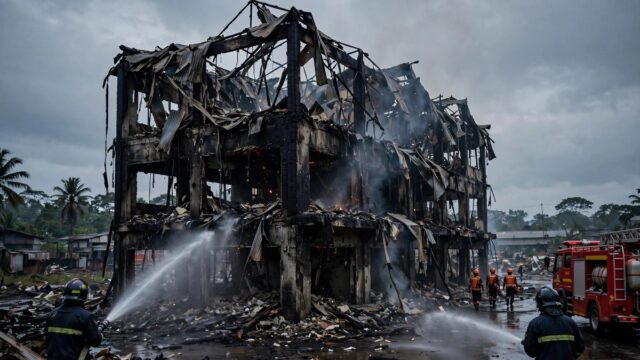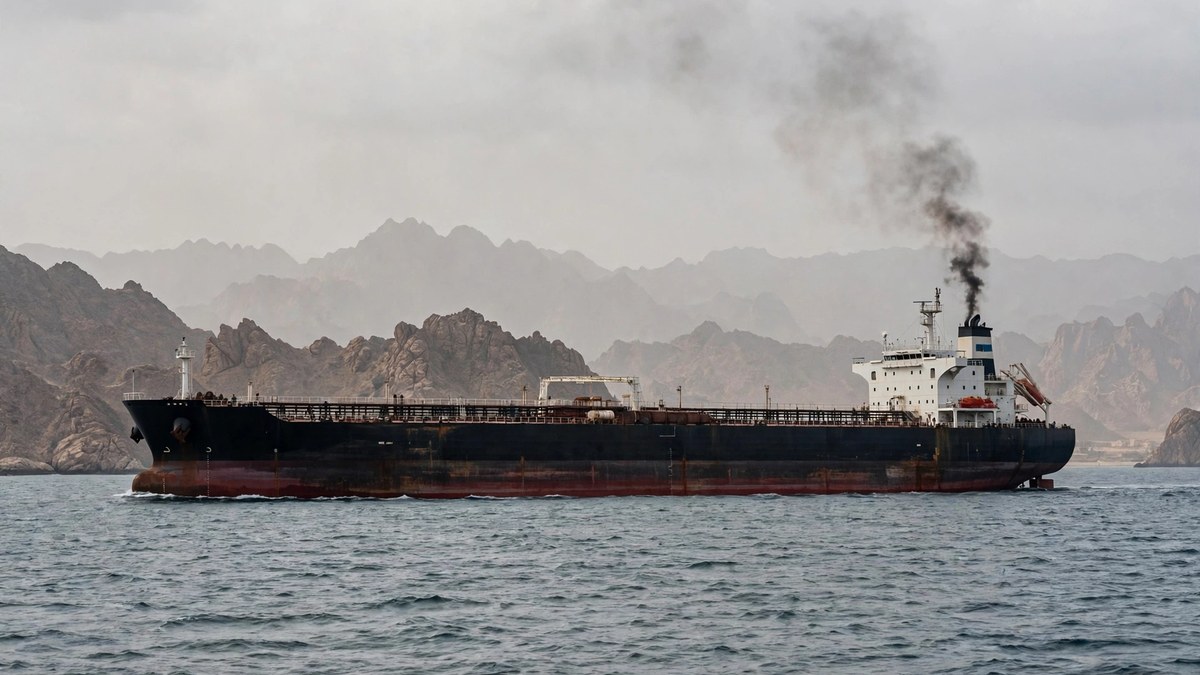
Two oil tankers were hit by unidentified projectiles near the Strait of Hormuz on Saturday, in the latest strikes on shipping through the waterway at the centre of the Iran–US war.
Key Points
- Two tankers were struck by unidentified projectiles near Oman on Saturday, British maritime agency UKMTO said.
- One was hit on the stern about 20 km north of Khasab; the other was hit in its engine room about 31 km east of the port.
- No casualties were reported in either incident, and it is unclear whether the two reports involve the same vessel.
- Iran’s navy said a tanker caught fire after hitting a naval mine east of the strait — a claim that could not be independently verified.
- About 25 shipping incidents have been reported in the past week, as Tehran tightens its grip on the waterway.
What happened
Saturday brought two more attacks on commercial shipping at the mouth of the Gulf. The United Kingdom Maritime Trade Operations centre, the British agency that tracks threats to merchant vessels, said a tanker sailing out of the Strait of Hormuz was struck on its stern by an unidentified projectile roughly 20 kilometres north of Khasab, a port town on Oman’s northern coast. About 50 minutes later, it reported a second incident: another tanker hit in its engine room around 31 kilometres east of the same port. Neither report named a vessel, and it remained unclear whether the two alerts described two ships or one.
No crew members were reported hurt in either incident, and the scale of any environmental damage was not yet known. A day earlier, a tanker near Khasab was also attacked and caught fire, according to the same British agency.
Separately, Iran’s navy said on Saturday that an oil tanker had caught fire after striking a naval mine in a restricted area east of the strait. In a statement carried by state television, the navy said the vessel had entered the zone with its identification and navigation systems switched off, despite warnings. The account could not be independently verified, and it was not clear whether the burning tanker was one of the two vessels in the UKMTO reports.
Iran also said on Saturday that it had shot down a US drone over Qeshm Island in the strait, according to state television. American fighter jets had struck an Iranian missile site on the island on Tuesday, a US military official said, in what Washington described as a self-defence strike.
Why the Hormuz strikes matter
The attacks fit a sharp pattern. Al Jazeera’s correspondent in Tehran, citing statements from Iran’s armed forces, said about 25 incidents involving tankers had been reported since the previous Saturday — roughly three a day. Tehran has made clear it regards the strait as under its control, saying ships must coordinate with Iranian authorities and follow lanes it sets out, and warning that vessels that do not comply risk attack or mines.
That matters far beyond the Gulf. Before the war began in late February, about a fifth of the world’s oil and natural gas moved through the strait, and crude shipments through the waterway have already fallen this month as the attacks mounted. Washington has answered by blockading Iranian ports and sending naval vessels to escort tankers through the passage; US Central Command said last month it had helped Gulf countries move 1.5 billion barrels of oil through Hormuz since the summer. The US military has also said it recently cleared mines from the main shipping routes — a claim the latest incidents now put to the test. For the wider picture of how the shipping campaign has escalated, see our report on the fourth tanker to hit a mine in the strait.
What happens next
The next questions are practical ones: which vessels were hit, how badly they were damaged, and whether Iran’s mine claim checks out. Attention will also turn to Washington, where President Donald Trump said on Friday that Iran wanted a deal but had not offered acceptable terms, and hinted that developments in the conflict would come after January 1. Shipping firms, insurers and oil markets will be watching whether vessels keep transiting the strait — and whether the pace of attacks, now running at several a day, slows or climbs further. The US strike on the island at the centre of the latest claims is covered in our earlier report on the US strikes on Qeshm Island.
Sources: Reuters, Al Jazeera, Arab News | 22 Nov 2026