
Key Points
- Iran’s army says another oil tanker hit a naval mine in the Strait of Hormuz on Friday — the fourth vessel reported hit since Thursday.
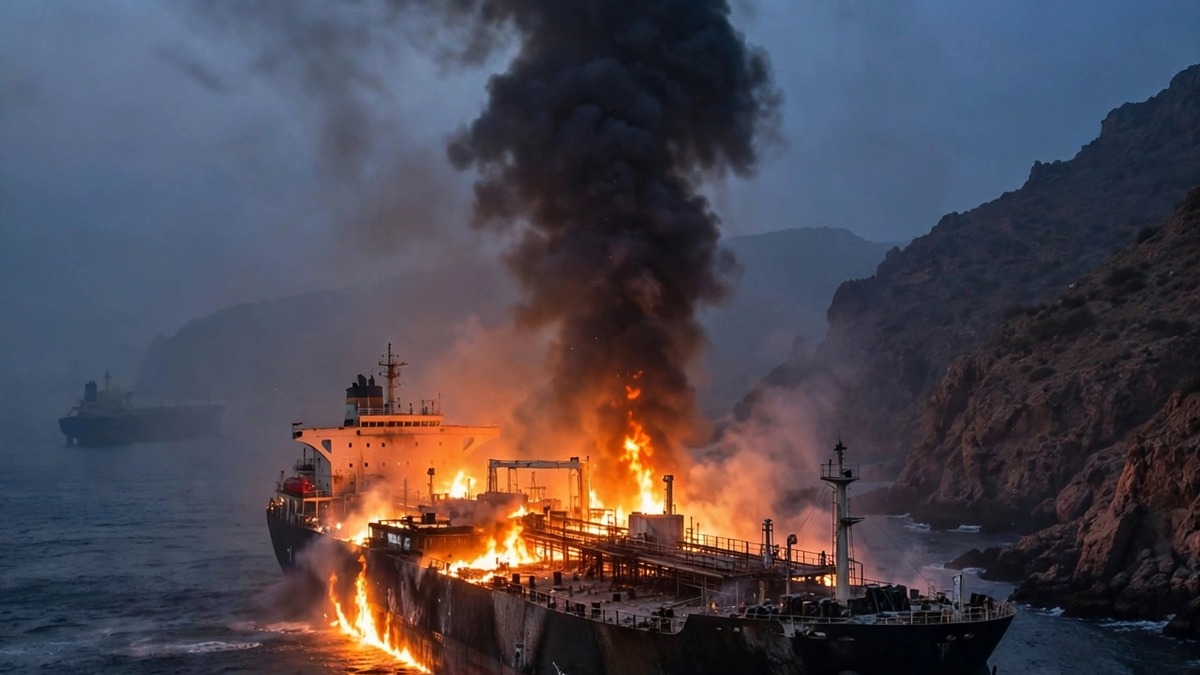
- Two supertankers holding over 4 million barrels of crude exploded and caught fire on Thursday, the Revolutionary Guard said.
- No vessel has been named, and the claims have not been confirmed by any outside source.
- Oil prices rose on Friday, and maritime monitors warn further attacks on commercial vessels are highly likely.
- The Revolutionary Guard’s spokesman says the strait will stay closed until Tehran’s seven conditions are met.
Iran’s army says another oil tanker has hit a naval mine in the Strait of Hormuz, the fourth vessel reported hit since Thursday, as shipping fears and oil prices climb.
What happened
Iran’s army announced on Friday that another oil tanker had been hit by a naval mine in the Strait of Hormuz. The announcement, reported by Al Jazeera’s correspondent in Tehran, described the vessel as the fourth tanker to hit a mine in the strait since Thursday.
The latest incident follows a day of claims from Iran’s armed forces about tankers striking mines in the waterway. On Thursday, the navy of the Islamic Revolutionary Guard Corps said two supertankers had struck naval mines and exploded while travelling on a route Tehran describes as unauthorised. Together the two ships held over four million barrels of crude, and both were ablaze off the strait’s southern shore, Iranian state media reported. The Revolutionary Guard said the tankers had been crossing a restricted route under the protection of American fighter jets and surveillance drones. That claim about American aircraft has not been confirmed by any outside source.
The regular army gave a separate account of tankers hitting mines east of the strait. Its navy said the vessels had ignored warnings, switched off their navigation systems and entered a prohibited area before striking mines and catching fire. The army told vessels to contact Iranian forces before entering the area and to keep to the lanes Tehran has set aside for transit.
No vessel has been named in any of the statements, and no details have been given about the flags the tankers were flying, the state of their crews, or the extent of the damage. Reuters said it could not confirm the Iranian account from its own reporting.
The mine incidents are the latest in a run of attacks on shipping in and around the strait this month. About 14 attacks on vessels in and near the waterway were recorded in the first 19 days of November, according to a UK maritime operations count cited by Bloomberg. Earlier this week, a supertanker was reported sunk after a mine strike, and five tankers were hit in a single day last week. An ADNOC vessel was also attacked while crossing the strait on Tuesday evening, leaving one crew member missing and 11 injured, according to the company.
Why the Strait of Hormuz tanker attacks matter
The Strait of Hormuz is the narrow channel between Iran and Oman through which about one-fifth of the world’s oil normally moves. When tankers burn there, the effects reach far beyond the Gulf. Oil prices rose on Friday as traders weighed the risk to supplies, with Brent crude climbing to $92.22 a barrel and American crude to $83.40, according to Reuters. Traders were also reacting to the Houthi attack that damaged the tallest tower in Riyadh on Thursday, the second landmark in the city’s financial district hit in under two weeks.
The International Energy Agency said on Thursday that no conflict has ever disrupted world oil and gas trade as much as the current Middle East war, and warned it could cut world oil demand by more than 4 percent by 2035 if governments speed up the shift to electric power and cleaner fuels.
Shipping monitors are warning the danger is growing rather than easing. The Joint Maritime Information Center told shipping to expect more attacks on merchant vessels, and advised ships to stay alert while crossing the strait.
The timing also matters for the war itself. Iran has tightened its hold on the waterway as Washington tightens its naval blockade and adds restrictions, with the aim of imposing a complete land and air blockade, according to Al Jazeera’s correspondent in Tehran. The Revolutionary Guard’s spokesman, Hossein Mohebbi, said the strait will not reopen until Iran’s seven conditions are met, and only then can Tehran discuss its nuclear programme. He added that Iran will not accept a continued state of neither war nor peace.
What happens next
The immediate question is whether more tankers will be hit in the coming days. The maritime centre’s warning suggests the risk remains high, and Iran’s forces have shown no sign of lifting the mine threat from the routes they call unauthorised. Ship owners now face a choice between the designated routes Tehran insists on, longer detours around the region, or holding their vessels back altogether.
Diplomacy looks no closer. Talks hosted by Oman collapsed earlier this week, and the two sides remain far apart on the strait’s future. The American president has pushed any decision on renewed major strikes into next year, telling reporters he will discuss it after the beginning of the year. For now, the strait stays mined, the tankers keep burning, and the world’s busiest oil channel remains a front line.
Sources: Al Jazeera, Reuters, IRNA, Tasnim, Press TV, ISNA, The National, Gulf News, Tribune | 20 November 2026, 15:30 +08 (Asia/Kuala_Lumpur). Image: AI generated image of a burning oil tanker in the Strait of Hormuz at dusk.