A Houthi attack damaged Riyadh’s tallest skyscraper on Thursday, blowing out windows across seven floors of the sovereign wealth fund’s headquarters, Saudi Arabia said, with no injuries reported.
Key Points
- Saudi civil defence confirms a Houthi attack damaged the PIF Tower in Riyadh’s financial district on Thursday, with no injuries.
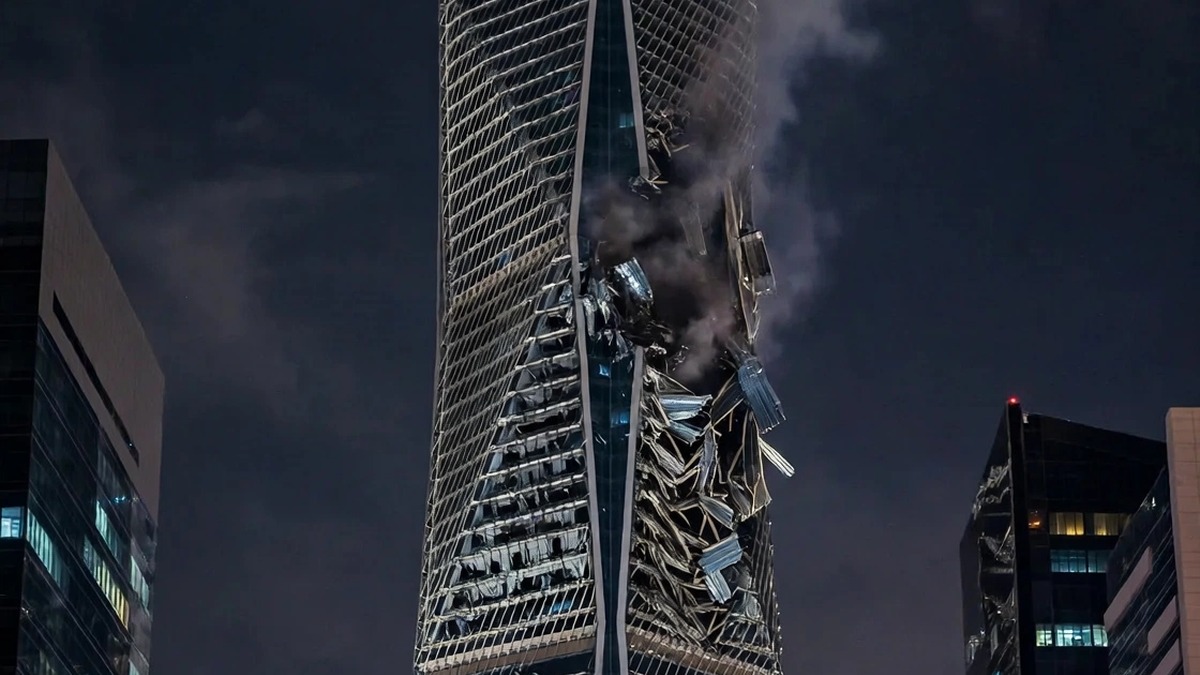
- Windows were blown out across seven to eight floors of the 80-storey tower, bending parts of its metal facade.
- The Houthis claimed the strike, saying they hit the financial district twice in one day.
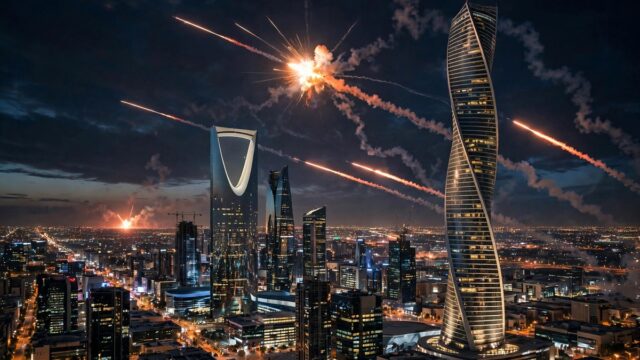
- Saudi defences intercepted missiles aimed at Riyadh and the south, and the coalition says it destroyed the launchpad used in the attack.
- It is the second landmark in the district damaged in under two weeks, after the Aramco building on 8 November.
What happened
Saudi Arabia said on Thursday that a Houthi attack had struck a tower in the financial district of its capital, Riyadh, causing material damage but no injuries.
The country’s civil defence agency said the attack damaged the tower and nearby buildings. Its statement did not name the building, but a photograph published by the state news agency SPA showed the Public Investment Fund (PIF) Tower — the headquarters of the Saudi sovereign wealth fund and the tallest skyscraper in Riyadh.
The strike blew out windows across seven to eight floors of the 80-storey building, which stands 385 metres high, and bent parts of its metal facade. Three people familiar with the matter told Reuters the building had been struck by an incoming Houthi missile. The Saudi-led coalition said it had dealt with a missile threat launched towards Riyadh and that its first assessment showed debris had fallen and material damage had been reported.
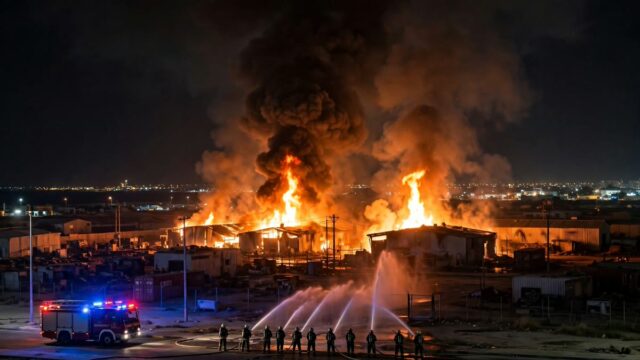
Entrances to the King Abdullah Financial District were closed after the attack, people were evacuated from the area, and ambulances and fire trucks were sent to the scene. The district was closed to visitors.
The Houthis claimed the attack hours later. Their military spokesman, Yahya Saree, said the group had struck Riyadh’s financial district twice on Thursday, first before dawn and again in the evening, and had also aimed at King Khalid International Airport, the Khamis Mushait airbase in the south and a petrochemical plant in Jubail. Those wider claims have not been confirmed by Saudi authorities.
Why the Houthi attack on Riyadh matters
The PIF Tower is not just another office block. It is the home of the Public Investment Fund, one of the largest sovereign wealth funds in the world, with more than $900 billion in assets under management. The fund sits at the centre of Crown Prince Mohammed bin Salman’s Vision 2030 plan to move the Saudi economy away from oil, and the glass towers of the financial district have become the showcase for that ambition.
Hitting the district’s tallest building — for the second time in under two weeks — is a deliberate strike at that showcase. On 8 November, the Houthis said they had hit the Aramco building in the same district, causing visible damage to several floors, although Saudi authorities said the damage followed an interception. In October, the group said it had struck the Aramco headquarters in Dhahran, in the east of the country.
The attacks are also spreading. In October, strikes on Riyadh airport killed 18 people over four days, Saudi authorities said, including 13 on 10 October. The Houthis have stepped up attacks on Saudi airports, energy infrastructure, military sites and the financial district since Yemen’s frozen civil war reignited in July, in the middle of the US-Israel war on Iran.
Saudi Arabia’s Foreign Ministry condemned the attacks on civilian sites and said the kingdom “affirms its full and legitimate right to take all necessary measures to defend its sovereignty, safeguard its national assets, and protect the security and safety of its citizens and residents”. It called on the international community to condemn the attacks and implement UN Security Council resolutions.
The assault did not stop at nightfall. Into Friday morning, the Saudi-led coalition said it had intercepted and destroyed a ballistic missile fired towards southern Saudi Arabia, along with two drones headed for the southern region, and civil defence issued fresh alerts in Abha, Khamis Mushait and the port city of Jizan. Egypt, Qatar, Kuwait and the Gulf Cooperation Council all condemned the attack on the tower.
What happens next
The coalition said it had destroyed a ballistic missile launchpad in Dhamar, about 100 kilometres south of Sanaa, that it said was used in the attempted attacks on Riyadh. Saudi aircraft also carried out air raids on the Houthi-controlled Yemeni capital, Sanaa, earlier on Thursday, according to the group-run Saba news agency.
Yemeni government forces said about 715 air strikes were carried out against the Houthis on several fronts on Thursday, as fighting intensified around Taiz and along the Red Sea coast, where the group captured strategic areas last month.
The human cost in Yemen keeps rising. The United Nations children’s agency, UNICEF, said on Thursday that more than 330,000 people, including an estimated 174,000 children, have been displaced since the renewed military escalation began. The World Health Organization put the death toll from the latest escalation, which began in August, at 2,260, with 10,519 wounded as of 16 November.
For Riyadh, the question is whether the tower strike marks a new phase. Most staff in the PIF building had already been working remotely since early September, and the district’s landmarks are now being hit in daylight as well as at night. With the Houthis openly claiming the financial district as a target, and the coalition answering with strikes on Yemen, the war that began in February is now being fought, in part, over the skyline of the Saudi capital.
Related coverage: Kuwait’s air defences engaged hostile drones overnight, ADNOC vessel attacked in the Strait of Hormuz, and a Third Iranian drone attack on Bahrain in five days was also reported this week.
Sources: Al Jazeera, Reuters, The Wall Street Journal, AFP, The National, Fox News. Published 20 November 2026, 12:30 +08.