Nvidia’s RTX Spark chip has moved from laptops to the desk. Compact desktops from Asus, Dell and MSI went on sale on 18 November, built to run large AI models and always-on agents without a cloud connection.
The idea is straightforward: the model, the data and the cost stay on your own machine instead of moving to a data centre. The price is not simple. The cheapest machine listed so far costs $4,399.99, and the top configuration reaches $7,499.99.
Key Points
- RTX Spark compact desktops from Asus, Dell and MSI went on sale on 18 November 2026.
- Each machine pairs a 20-core Grace processor with a Blackwell graphics chip and up to 128GB of shared memory.
- Nvidia rates the chip at up to 1 petaflop of AI performance and says it can run 120-billion-parameter models locally.
- Retail prices start at $4,399.99 for the MSI model; the Asus ProArt GR1X starts at $4,499.
- Mini PCs from Acer, GIGABYTE and HP are still to come, along with Microsoft’s Surface RTX Spark Dev Box.
What happened
Nvidia announced the desktops on 18 November in a company blog post. Asus, Dell and MSI are the first three makers selling them, with the Asus ProArt GR1X mini PC and the MSI EdgeMesa N AI+ Series named as the opening models. Dell has opened orders for its own version, a Creator Edition Desktop with 128GB of memory, but the company has not published a price for it.
Inside every machine sits the same chip. A 20-core Grace processor works alongside a Blackwell graphics unit with 6,144 CUDA cores, and the two share a single pool of up to 128GB of memory. Nvidia puts the chip’s AI output at up to 1 petaflop, measured at FP4 precision, and says the desktops can run language models with up to 120 billion parameters on the device itself. Those performance figures are Nvidia’s own; no independent tests of the desktop hardware have been published yet.
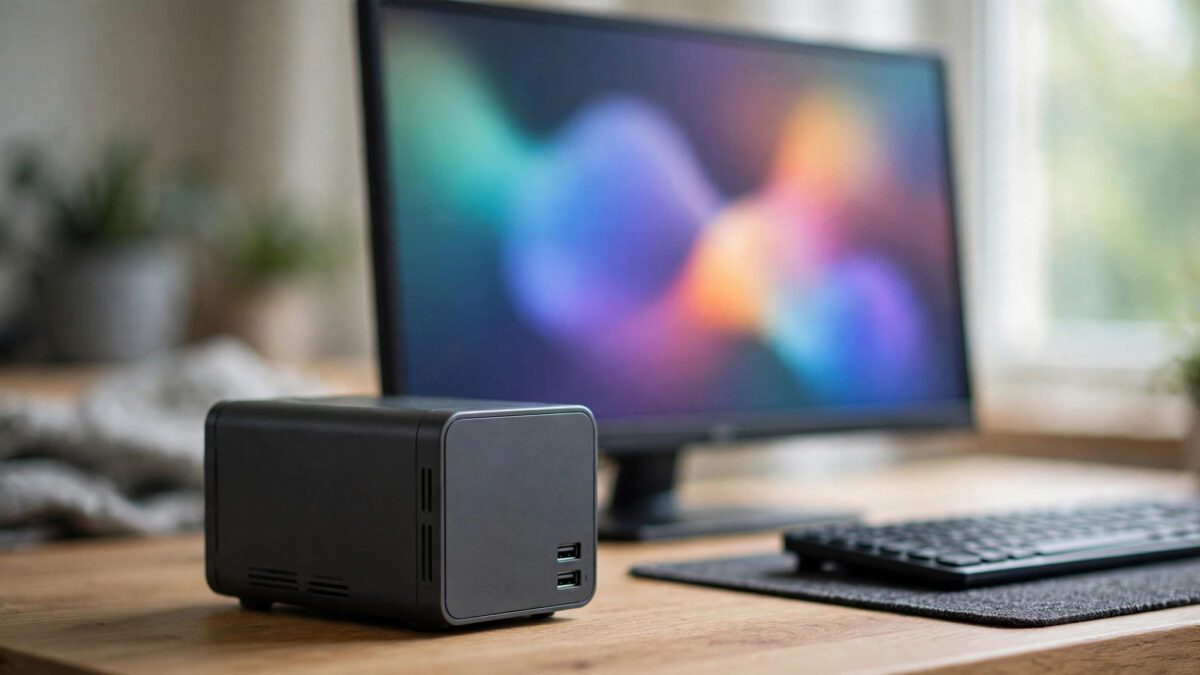
The Asus ProArt GR1X shows what the format looks like in practice. It measures 150 by 150 by 51 millimetres, weighs 1.48 kilograms, and holds two M.2 slots for up to 4TB of storage, plus 10-gigabit Ethernet, Wi-Fi 7 and support for up to four screens.
Retail listings checked on 19 November put the MSI EdgeMesa N AI+ at $4,399.99 with 64GB of memory and 1TB of storage, and $7,499.99 with 128GB and 4TB. The Asus ProArt GR1X starts at $4,499 with 64GB and 1TB. Microsoft’s Surface RTX Spark Dev Box, priced at $5,999.99, has been on preorder since 7 October and is due to ship in November. No prices outside the United States have been announced. Preorders opened in South Korea on 19 November, with wider availability expected from late November.
Why it matters
The desktops are aimed at a gap between two kinds of computing. A laptop can run an AI agent, but it travels, sleeps and gets used for other things. A cloud service can run any model, but it charges by the token and holds the data elsewhere. Nvidia is selling the desktop as the machine that stays on, keeps agents and scheduled tasks running around the clock, and keeps locally processed code and files on the PC.
Creative work is part of the same sales case. Nvidia points to native Windows on Arm support across Adobe’s creative applications and to DLSS 4.5 Ray Reconstruction in Blender 5.3. The company says the machines can render 3D scenes larger than 90GB in real time and edit 4:2:2 video without stuttering. Those are company claims, not tested results.
There are limits buyers should know about. The desktops run Windows on Arm, so most older x86 programs still run through emulation. Not every agent workflow stays local either: Nvidia’s Switchyard software routes tasks between the machine and cloud models, and the company says advanced reasoning draws on cloud models. And the price puts the machines well beyond a typical home PC. Analysts quoted by Reuters in September warned that premium pricing and a tight memory market could hold the platform to a niche audience.
The launch lands in a crowded week for AI releases, the same week OpenAI’s GPT-6.2 models arrived, and days after Nvidia reported record third-quarter revenue of $115.8 billion, up 103 percent on a year earlier. Even so, Nvidia shares fell 2.89 percent to $150.96 on Wednesday, as doubts about the durability of AI spending weighed on technology stocks.
What happens next
More machines are on the way. Nvidia lists compact desktops from Acer, GIGABYTE and HP as coming soon, but has given no dates for them. The Surface Dev Box is the nearest arrival, due to ship this month.
The next test is not another announcement. It is the first independent reviews: real benchmarks on the desktop hardware, thermal and noise readings, and whether the 120-billion-parameter claim holds up on a machine a buyer can actually order. Until then, the RTX Spark desktop is a promise with a price tag — a small, expensive box for people who want their AI at home.
Source: NVIDIA blog; The Verge; Aju Press; VideoCardz; The Threshold. Published: 19 November 2026.