OpenAI chief Sam Altman admitted on Monday that Silicon Valley has failed to sell the public on artificial intelligence, as voters across the United States moved to block new data centres near their homes.
Key Points
- At Semafor’s summit in Menlo Park on Monday, Altman said Silicon Valley’s case for AI had failed to convince the public, and that data centres had become the visible symbol of that failure.
- Voters approved about 40 measures to restrict or ban new data centre projects in the 3 November midterm elections, and tech analyst Dan Ives now expects 10 percent of the 800 to 1,000 data centres planned in the United States never to be built.
- A Harvard study published on Monday found that the 403 hyperscale data centres in the United States produce as much greenhouse gas as Denmark in a year.
- Altman also walked back his claim that scarce memory belongs in data centres rather than home computers, saying people should be able to buy as much RAM as they want.
- He declined to say whether Jensen Huang should return as chief executive of Nvidia, saying he does not know enough to judge.
OpenAI chief Sam Altman admitted on Monday that Silicon Valley has failed to sell the public on artificial intelligence, as voters across the United States moved to block new data centres near their homes.
What happened
Altman spoke on Monday at the first “Silicon Valley and the World” summit, hosted by Semafor in Menlo Park, California, a short distance from Sand Hill Road, where many of the region’s biggest venture capital firms have offices. He said the industry’s case for AI had failed to land with the public, and that data centres had become the visible symbol of that failure.
“I think data centres will get built, but clearly the current way they’re working, being built, and the engagement with communities is not working for people,” he said. “The ecosystem will adapt.”
He said he understood why residents object to a centre opening near them. “I personally have a lot of sympathy to not wanting to have a data centre in [a] community,” he said, adding that the United States had room to build elsewhere. “We have a giant country. We have a lot of space.”
The remarks came 13 days after the 3 November midterm elections, in which voters approved about 40 measures to restrict or ban new data centre development. Dan Ives, a tech analyst known for his bullish view of the sector, now estimates that 10 percent of the 800 to 1,000 new data centres planned in the United States “will not happen”.
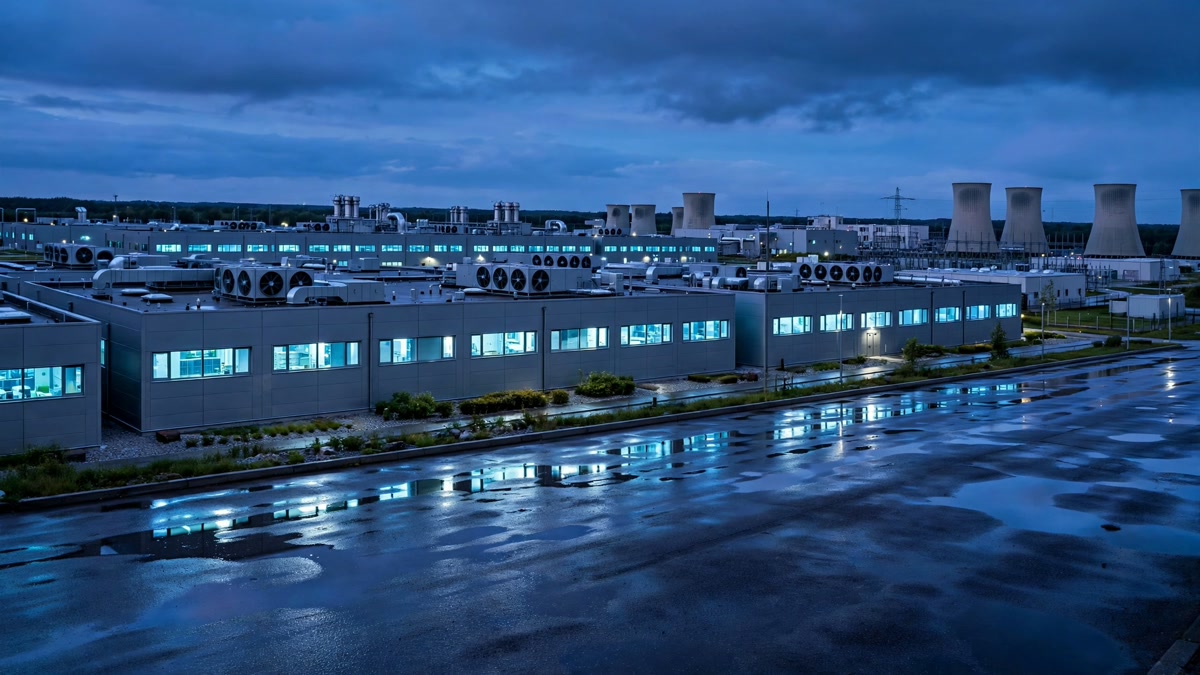
The same day brought fresh numbers behind the backlash. Harvard researchers published a peer-reviewed study in the journal Nature Sustainability which found that the 403 hyperscale data centres in the United States emit as much greenhouse gas as Denmark in a year. The centres produced 25.7 million tonnes of carbon dioxide between May 2024 and April 2025, three times the level measured in 2018. Virginia, Oregon, Ohio and Iowa together account for more than half of the electricity use studied, and most of the centres run on gas. Gianluca Guidi, the lead author and a Harvard researcher on AI and public health, said the aim was to bring transparency and data to the debate over data centres and AI. Reuters reported that candidates who ran on curbing data centres were among the biggest winners of the Democrats’ landslide victories in the midterms.
Altman also used the stage to walk back a remark that had angered computer owners. Last month, on the Cheeky Pint podcast, he called it “quite terrible” for people to keep scarce memory in their own computers instead of letting it sit in data centres. He later wrote on X that he wanted people to have “so much ram” and that his words had been “taken out of context”. On Monday he went further. “I want to be clear, I want people to have a lot of RAM, I think everybody should be able to buy a lot of RAM for their own computer,” he said on stage. “I think the home tinkering is great.” He put the rise in memory prices at “5x, 7x, something like that”, his own rough estimate, and said OpenAI had been warning for years that the world needed to build far more memory supply. He added that OpenAI itself has been held back at different times by memory, rack assembly, data centre capacity and “some random component”.
Why it matters
The backlash now shows up in votes, in published emissions figures and in analysts’ forecasts. For OpenAI, the problem is close to home: the company needs more data centres and more memory to run its models, and both are getting harder to secure. OpenAI’s new defence unit shows the company is still expanding, but its chief executive is now conceding in public that the way the industry builds has to change.
Appetite for AI shares has not faded. Anthropic’s listing drew orders for about six times the shares on offer by the end of last week, even as the row over data centres grew. The money is there. The question is whether the buildings to spend it on can still get built where the industry wants them.
Altman also warned that the supply chain may be building more than buyers need. He told the summit he had warned Samsung executives about double counting: many chipmakers expect to sell most of their output to OpenAI, Anthropic and a handful of others, and those buyers will not need all the supply on offer from every vendor. He said the buildout itself was solid.
The memory shortage ties the two halves of his appearance together. AI firms have spent two years buying up the world’s memory supply for data centres, pushing up prices for phones, game consoles and home computers. That is why a remark about RAM landed so badly, and why Altman spent part of Monday correcting it.
“I think data centres are easy to point to because they’re like a big physical instantiation of this broader thing,” Altman said. “If the tradeoff for curing cancer and having cheaper products is ‘you are going to lose all agency and control and voice in the future,’ that is ‘a terrible sales pitch.'”
What happens next
The next test comes from the market. Nvidia reports third-quarter results after the US market closes on Tuesday, five days after Jensen Huang resigned as chief executive. The figures will show whether demand for AI chips is still rising, and the outlook from interim chief Colette Kress will be the first read on the company after the handover.
Anthropic’s listing is due to be priced on Wednesday 18 November, with trading to start the next day. The price it sets, and the first day of trading, will show whether the data centre row has dented investor appetite for AI at all.
For data centre builders, the question is whether they take Altman’s advice and move projects away from homes, and whether the 40 local measures slow the pipeline that Ives is already trimming. The industry’s answer will show in the next round of planning applications, and in how many of the 800 to 1,000 planned centres actually break ground.
Sources: AFP, Reuters, The Verge, Semafor. Published: 17 November 2026, Kuala Lumpur time.