France faces a nationwide day of strikes and demonstrations on Tuesday, 17 November, as public-sector unions walk out over pay in the second big mobilisation in twelve days.
The stoppage is the broadest yet. France’s largest union, the CFDT, has joined the call for the first time, leaving the government isolated after talks on Friday ended with an offer of a month of discussion and no rise in the base pay rate for 5.8 million public workers. It also lands in the middle of a budget crisis that has already cost the government its finance bill.
Key Points
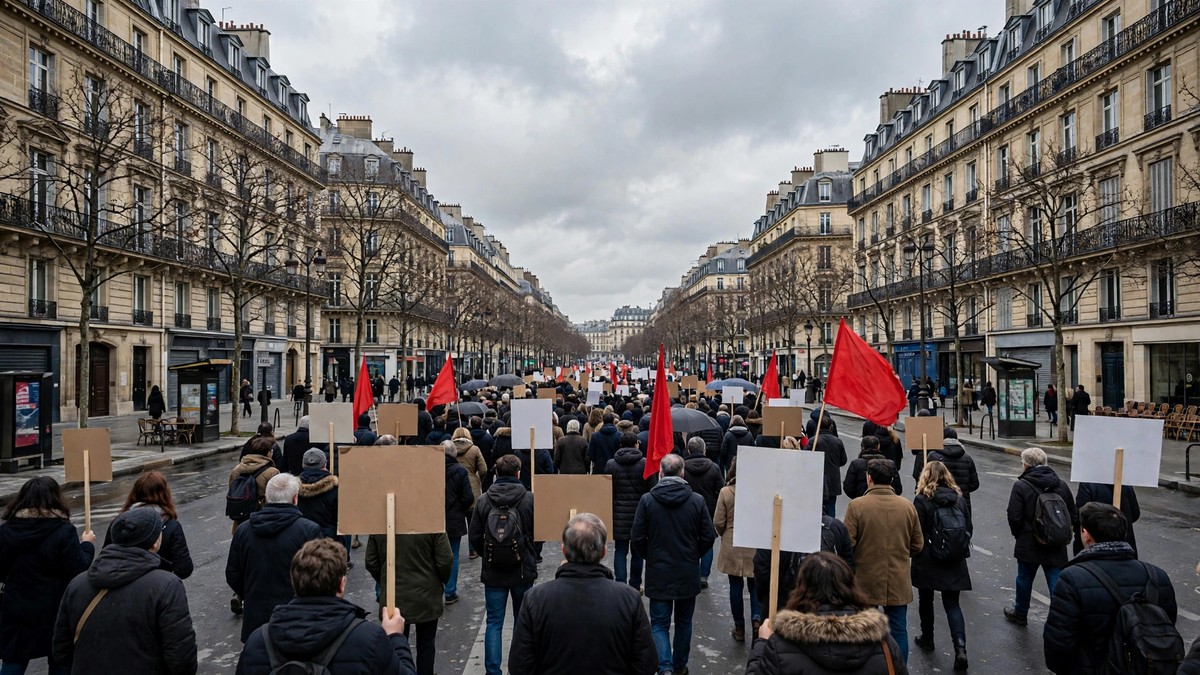
- More than 150 demonstrations are planned across France on Tuesday, 17 November, with the Paris march running from Place de la Nation to Place d’Italie.
- All of the main public-sector unions are behind the strike, after the CFDT joined on Friday, 13 November.
- The dispute is over pay: the index point that sets civil servants’ base salaries has been frozen for a fourth year.
- Trains will be disrupted, with three rail unions striking at SNCF, and schools, town halls and creches are also expected to be hit.
- The government offered a month of talks on low pay but refused a general rise. The next meeting is on 11 December.
What happened
The strike was called on 9 November, hours after Prime Minister Sébastien Lecornu held a social conference with union leaders. Lecornu announced that a 1.6 percent rise in the minimum wage would be brought forward to 1 December, taking it to 1,502 euros net a month, a rise of 24 euros. The unions dismissed it at once. The automatic rise due on 1 January would already have added about 18 euros, so the real gain amounts to only a few euros.
Sophie Binet, general secretary of the CGT, called the offer “crumbs”. The CGT wants about 150 euros a month more, a 10 percent rise in the minimum wage, and pay linked to inflation, which stood at 3.4 percent in October. The six public-sector federations behind the call — the CGT, UNSA, FSU, Solidaires, CFE-CGC and FA-FP — also want the index point unfrozen and the waiting day before sick pay begins scrapped. Four of them have extended the call to the private sector.
Lecornu met the unions again at Matignon on Friday, 13 November, the first time civil-service unions had been received there in almost 20 years. He offered a month of talks on low pay, covering emergency rises for the lowest-paid staff, a shake-up of pay scales, transparency and equality between women and men, help with commuting costs, and protection for staff who are threatened or hurt at work. He would not move on the index point. The government says even a 1 percent rise would cost 2.4 billion euros.
The CFDT, which had held back to keep negotiating, joined the strike after that meeting. Its public-sector chief, Laure Revel, said the proposals “do not represent any real progress”. Marylise Léon, the CFDT’s general secretary, had already called the minimum-wage rise insufficient. With the CFDT on board, the call now has the backing of the main public-sector federations.
Why it matters
The numbers show why the government is under pressure. About 1.35 million of France’s 5.8 million public employees are on low pay, according to a government figure. Hundreds of thousands of civil servants still earn a base salary below the minimum wage, even after the December rise. The unions say four years without a rise in the index point has eaten into living standards, and the government says it cannot afford to pay for one.
The disruption will reach well beyond the public sector. More than 150 demonstrations are planned across the country. In Paris, police have approved a march from Place de la Nation to Place d’Italie, with between 40,000 and 80,000 people expected. Three rail unions — CGT-Cheminots, SUD-Rail and CFDT-Cheminots — have called a strike at SNCF, and the early outlook warned of disruption on RER D and Line R around Paris, with high-speed TGV services less affected than regional trains. At the RATP, which runs the Paris metro, no strike call covers the day, but an open-ended CGT notice does. Air traffic controllers are covered by strike notices, though there was no sign on Monday morning that flights would be hit.
The last nationwide strike, on 5 November, drew about 600,000 people according to the authorities and more than 1.5 million according to the unions. More than 100,000 people marched across France last weekend, and 70,000 police officers and gendarmes were deployed on Saturday. A transport union has also called a week of action from 16 to 20 November covering buses, taxis, logistics and airports.
The dispute has grown into a test of Lecornu’s government. On 4 November the National Assembly rejected the revenue section of the 2027 finance bill by 458 votes to none, sinking it at first reading. The Senate takes up the government’s original draft from 20 November and votes on 9 December. The government insists its measures will not put at risk its target of cutting the deficit to 5 percent of GDP in 2027.
France is not alone in facing transport disruption on Tuesday. Spain is holding a nationwide rail strike the same day, with the government guaranteeing 72 percent of high-speed services. The French unrest also comes as Europe’s leaders argue over the next steps in Ukraine, and days after France blamed Iran for a cyberattack that switched off supermarket fridges.
What happens next
The strike itself is the next step. SNCF was due to publish its line-by-line service plan on Monday evening, with the RATP forecast to follow, and travellers have been told to check their train before setting out. Services could start to return to normal on Wednesday morning. The DGAC, France’s civil aviation authority, was also due to say on Monday evening whether flights would be affected.
The unions have made clear the dispute will not end on Tuesday. The CGT transport federation’s week of action runs until Friday, and Lecornu is due to meet the unions again on 11 December, after public-service elections. The Senate’s budget debate, starting on 20 November, will show whether the government can rebuild a majority for its spending plans. Until then, the pay freeze that started this dispute stays in place.
Sources: Le Monde, Connexion France, Sortiraparis, Swiss Financial Time, NGlobe News, teleSUR. Time: Tuesday 17 November 2026.