Foreign students are turning away from American universities: new enrollment fell 15% this fall, a survey of more than 800 schools released Monday found. Visa delays and travel limits drove the drop.
The fall is the second in a row, and it is getting worse. Last year new enrollment fell 18%. Now the pipeline of students arriving for the first time has shrunk again, and universities say the damage is showing up in their budgets, their classrooms and their research labs.
Key Points
- New international enrollment fell 15% this fall, and total international enrollment fell 9%, in a survey of more than 800 US universities by the Institute of International Education (IIE).
- Graduate enrollment fell 15% this fall, while undergraduate enrollment fell 3%.
- India remains the biggest source of students but fell 6.5% to 339,435; China fell 4% to 254,458.
- 88% of universities blamed the visa application process for the drop, and 70% blamed travel restrictions.
- The fall decline will cost the US economy $2.4 billion and 31,000 jobs, according to NAFSA, the association of international educators.
What happened to foreign student enrollment
The figures come from two sets of numbers the IIE released on Monday. The first is a snapshot of this fall, based on a survey of 809 colleges carried out in October with 10 higher education associations. It found total international enrollment down 9% from last fall, with new students down 15%.
The second is the full Open Doors census for the 2025-26 school year. It counted 1,146,163 international students in the United States, down 3% on the year before. New students fell 18% to 228,123. The sharpest fall was among students starting a master’s degree, down 22% to 237,655, while undergraduate numbers were almost flat at 356,165 and doctoral students rose 3.1% to 158,152.
India stayed the top sending country for a third year, with 339,435 students, but that was a 6.5% fall and the first annual drop in five years. China sent 254,458 students, down 4%, continuing a slide that began after the pandemic. More than half of all international students, 57%, study science, technology, engineering or maths. They make up 6% of the US higher education population, and 59% of them attend public universities.
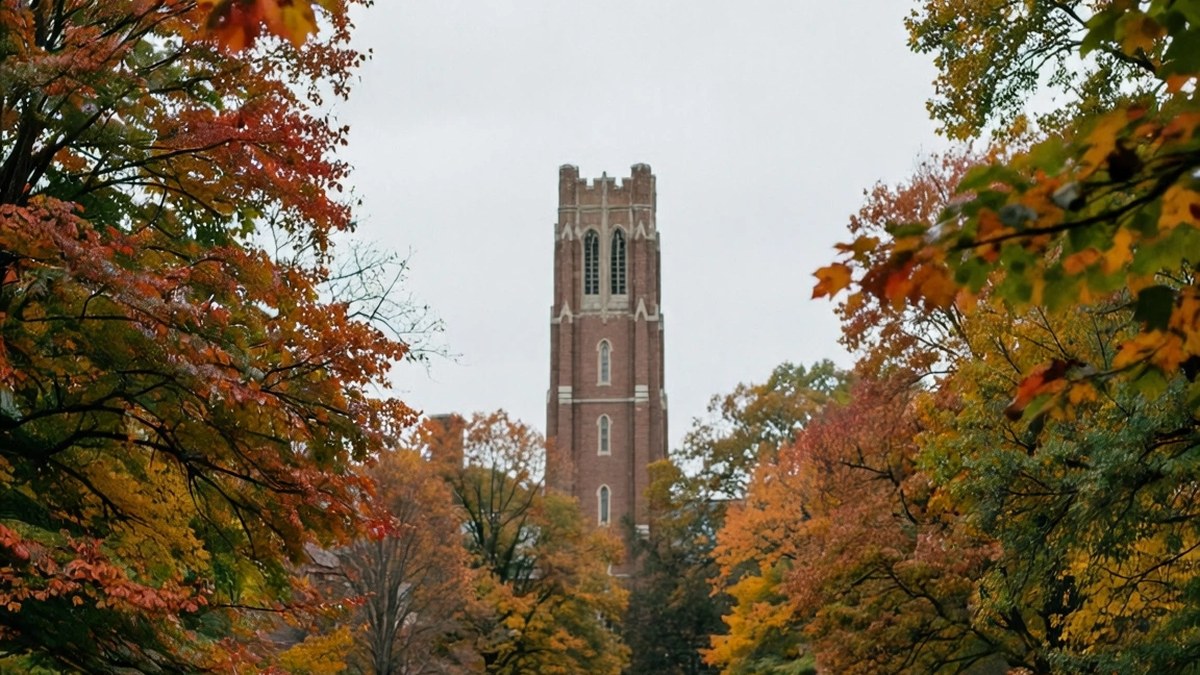
The national figures hide sharper falls on individual campuses. Michigan State University reported international enrollment down about 10%. Ohio State University fell 13%, including a 20% drop in students from China, to its lowest level in 16 years. Cleveland State University has lost 46% of its international students in two years, falling to 828 this fall, with fewer than 50 new students arriving and a budget hit of $2 million to $4 million.
Penn State University pointed to the drop when it reported a $124 million budget gap on a $2.2 billion budget. About 70 programmes at the University of North Texas are being cut or merged, a step the university links to the drop in students from abroad. The Illinois Institute of Technology plans to borrow up to $200 million from its endowment. Ted Mitchell, president of the American Council on Education, called the two-year downturn “likely historic”.
Why foreign students are staying away
Universities were asked what they thought was behind the fall, and their answers were blunt. In the IIE survey, 88% blamed the visa application process and 70% blamed travel restrictions. Six in ten pointed to competition from other countries, which are recruiting the same students harder.
The Trump administration has tightened the rules at several points in a student’s journey. The Department of Homeland Security has ended the legal status of thousands of international students, and detained and deported many of them. It finalised a rule this summer limiting student stays to four years without federal approval, though a judge has temporarily blocked it. It has also proposed charging schools a $70,000 fee for each student they recommend for Optional Practical Training, the programme that lets graduates work in their field for up to three years. That proposal is not final and is expected to face legal challenges.
The uncertainty is already changing behaviour. Participation in Optional Practical Training fell 6% this fall, and 95% of schools in the survey said students would probably look to another country if the programme were limited. Federal data analysed by the Presidents’ Alliance on Higher Education and Immigration counted fewer than 1.1 million international students in the US as of last month, down 6.7% from October 2024, a separate measure that points the same way.
Other countries are picking up the students America is losing. A survey by NAFSA and Studyportals found half of colleges in continental Europe reported higher foreign undergraduate enrollment this summer and autumn, and 59% of institutions in Asia reported more foreign postgraduate students. Applications tell the same story: first-year international applicants through the Common App fell 10% in the last admissions cycle.
The administration has pushed back on some of the figures. The Department of Homeland Security called NAFSA’s survey data “completely misleading” and said its own student records had not shown a 10% drop. That dispute is about NAFSA’s survey, not the IIE figures. Trump himself has said parts of his immigration crackdown may have gone too far, telling CBS in an interview after the midterm elections that the policy had “both helped and hurt”.
What happens next
The fall snapshot is preliminary, and the full picture for this academic year will not be known until the next Open Doors report. The proposed fee for Optional Practical Training has not been finalised, and the four-year stay limit is still before the courts, so both could change before they bite.
Universities are already adjusting. Just over half of the schools that grew their new international enrollment credited recruitment and campus athletics, and many are now chasing students who are already in the United States: 57% said they reached out to foreign students at US high schools, and 48% sought out international undergraduates for graduate programmes.
The United States remains the world’s top destination for international students, with more than a million enrolled last school year. The question now is whether the slide stops there, or whether a third straight fall turns a warning into a lasting loss. Trade tensions with China have also spilled into technology and chips, adding another reason for students and their families to weigh other destinations.
Sources: Institute of International Education (IIE) Open Doors 2026 report and Fall 2026 Snapshot; The New York Times; Associated Press; Bloomberg; Higher Ed Dive. Published 16 November 2026.