SpaceX plans to spend more than $74 billion on two giant supercomputing campuses in Texas and Arizona, the company said on Thursday, in one of the largest bets yet on the infrastructure behind artificial intelligence.
The announcement, made under the company’s “Building the Future” initiative, puts a price on a shift that has been building all year: the rocket company is now also one of the biggest spenders on the machines that train AI. SpaceX said its AI business brought in more than half of its revenue in the third quarter, and the two new campuses would give it some of the largest AI training capacity in the United States — if local officials approve them.
Key Points
- SpaceX said on 12 November it will invest more than $74 billion in two AI supercomputing campuses in Texas and Arizona.
- More than $24 billion goes to the Starbase site in Texas; roughly $50 billion to Cochise County, Arizona.
- The Arizona campus would draw up to 6 gigawatts at full build-out, across nine buildings on 747 acres.
- Both projects still need local approval, with key decisions due on 9 December.
- SpaceX says its AI business brought in more than half of its revenue in the third quarter.
What happened
SpaceX set out the plan in a statement on Thursday, first reported by Reuters and confirmed in detail by The Wall Street Journal. The company expects to spend more than $24 billion on a supercomputing facility at Starbase, its rocket site in the Rio Grande Valley in South Texas, and about $50 billion on a second campus in Cochise County, in south-eastern Arizona.
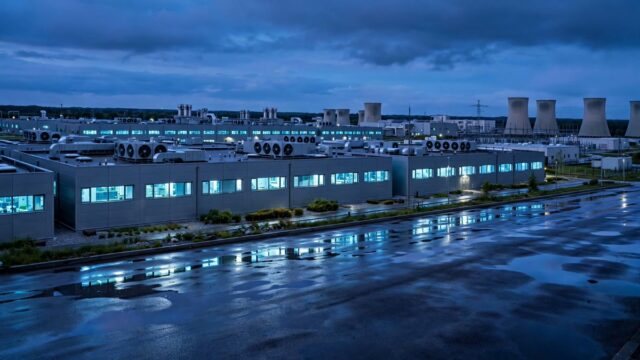
The Texas project is the further advanced of the two. The campus would sit on about 444 acres near the Port of Brownsville, alongside a gas-fired power plant that would generate its own electricity rather than draw from the Texas grid. SpaceX said work there had already created more than 3,000 construction jobs and would support more than 500 permanent roles once the site is running. The Starbase City Commission is due to consider a property tax abatement for the project on 9 December.
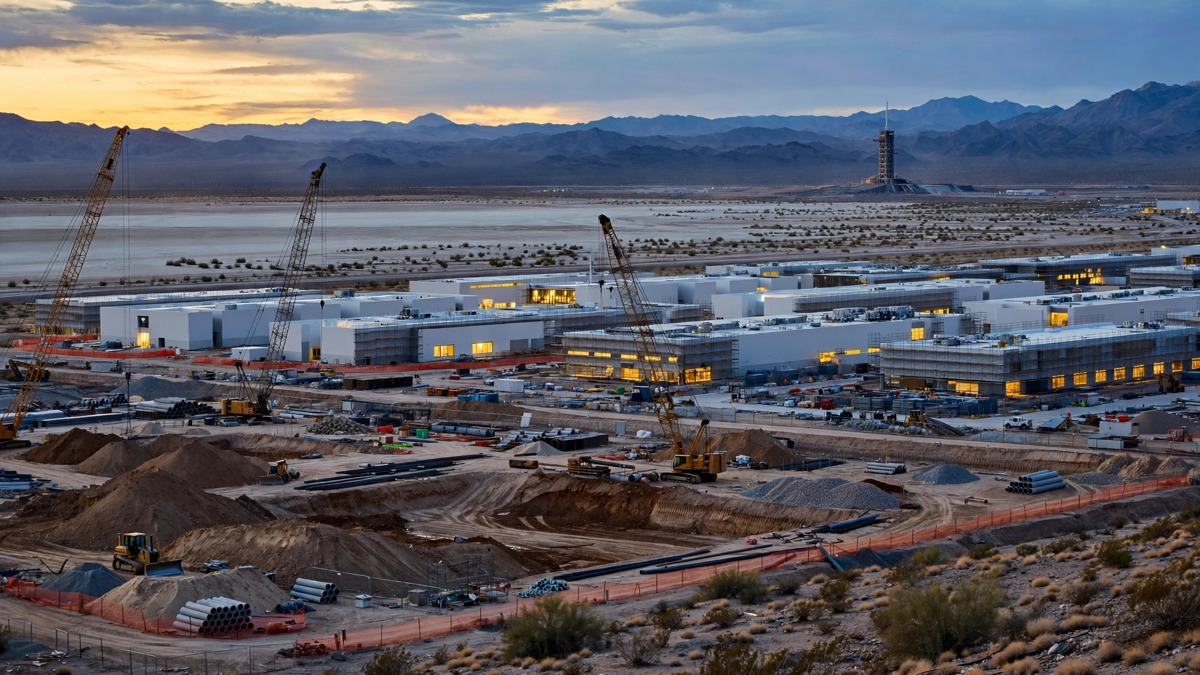
The Arizona campus is the bigger bet and the harder sell. It would cover 747 acres along US Highway 191 near the Willcox Playa, a dry lake bed in the desert about 80 miles east of Tucson. The plan, filed on 30 October by an affiliate called Tombstone Resources LLC, describes nine buildings of about 493,000 square feet each, built in four phases of roughly 1.5 gigawatts apiece, reaching 6 gigawatts at full build-out. SpaceX confirmed at a town hall on 4 November that it is behind the project and would own and build it.
SpaceX says the Arizona campus would create about 5,500 construction jobs and 1,000 permanent positions. It says it is working with local electric cooperatives, would invest $3.6 billion in transmission and grid upgrades, and could cut electricity bills for cooperative members by up to 20%. The campus would use dry cooling, with no planned industrial use of groundwater — a sensitive point in a desert county where water is closely watched.
The project faces real opposition. A petition with about 2,400 signatures has asked Cochise County officials to deny the permit, and the county’s Planning and Zoning Commission will hold a public hearing on the application, known as SU26-22, on 9 December. Data centres are not allowed by right in the county, so the project needs a special use permit to proceed. If it is approved, construction could begin in March 2027, according to Data Center Dynamics.
Why it matters
The scale is what sets this apart. Six gigawatts is about two and a half times the power drawn by all the data centres in Maricopa County — home to Phoenix — combined, according to an analysis by The Arizona Republic. It is also roughly one and a half times the output of the Palo Verde nuclear plant, the largest in the United States. Few companies have ever committed this much money to AI computing in a single announcement, and the two campuses together would rank among the largest AI training sites in the country.
The plan also shows how far SpaceX has travelled from rockets. The company went public in June, and its AI segment — built around the data centre business formed when it absorbed xAI earlier this year — now accounts for more than half of its revenue, Reuters reported. The new campuses would extend a footprint that already includes the Memphis, Tennessee region, added when the xAI merger closed. CoreWeave raised its outlook this week on surging AI demand, and the wider industry is racing to lock up power and land before both run short.
Politics hangs over both sites. The announcement came days after widespread Democratic wins in the midterm elections, including in Texas, where governor-elect Gina Hinojosa has been critical of data centres — though Wall Street analysts largely expect projects that have permits or have broken ground to continue, the Journal reported. Elon Musk, SpaceX’s chief executive, spent more than $440 million supporting Republicans in the midterms.
There are also limits to what the announcement proves. The $74 billion is the company’s own planned figure, not contracted spending, and SpaceX has not said who will supply the AI chips at the heart of the campuses, what network they will use, or when either site would start running. In Arizona, the promised bill cuts depend on a separate approval from the state regulator, and the power supply itself is still being negotiated. The money is promised; the permission is not.
What happens next
Both projects face their first real test on the same day. On 9 December, the Cochise County Planning and Zoning Commission will hear the Arizona application in Bisbee, moved to 2 p.m. to handle the expected turnout, while the Starbase City Commission considers the Texas tax abatement. The Arizona commission’s decision is final: it can approve the project, approve it with conditions, or deny it outright.
If Arizona is approved, construction could start as early as March 2027, with the first phase of about 1.5 gigawatts built first. The Texas site, already under way, will move faster — the question there is less whether it gets built than how much of the $24 billion is spent, and how quickly the gas plant that powers it comes online.
The wider race is not slowing down. Google launched Gemini 4 Hydrogen, a fast model built for coding and AI agents, on the same day SpaceX set out its plan, and Jensen Huang resigned as Nvidia’s chief executive hours earlier — a reminder that the companies building the AI boom are changing as fast as the technology. For SpaceX, the next month will show whether its biggest bet on computing can clear the local politics that now decide where the machines get built.
Sources: Reuters, 12 November 2026; The Wall Street Journal, 12 November 2026; Data Center Dynamics, 6 November 2026; The Arizona Republic, 6 November 2026; SpaceX statement, 12 November 2026. Published 13 November 2026.