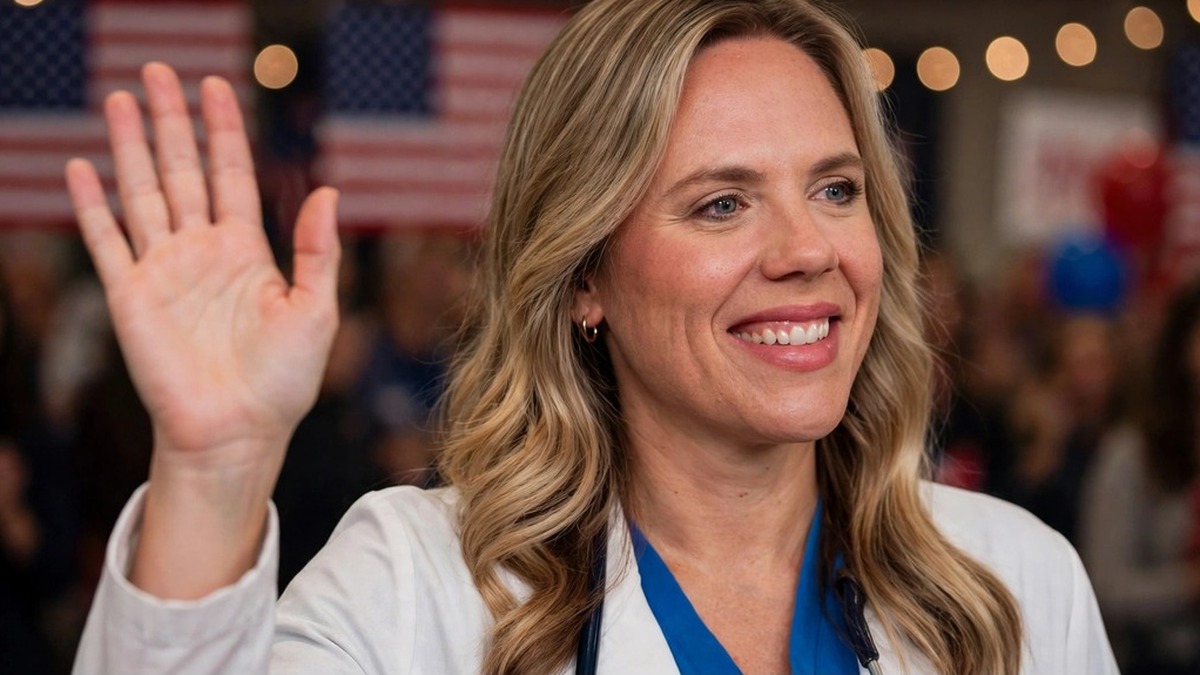
A pediatrician who built her campaign around the cost of living has taken a Senate seat Democrats had not won since 1998.
Key Points
- The Associated Press called South Carolina’s Senate race for Democrat Annie Andrews on 3 November.
- With 100% of precincts reporting, Andrews led Republican Darline Graham by 1,042,362 votes to 951,165.
- A pre-election NYT/Siena poll had the race tied 48-48; Andrews outraised Graham $24.2 million to $1.9 million.
- Graham called Andrews to congratulate her, and NBC and CNN also called the race for Andrews.
Democrat Annie Andrews won South Carolina’s Senate race on 3 November, beating Republican Darline Graham with every precinct counted, in a result the Associated Press called a stunning upset in one of America’s reddest states.
What happened
The call came on election night, and it surprised even seasoned watchers of South Carolina politics. Andrews, a pediatrician, defeated Graham by 1,042,362 votes to 951,165 once all precincts had reported. The margin was decisive, not narrow, and it ended a run of Republican control of the seat stretching back to 1998.
Graham called Andrews to congratulate her after the result became clear. NBC and CNN also called the race for Andrews, confirming the outcome across the major networks.
Then came the line that defined Andrews’ night. “This Senate seat doesn’t belong to one family, one party, or to Washington, DC. It belongs to you and it always will,” she said. The remark drew a direct contrast with her opponent’s famous family name in South Carolina politics, and with the Washington establishment Andrews had campaigned against.
The result had looked very different only weeks earlier. A pre-election NYT/Siena poll put the two candidates dead level at 48-48, and few forecasters had South Carolina on their list of competitive Senate races at all. Andrews also held a wide fundraising edge, bringing in $24.2 million against Graham’s $1.9 million, which let her campaign advertise heavily in the closing weeks.
Why Andrews’ South Carolina win matters
Andrews built her campaign around a single theme, repeated at almost every stop: lowering costs. She told voters that prices, not party labels, would decide how she voted in the Senate, and she returned to that message first, second and third. Against that pitch, Graham’s advantages — a family name known across the state and the endorsement of Donald Trump — were not enough.
The win matters beyond South Carolina for two reasons. First, it shows that a Democrat can still win statewide in the Deep South when the campaign is fought on household costs rather than national culture battles. Second, it adds to a string of Democratic Senate gains on election night, coming hours after the party also flipped a long-held Republican seat in Texas. For a full picture of that Texas result, see our report on James Talarico’s victory: https://worldpulsewire.com/2026/11/04/talarico-wins-texas-senate/
South Carolina’s own recent history underlines the scale of the upset. No Democrat had won this Senate seat since 1998, and the state has voted Republican in every presidential election for decades. The Kansas Senate race, where Democrat Christy Hamilton led Republican Roger Marshall in late polling, showed a similar pattern of a supposedly safe Republican seat coming under pressure: https://worldpulsewire.com/2026/11/03/kansas-on-a-knifes-edge-hamilton-leads-marshall-as-a-94-year-drought-faces-its-biggest-test/
What happens next
The result is a projection, not yet a certified count. South Carolina’s election authorities will certify the vote in the coming days, and only then does Andrews’ victory become formal. Certification is routine when the margin is this wide, and no challenge to the result has been signalled.
Once seated, Andrews will face the question every upset winner faces: whether the cost-of-living message that won the race can survive contact with Washington. Her supporters will expect her to keep prices at the centre of her politics. Her opponents will test whether a Democrat in such a red state can hold the seat when it next comes up.
For now, though, the story of the night in South Carolina is simple. A race polled as a tie, in a state written off by most forecasters, ended with a Democrat winning by more than 90,000 votes — and with a victory speech that claimed the seat for voters, not for any family, party or capital.
Sources: Associated Press, NBC, CNN | 4 November 2026