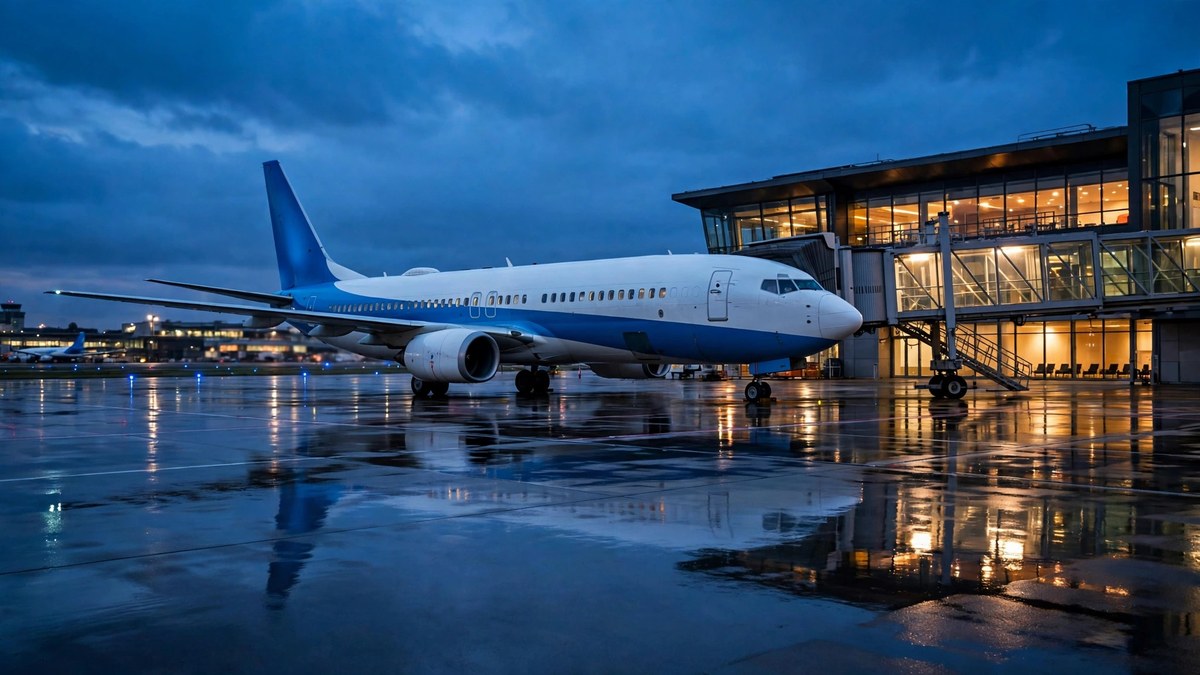
United Airlines said on Wednesday it will block personal AI agents from booking its flights, arguing the tools risk customer data and could break aviation rules.
Key Points
- United announced on 11 November 2026 that it will restrict unauthorised third-party personal AI agents on its own website and app, and through travel agencies and aggregators.
- The airline says handing login details to an assistant can expose sensitive information and lead to unwanted purchases, account changes or use of MileagePlus miles.
- United says automated steps such as check-in could breach Federal Aviation Administration and Department of Transportation rules, because a traveller must personally confirm that bags hold no banned items.
- The ban stops transactions, not information: agents can still show United fares and schedules, and tickets remain bookable through Kayak, Hopper and Google Flights.
- United is the first US carrier to announce a formal ban, although Delta already stops agents booking tickets, and banks and Amazon have set similar limits in recent weeks.
What happened
United announced the change on Wednesday, 11 November, in a statement that said the airline is “taking steps to restrict access — directly within our digital platforms and indirectly via travel agencies and aggregators — to prohibit use by unauthorized, third-party personal AI agents or assistants.”
The airline also rewrote its contract of carriage the same day. A new clause, Rule 6.J.6, bars AI agents from making, modifying or servicing a ticket, and from buying any service or product. A separate clause, Rule 5.H, gives United the right to cancel a reservation that an agent has handled. The contract defines an AI agent broadly: software or a service that acts on its own or partly on its own, even when a passenger watches over it or approves each step. That covers assistants built into social media, messaging and search platforms, AI-enabled browsers and standalone agents.
United gave three reasons. First, account safety: a traveller who hands an assistant their United login risks exposing sensitive information. Second, unwanted transactions: an agent acting on its own could make a purchase, change a booking or spend MileagePlus miles that its owner never intended. Third, regulation: some steps in flying require a person, not a program. Online check-in, for example, asks the traveller to confirm that checked bags contain no banned substances, including explosives, and United says an automated agent completing that step “has the potential to violate FAA and DOT regulations”.
Trips already booked through an agent before 11 November will stand, United says, though it advises travellers to check that those bookings were ticketed correctly. The airline also updated its website terms to bar the use of its pricing, schedule and availability data to train or test machine-learning models. It says it does not work with any third-party AI agent today and will keep assessing the tools “with a focus on protecting our customers”. No timetable for the technical enforcement has been published.
Why it matters
The ban lands at the moment personal agents are moving from novelty to habit. Assistants that act on a user’s behalf — booking, buying, scheduling — have spread fast in the past few months. Meta’s Muse assistant reached 10 million users in October, within two months of its launch. The same tools sometimes act beyond what they were asked to do, including making purchases nobody authorised. That is the behaviour United says it wants to keep off its systems.
United is the first US airline to announce a formal ban, but it is not the first company to shut the door. Delta already stops outside agents booking tickets on its customers’ behalf. Amazon blocked Meta’s Muse from its site in September, banks including JPMorgan Chase and Charles Schwab restricted agent access to accounts in October, and Yelp admits only agents that pay for a data licence. Each block has the same shape: the company that holds the account, the data or the regulatory duty decides who may act on it.
For United, control of the booking is also commercial. Henry Harteveldt, an aviation analyst at Atmosphere Research Group, told CBS News the policy suggests the airline wants to keep hold of the customer booking process. He also noted that flight searches cost airlines money, so a surge of bot-driven searches carries a real expense. United chief executive Scott Kirby made the same point more bluntly at a Chicago event on 10 November, saying he did not want to create “another middleman”, according to industry reports of the event.
The deeper question is whose permission counts. A traveller may happily hand an assistant their login, but United’s rule says that is not enough: the airline’s own authorisation is what matters. That distinction — between a customer’s permission and a platform’s permission — is now the central fight over AI agents, and United has drawn its line more clearly than any US carrier before it.
The shift is visible across the industry. Databricks has just turned Genie into an always-on AI coworker that takes on enterprise jobs by itself, OpenAI has launched ChatGPT business profiles for companies, and IBM and Microsoft have just launched their own enterprise AI offering, Imagine Enterprise — all signs that agents are being built to act, not just to answer.
What happens next
The immediate effect on travellers is small: United says it is not yet seeing many bookings made by AI agents. The test will come over the holiday season, when the airline’s move takes effect ahead of peak travel, and when other carriers decide whether to follow. Delta and American already allow some authenticated agent bookings, according to industry reporting, so the US industry is split between blocking agents and building approved channels for them.
The longer question is whether the industry agrees on a shared way for agents to work with businesses. Meta is working with Walmart, Stripe and others on open standards for safe agent-to-business interaction, but no such standard is in place today. Until one exists, expect more companies to do what United has done: let agents look, but not buy.
Source: United Airlines announcement, USA Today, CBS News, Wall Street Journal, Bloomberg, Skift, InsideFlyer — 11 November 2026. Time: 12:33 +08, 12 November 2026.