

Key Points
- The Nasdaq Composite fell more than 4% in Thursday trading, dropping over 10% below its 6 October record close of 27,599.89 — putting the index in correction territory.
- The Dow Jones Industrial Average fell more than 1,000 points, and the S&P 500 lost more than 3%.
- Chip and AI stocks led the fall: AMD and Micron were down about 15%, Nvidia about 8% and Tesla about 10% in mid-morning trading.
- Investors are questioning whether heavy spending on artificial intelligence and data centres will turn into profit fast enough, and fear the new Democratic Congress will slow data-centre expansion and add scrutiny.
- The sell-off reversed Wednesday’s post-midterm rally, when the Dow recorded its best day in 18 months.
- Investors now look to Friday’s October jobs report for the next signal.
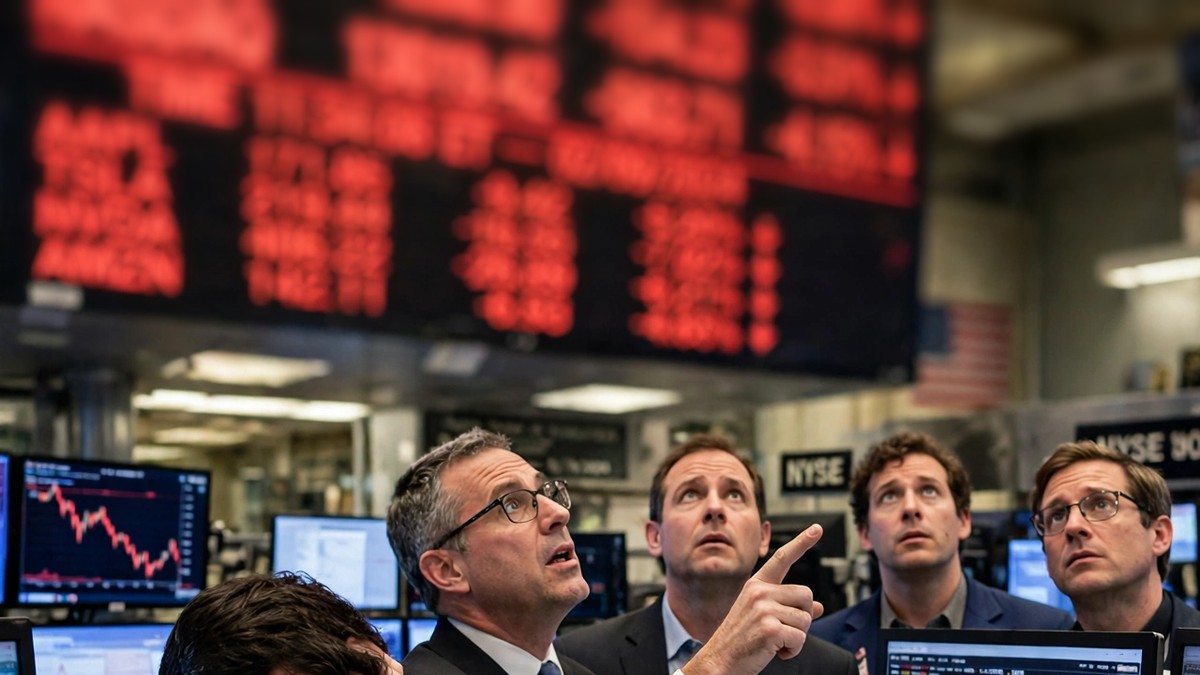
The Nasdaq plunged more than 4% on Thursday, falling into correction territory as a sell-off in chip and artificial intelligence stocks wiped out Wall Street’s post-midterm rally in a single session.
What happened: Nasdaq enters correction as tech sell-off deepens
Wall Street tumbled on Thursday 5 November as investors sold technology stocks hard, reversing the rally that followed the Democrats’ midterm sweep. The Nasdaq Composite fell more than 4% in morning trading and was at one stage down more than 5%, dropping over 10% below its record closing level of 27,599.89 set on 6 October. A fall of 10% or more from a recent peak is defined as a correction.
The Dow Jones Industrial Average fell more than 1,000 points, giving back much of Wednesday’s 1,569-point surge, its best day in 18 months. The S&P 500 lost more than 3%, with technology the worst-hit sector. The Philadelphia Semiconductor Index, which tracks chipmakers, plunged more than 9% to its lowest level since mid-April.
Chip stocks bore the brunt of the selling. Advanced Micro Devices and Micron Technology each fell about 15% in mid-morning trading, while Nvidia slid about 8% and Tesla about 10%. The selling spread across the AI supply chain, from memory-chip makers to the data-centre builders that have powered the market’s gains this year.
Why it matters
The sell-off is a sharp verdict on the two forces that have driven markets this year: the artificial intelligence boom and the politics around it. Investors have poured money into chipmakers and data-centre operators on the promise that AI spending will pay off, but Thursday’s selling showed growing doubt about how quickly that spending turns into profit. Big technology companies have borrowed heavily to fund data centres and chips, and the market is now asking whether the returns justify the cost.
Politics added to the pressure. The Democrats’ sweep of both chambers of Congress has raised expectations of tougher regulation and closer scrutiny of data-centre expansion, which could slow projects and squeeze revenue at the largest AI companies. That fear hit the same stocks that had rallied on Wednesday, when investors first cheered the election result.
The scale of the move matters beyond Wall Street. A correction in the Nasdaq, coming a day after the market’s best session in a year and a half, shows how fragile confidence has become. Retirement savings, pension funds and ordinary investors with money in index funds all feel a fall of this size, and a deeper slide would raise questions about consumer spending and business investment in the months ahead.
What happens next
Traders now look to Friday’s October employment report, due at 13:30 GMT, for the next signal on the health of the US economy. A strong report could steady nerves; a weak one could deepen the sell-off. Attention will also stay on the chipmakers reporting results in the coming days, and on whether the new Congress moves quickly on data-centre oversight.
The immediate question is whether Thursday was a one-day flush or the start of a longer retreat. The Nasdaq has corrected before this year and recovered, but the combination of AI-spending doubts and a new political landscape in Washington gives this sell-off a different character. Investors will be watching the open on Friday for the answer.
Sources: Reuters (original report, 5 November 2026) and CNBC (independent report, 5 November 2026), with corroboration from the New York Post and The National. Facts verified against the original report and one independent source. Figures are intraday readings from Thursday trading; the market was still open at the time of writing. Image is AI-recreated, not the original photograph.