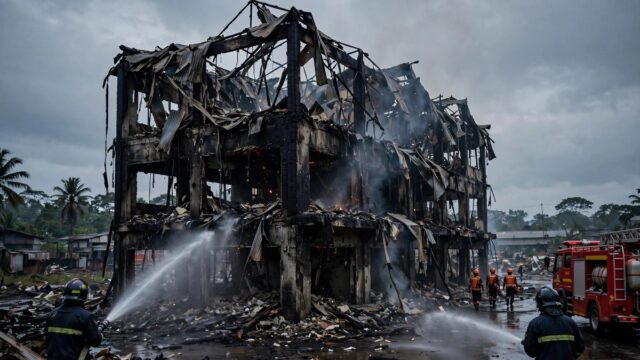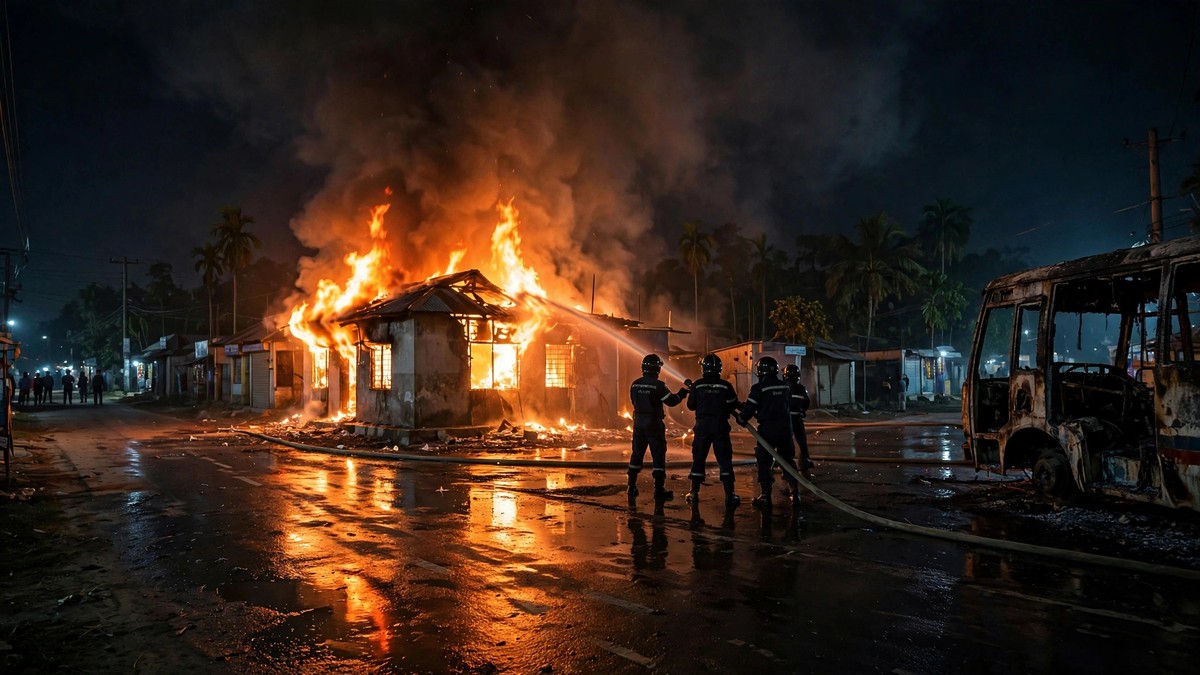
Fresh arson attacks swept across Bangladesh on Friday, killing at least three people, as the country braced for the planned December return of ousted prime minister Sheikh Hasina.
The fires cap a week of bombings, street clashes and mass arrests set off by Hasina’s announcement that she will come home from India next month, even though a court sentenced her to death in her absence. Her banned party has taken to the streets. The government has sent in troops.
Key Points
- At least three people have been killed in the unrest, and hundreds of paramilitary troops have been deployed across seven districts.
- Attackers set fire to the family home of Nobel laureate Muhammad Yunus in Chittagong and torched a police station in Hasina’s hometown of Gopalganj.
- Hasina, 79, says she will return in December despite a death sentence for crimes against humanity over the 2024 crackdown that ended her rule.
- Police say 124 people linked to her Awami League were arrested in Dhaka in the past 24 hours.
- Prime Minister Tarique Rahman has blamed India for the unrest, and the government says those behind the violence will be prosecuted.
What happened
The latest fires broke out on Friday. A petrol bomb was thrown at the home of junior foreign minister Humaiun Kobir in the northeastern city of Sylhet, police said. Kobir told reporters Dhaka would deal with the attacks “very firmly”. “It is not possible to bring back a ‘fled terrorist’ by throwing petrol bombs,” he said. Communications with Gopalganj, Hasina’s home district, were restored on Friday.
A day earlier, attackers set fire to the home of a former junior minister from the Awami League in Rajshahi. In Gopalganj, protesters carrying machetes set fire to a police station in Tungipara. A bus and a truck were set ablaze on the Dhaka-Chattogram highway on Thursday, though the passengers escaped unharmed.
The violence began building earlier in the week. Two activists of the ruling Bangladesh Nationalist Party were killed in clashes in Gopalganj on Wednesday night, police said. Late the same night, the ancestral home of Muhammad Yunus, the Nobel laureate who led Bangladesh after Hasina’s fall, was set on fire in Chittagong. Police said flammable material was thrown into an unused room on the ground floor. Members of Yunus’s family who live upstairs were unhurt. A bus company helper was burned to death on Wednesday morning in Pirojpur after two buses were set alight. A crude bomb had exploded outside the Dhaka home of Cultural Affairs Minister Nitai Roy Chowdhury the night before, and an empty train carriage was set on fire at a station in Netrokona.
Police have recorded dozens of crude bomb blasts and vehicles set on fire in at least 28 districts over the past 10 days, with police officers and members of the public among the injured. Grameen Bank, the lender Yunus founded, said at least 37 of its branches and offices have been targeted in arson attacks or attempted fires since 10 November.
Arrests have mounted through the week. Police said 124 people linked to the Awami League were arrested in Dhaka in the 24 hours to Friday. A day earlier, officers detained former education minister Nurul Islam Nahid at his home in the capital. He faces charges linked to killings during the 2024 protests. To contain the unrest, 97 platoons of the Border Guard Bangladesh have been sent to seven districts, including Gopalganj and Faridpur.
Why it matters
Hasina’s planned return has reopened the deepest wound in Bangladeshi politics. She fled to India on 5 August 2024, after weeks of student-led protests and a deadly crackdown ended her 15 years in power. A local court later sentenced her to death for crimes against humanity over that crackdown. The sentence was handed down a year ago this week. She has now asked for a new passport and national identity card so she can travel home. The government has refused both.
Her Awami League, its activities now banned, answered with a week of rallies and protests, ending in a nationwide shutdown on Thursday. The shutdown had mixed results, with the strongest effect in the southern districts where the party still has support. The government blames the banned party for the violence, though police have not named suspects in the Gopalganj attacks.
The unrest has also pulled India into the row. Hasina has lived in exile there since 2024, and Prime Minister Tarique Rahman blamed India for the unrest at a rally in Lalmonirhat on Thursday. “Enough is enough. We must give a clear answer to these terrorists, arsonists and killers,” he said. State Minister for Foreign Affairs Humaiun Kobir said on Friday that the attacks were “terrorist activities” carried out by Awami League activists.
The death sentence against Hasina sits alongside other recent verdicts on mass atrocities in the region: an international court ruled this week that Myanmar committed genocide against the Rohingya. The unrest also lands on a crowded regional agenda. Southeast Asian leaders met in Manila this month for the ASEAN summit, with energy security at the centre of the talks.
What happens next
Hasina has said repeatedly that she wants to return next month. She told the AFP news agency by email this week that she was “fully aware” she could be hanged. She has given no exact date for her return, and the government has given no sign it will issue the passport or identity card she needs to travel.
Home Minister Salahuddin Ahmed said on Tuesday that Awami League leaders abroad were urging supporters to destabilise the country and burn property, and that those involved would be identified and prosecuted. Troops remain on the streets, and police say more arrests are likely as they work through the week’s attacks.
The next flashpoint is December, the month Hasina says she will return. Until then, paramilitary patrols continue and the government has promised prosecutions for those behind the attacks.
Sources: Reuters, AFP via Free Malaysia Today, Dawn, The Indian Express, UCA News, ANI. Published 20 November 2026.