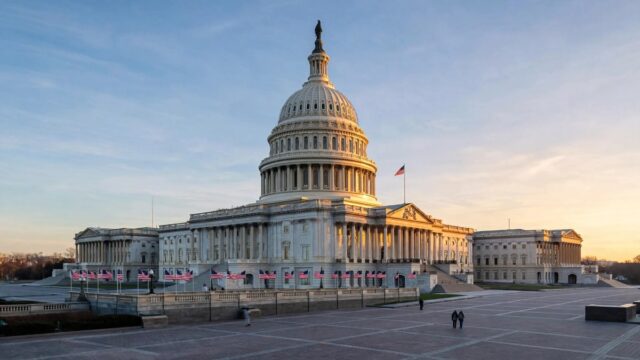

The US Senate passed the BAAJA permitting bill 62-33 on Thursday night, sending the biggest rewrite of federal environmental review in years to the House.
Key Points
- The Senate passed the Bipartisan American Affordability and Jobs Act (BAAJA) 62-33 on Thursday 19 November; the bill now goes to the House.
- BAAJA puts two-year limits on major environmental reviews, cuts the window to sue to 150 days, and stops courts from halting projects over review flaws.
- The bill makes data centres pay for the grid upgrades they need, a change its authors say could bring in about $55 billion over ten years.
- Supporters call it the largest permitting reform in history; critics, including Al Gore, say it weakens environmental law and tribal rights. The House must act before this Congress ends in January.
What happened
The vote came just after 10 p.m. in Washington on Thursday, after weeks of procedural fights. Four senators wrote the bill together: Shelley Moore Capito and Mike Lee for the Republicans, Martin Heinrich and Sheldon Whitehouse for the Democrats. They introduced it on 30 September, and it cleared its last procedural hurdle, 65-31, on Wednesday before the final vote.
Democrats split on the bill. Minority Leader Chuck Schumer was among those who backed it, while most of his party voted no. Only two Republicans, Josh Hawley and Mike Rounds, voted against it.
Capito, who led the effort, said the vote was a breakthrough after years of failed attempts. “Tonight, the passage of permitting reform in the Senate finally became reality and we took a major step towards addressing the affordability concerns of the American people,” she said in a statement after the vote. President Donald Trump has said he will sign the bill if it reaches his desk.
At nearly 500 pages, BAAJA rewrites parts of four bedrock environmental laws: the National Environmental Policy Act, the Clean Water Act, the Endangered Species Act and the National Historic Preservation Act.
What BAAJA changes
The core of the bill is speed. A full environmental impact statement would have to be finished within two years, and smaller assessments within one year. Anyone who wants to challenge a permit in court would have 150 days to file, and the case would go straight to a federal appeals court, which could no longer stop a project while the challenge is heard.
One section, numbered 1401, would bar agencies from revoking or materially changing a permit that is in force on or after 6 November 2026, with only narrow exceptions such as fraud or a court order. Another, section 1402, would let developers claim between half and all of a project’s expected construction cost if they can show an administration deliberately slowed or denied permits for their industry.
Data centres, whose power use has pushed electricity prices up, would have to pay for the grid upgrades their demand requires. The bill’s authors say that change could bring in about $55 billion over ten years, and they say households could save about $19 billion on electricity through 2040. An independent analysis by the Rhodium Group put the saving at $50 to $78 per household per year by 2040.
States would lose their power under the Clean Water Act to block pipelines and power lines that cross waterways, unless the project discharges directly into the water. Permits to discharge pollutants into waterways could run for ten years instead of five. The bill also makes it easier to approve mines and geothermal projects, and it eases the path for immigration detention facilities, according to the Wall Street Journal.
Why BAAJA matters
The bill has split both parties and the groups that usually line up behind them. Representative Scott Peters, a California Democrat, called it the largest permitting reform package in history and urged the House to take it up at once. The Citizens’ Climate Lobby applauded the vote, and home builders said it would help deliver the affordable homes families need.
The opposition was just as loud. Al Gore, speaking at the COP31 climate summit in Turkey on Monday, called the bill a “serious mistake”. Senator Ed Markey called it a “wolf in sheep’s clothing” that attacks tribal sovereignty and states’ right to protect clean water. The Sierra Club said the Senate passed it after too little debate and a thin amendment process. The National Congress of American Indians urged both chambers to reject it outright on Tuesday.
The split ran through the Senate committee that wrote the bill: nearly every Democrat on the Environment and Public Works Committee voted against it, apart from Whitehouse, one of its authors. Senators filed amendments to fix the parts they objected to, but none of them received a vote.
Energy prices were a live issue in this month’s midterm elections, and anger over rising electricity bills and power-hungry data centres helped carry the bill through a chamber that has failed to pass permitting reform for years.
What happens next
The bill now faces the House, where its path is far from clear. Some House Republicans have objected to the sections that give Washington more power over transmission lines, and a spokesperson for Minority Leader Hakeem Jeffries said he would not “rubber-stamp” the Senate text. More than 100 moderate House Democrats are warming to it, according to Latitude Media, and Senate Majority Leader John Thune said the best outcome would be for the House simply to take it up and approve it.
Time is short. The House’s last scheduled day this year is 17 December, and if the bill does not pass before this Congress ends in January, the process starts over under a new Congress in which Democrats will hold both chambers.
Supporters say this is their best chance: with Trump in the White House for two more years, a version written by Democrats would face a veto. Critics say the House should block it and let the new Congress write a fresh bill. The next move belongs to the House.
Sources: Reuters, Associated Press, Wall Street Journal, Al Jazeera, The Guardian, Center for Western Priorities, Citizens’ Climate Lobby. First published 20 Nov 2026. The Senate vote took place on Thursday 19 Nov 2026.