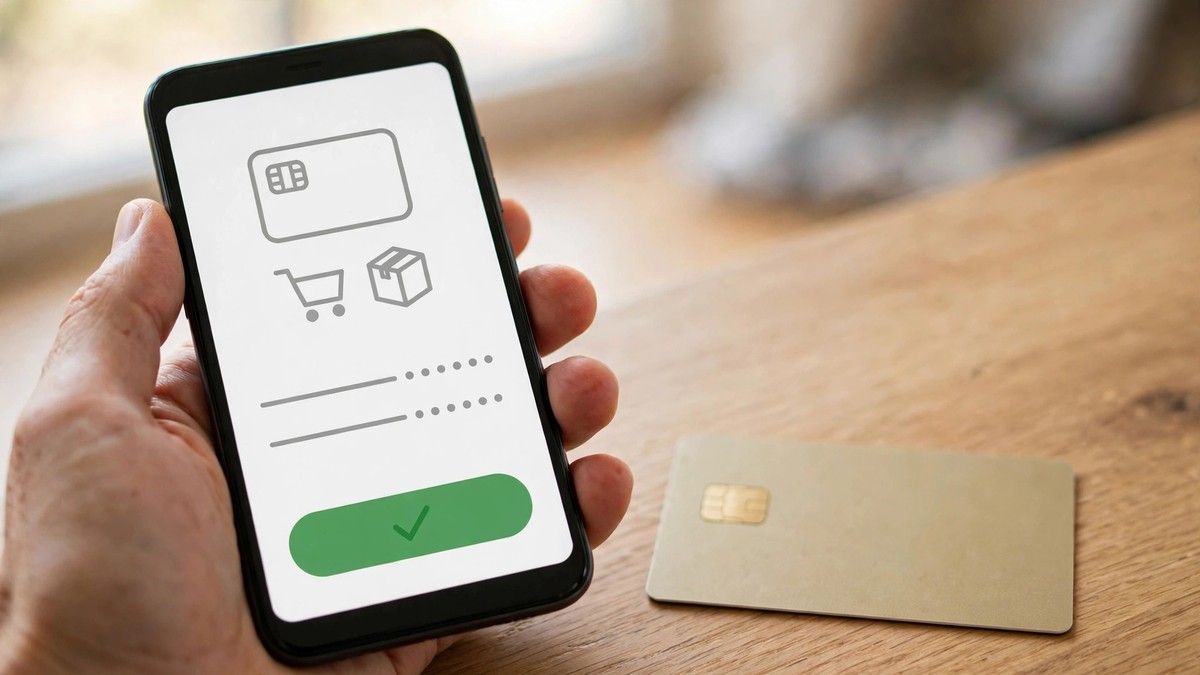
OpenAI launched ChatGPT Wallet on Friday, giving its ChatGPT agents a way to pay for online shopping without ever seeing a user’s card details. Every order still needs the user’s approval.
The move takes ChatGPT from adviser to buyer. Until now, its dots agents could find products and fill a basket, but they could not finish the purchase. The wallet closes that gap, and it puts OpenAI at the centre of a live argument over whether software should be allowed to spend people’s money at all.
Key Points
- OpenAI launched ChatGPT Wallet on 13 November for its dots agents, built with American Express, Mastercard and Visa.
- A card is added once. Each purchase needs the user to review the items and approve it with Face ID or a fingerprint.
- The payment network issues a one-use token, so neither the agent nor the shop sees the real card number.
- At launch it is open only to ChatGPT Pro subscribers aged 18 and over in the United States, with eligible US-issued cards.
- OpenAI takes no cut of transactions at launch, and some large retailers already block agent purchases.
What happened
OpenAI introduced the wallet on Friday through dots, the always-on personal agents it showed in late September. A user saves a card once. From then on, the agent can put an order together, but nothing is charged until the user has looked at the items, the total and the card, and then approved it with a security check such as Face ID or a fingerprint scan. Each approval leaves a clear record of what the user agreed to.
Once the user approves, the payment network supplies a token in place of the real card details. The token carries its own number, security code and expiry date, and it covers that one purchase only. The charge lands on the card the user picked, while the agent and the shop never see the actual details. Existing card rewards stay in place, and so do protections for eligible disputes, for example when an item arrives defective. The shop remains the seller, in charge of pricing, delivery, returns and customer service. OpenAI holds no purchase money and is not a bank or a card network; refunds go through the merchant.
The launch partners are the three big US card networks. Luke Gebb, head of global innovation at American Express, said the small start was deliberate: “It just makes sense to watch it, start it in a contained environment, and then keep rolling from there”. Sherri Haymond of Mastercard said: “An agent making a purchase should strengthen, not bypass, the trust built into payments.” Rubail Birwadker of Visa said the partnership would “connect user-approved purchases with the systems businesses already use”.
OpenAI also published a Commerce Partner Playbook to help shops prepare for agent buyers. It tells businesses to claim a verified profile, keep product feeds current, and set firewalls to recognise signed agent requests instead of blocking them. Fraud firms Forter, Riskified, Sardine and Signifyd are working with OpenAI, along with payment providers Adyen, Checkout.com and Stripe, so their systems can tell a genuine agent purchase from a fake one. The wallet arrived a day after OpenAI unveiled Daybreak, its agents for testing web security, in a busy week of AI launches that also included Google’s Gemini 4 Hydrogen and Anthropic’s Claude for Manufacturing.
Why it matters
Scale is the first reason this launch counts. OpenAI says 1.2 billion people use ChatGPT each week, and many of them already use it to research products and weigh what to buy. A wallet turns that research habit into completed sales, inside ChatGPT itself. No smaller agent product has that reach.
The second reason is trust. OpenAI describes the wallet as the first that lets agents pay without access to real card details and demands a security check on every purchase. That is the company’s own description, and the token design backs the first half of it: the number that travels is a stand-in, good for one order. The open question is whether shoppers accept the second half, an agent handling their money at all.
Money is the third reason. Chaya Nayak, who leads product for monetization and payments at OpenAI, told CNBC the company is taking no cut of transactions at launch. “Our goal here is to really focus on merchants and our network partners and start building out a really great foundation that’s safe and easy to use,” she said. The wallet is a foundation first and a revenue line later.
But the web is not ready for it. Amazon blocks agent purchases on its marketplace. United Airlines said this week it will stop agents booking tickets, and Delta bans them too. JPMorgan and Schwab do not let agents move customer money. OpenAI itself warns that some sites may block its agents by accident, and that fraud systems may flag genuine agent orders and turn them away.
Early demand also looks thin. Uber reported four agent rides and 500 Uber Eats orders in the final week of October, against roughly 320 million rides and deliveries. DoorDash’s chief put agent orders at several hundred in total, and Airbnb described its agent bookings as very non-material. A survey by the American Bankers Association last month found 77% of people concerned about giving an agent permission to pay, and 61% unlikely to let one manage bank balances within a year. Visa tested 22 AI models as shoppers this month, and they failed 42.8% of the time.
There is a counterweight. Meta’s Muse agent has more than 10 million users, and shopping has become a top activity on that app. And OpenAI has tried in-chat shopping before: Instant Checkout arrived in autumn 2025 and was dropped, with a rebuilt shopping experience following by March. The wallet is the company’s second attempt, this time built on the payment networks themselves.
What happens next for ChatGPT Wallet
OpenAI says users should, over time, be able to hand purchasing to their agent entirely, setting spending limits, purchase categories or time periods in advance, with extra safeguards on top of today’s checks. No date has been given for that step.
Expansion comes first through learning. The company says it will study early use with businesses, banks and payment networks before opening the wallet beyond Pro subscribers in the United States. Whether shops open their doors or keep them shut will decide how far it goes. The Playbook is OpenAI’s pitch to merchants; the blocks from Amazon and the airlines are the other side of that argument. The next test is simple: whether people who already ask ChatGPT what to buy will also let it pay.
Sources: OpenAI, Reuters, 9to5Mac, The Hindu BusinessLine, The Outpost. Published: 15 November 2026.