Key Points
- Google started rolling out its November Pixel Drop on 10 November, bringing Gemini Intelligence to the Pixel 10 range for the first time.
- The update adds Rambler, a dictation tool that turns spoken rambling into clean text, plus multi-step automations and proactive suggestions.
- Google’s first tracker, Pixel Tag, goes on sale on 11 November at $29.99 for one or $99.99 for four.
- Pixel 11 phones gain a Gemini-powered Call Screen in the United States, while watches get step-by-step workouts and phones get new icons, widgets and search upgrades.
- The rollout is staged, so some owners may wait days or weeks for the update to arrive.
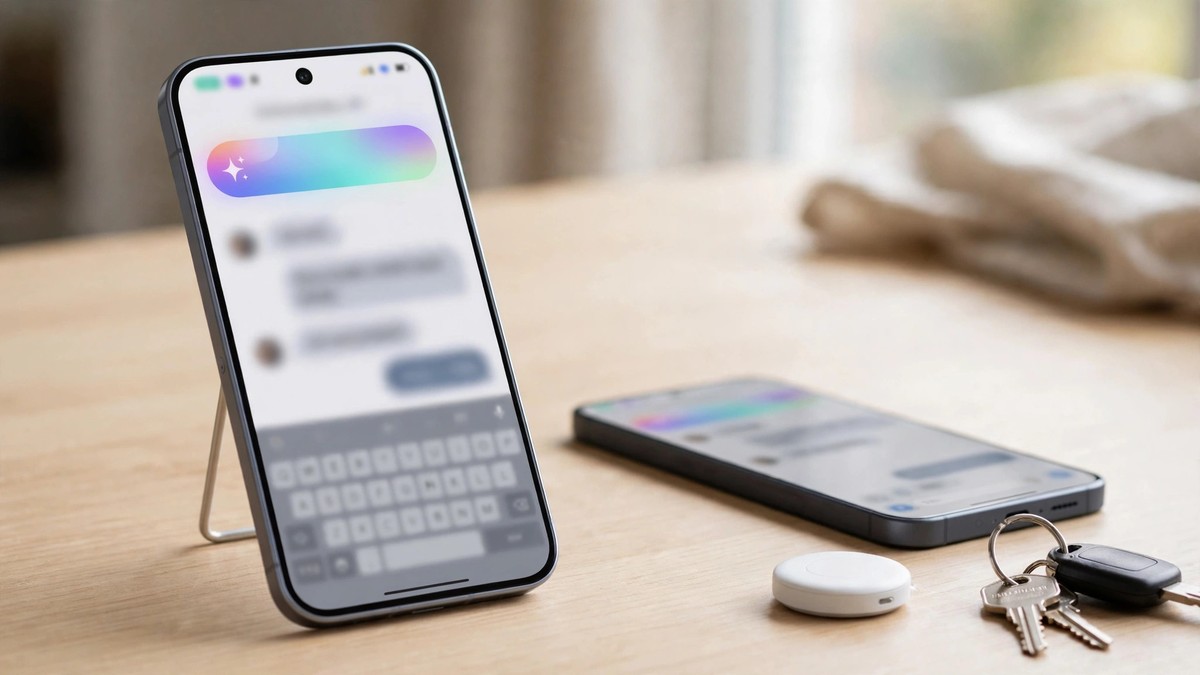
Google has begun rolling out its November Pixel Drop, giving Pixel 10 phones the Gemini Intelligence features that launched with the Pixel 11 and putting its first tracker, Pixel Tag, on sale today.
What happened
Google announced the update in a blog post on Monday, 10 November. The rollout began the same day and will reach supported Pixel phones, tablets and watches in stages over the next several weeks, so not every owner will see it at once.
The headline change is Gemini Intelligence reaching all four Pixel 10 handsets: the standard Pixel 10, the Pro, the larger Pro XL and the folding Pro Fold. Until now the feature set was limited to the Pixel 11 range, which arrived in August. Eight phones now carry it in total. The Pixel 9 does not get Gemini Intelligence in this update.
Rambler leads the new tools. It is a voice-typing feature that takes natural speech and turns it into polished text, stripping out filler words such as “um” and “ah”, tidying up repetitions and smoothing over self-corrections as you speak. Google says Rambler works in all regions and languages on the Pixel 10, while the rest of Gemini Intelligence is limited to selected regions and languages.
Gemini can also take on multi-step jobs. Owners can ask it to order groceries, book a ride, arrange takeout or find a restaurant table, and it handles the steps in the background. Google lists Japan, the United Kingdom and India for those automations. In the United States, Gemini can now place calls from the owner’s own number on Pixel 10 and Pixel 11 phones, for example to change a reservation, ask a shop to hold an item or check stock.
The phone will also start anticipating needs. Personalised suggestions include sharing an arrival time with one tap when someone asks when you will get there, or pointing to a dinner spot nearby. A new Create My Widget tool lets owners describe the widget they want in plain words — a monthly spending tracker, a match-day widget in team colours, a holiday countdown that pulls in flight and booking details — and the phone builds it. It arrives on Pixel 10 and Pixel 11 phones first, with Pixel Watch support to follow.
Long chats get shorter too. Pixel phones can now summarise lengthy conversations so the important parts stand out, in German, French, Spanish, Italian, Hindi and Traditional Chinese.
Pixel Tag, Google’s answer to Apple’s AirTag, goes on sale today, 11 November. The slim tracker fits in a wallet, runs for more than a year on one battery, and locates belongings through Find Hub, Google’s network of more than one billion Android devices. Ultra-wideband gives visual direction and distance guidance when the item is close. Google lists the tag at $29.99 for one or $99.99 for a four-pack. It pairs with any phone running Android 9 or later, although the full feature set needs a device with Bluetooth 6.0 running Android 16.
Pixel 11 owners get their own upgrades. In the United States, Gemini Call Screen now handles unknown callers in a more conversational way, asking why they are calling and showing a live transcript while the owner decides whether to pick up or end the call. A new Pixel Solver brings generative AI templates and step-by-step problem solving into the Calculator app. The Pixel 11 Pro’s HiLight strip, which glows for incoming calls, now also lights up for messages from favourite contacts in Google Messages when the phone is face down.
The rest of the drop reaches further back. New custom icon styles, built on Google’s Nano Banana model, arrive on phones from the Pixel 6a onwards. Pixel Search, available on Pixel 6 and newer, now finds photos, emails, messages, calendar events and settings with natural-language queries. Transit Mode switches on automatically from the phone’s sensors, the Calculator gains unit conversion, and Pixel 10 phones get Extreme Charging Mode for faster top-ups when conditions allow. Pixel Watch 3 and newer models gain step-by-step workouts, with live metrics, rep and weight logging on the wrist or phone.
Google also used the announcement to launch its Fi super network, which moves eligible Pixel phones automatically between two of America’s leading 5G networks and millions of secure Wi-Fi hotspots. New Fi customers can get 50 percent off selected unlimited plans for 12 months, an offer that ends on 1 December.
Why the Pixel Drop matters
For Pixel 10 owners, the update is the most significant software gift of the year. Features that were a reason to buy the Pixel 11 in August now arrive free on last year’s phones, with Rambler the clearest example: a dictation tool that reviewers praised on the Pixel 11 is now in the hands of millions more users. Google is betting that keeping older phones current matters more than pushing owners to upgrade every year.
The launch also closes a gap Google has left open for years. Apple has sold AirTags since 2021 and Samsung has its SmartTag, while Google relied on third-party trackers for its Find Hub network. Pixel Tag finally gives Android owners a first-party tracker, and its billion-device network is the largest of its kind. The test will be whether owners find it in practice, since no independent range or battery tests exist yet and the tag’s precision finding needs newer hardware to work at full strength.
The wider picture is Google pushing its assistant deeper into daily routines. Gemini is moving from answering questions to carrying out errands — ordering food, booking rides, making calls — and the Pixel Drop puts those chores on the phone itself rather than in a separate app. Google unveiled two new TPU systems on Monday to power the AI behind features like these, and the race to put agents in everyone’s pocket is accelerating. IBM and Microsoft launched their own enterprise agent platform, Imagine Enterprise, the same day, aimed at banks, insurers and retailers.
What happens next
Owners can check for the update in Settings, under System and then Software updates. Google says the rollout will continue over the next several weeks, and features will arrive in waves rather than all at once.
Pixel Tag goes on sale today through the Google Store. Early buyers will be the first to test whether Find Hub’s scale translates into finding a lost bag or keys in a busy street, and whether the tag’s battery really lasts beyond a year.
More is still to come. Unlocking a Pixel Watch by unlocking the nearby phone arrives in the next few weeks, along with notification summaries and Create My Widget support on Pixel Watch 4 and Pixel Watch 5. The AI race is moving fast elsewhere too, with Meta’s Muse Ember and Anthropic’s Claude Fable 5.2 launching this week — and the next Pixel Drop will show whether Google can keep its older phones at the front of it.
Sources: Google, Engadget, Droid-Life, Android Headlines. 11 November 2026.